
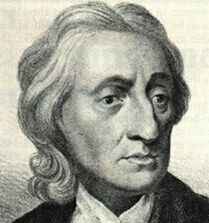
John Locke famously espoused the natural right to self-ownership, a right which he famously called man’s ‘property in his own person.’ He also said, “Government has no other end, but the preservation of property.” This led to the American Revolution and the French Revolution.
“He expressed the radical view that government is morally obliged to serve people, namely by protecting life, liberty, and property. He explained the principle of checks and balances to limit government power. He favored representative government and a rule of law. He denounced tyranny. He insisted that when government violates individual rights, people may legitimately rebel.”
“These views were most fully developed in Locke’s famous Second Treatise Concerning Civil Government, and they were so radical that he never dared sign his name to it. He acknowledged authorship only in his will. Locke’s writings did much to inspire the libertarian ideals of the American Revolution. This, in turn, set an example which inspired people throughout Europe, Latin America, and Asia.”
“Thomas Jefferson ranted Locke, along with Locke’s compatriot Algernon Sidney, as the most important thinkers on liberty. Locke helped inspire Thomas Paine’s radical ideas about revolution. Locke fired up George Mason. From Locke, James Madison drew his most fundamental principles of liberty and government. Locke’s writings were part of Benjamin Franklin’s self-education, and John Adams believed that both girls and boys should learn about Locke. The French philosopher Voltaire called Locke “the man of the greatest wisdom. What he has not seen clearly, I despair of ever seeing.”
https://fee.org/articles/john-locke-natural-rights-to-life-liberty-and-property/
Locke’s “Second Treatise Concerning Government” is available FREE for Kindle here: http://www.amazon.com/Second-Treatise-Government-John-Locke-ebook/dp/B004UJCSBG

 budbromley
You must be logged in to post a comment.