“The Greatest History Never Told” – Full Feature interview

“They are weaponizing energy, weaponizing medicine and weaponizing the environment,” says Catherine Austin Fitts. 

I add, weaponizing legal and political systems against humanity worldwide. 

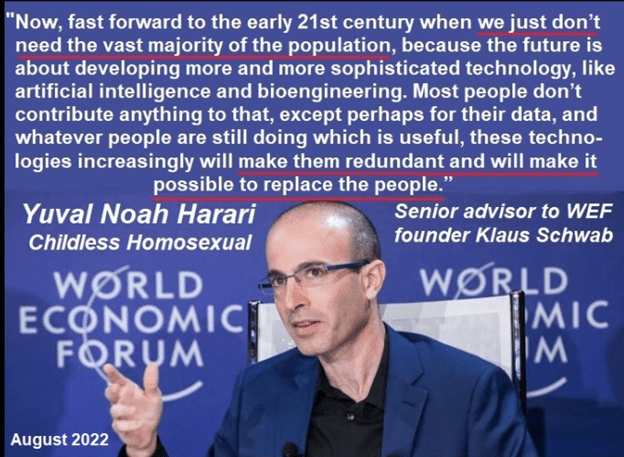
This is the history and development of “our common future” and the globalist one world project, beginning with John D. Rockefeller, Andrew Carnegie, Henry Ford and their families and foundations through League of Nations, United Nations, Agenda 21 and Agenda 2030, UN IPCC, Club of Rome, World Health Organization, and World Economic Forum, covid fraud and climate change fraud…and “global problems”. 

“They want to control life,” says Dr. Jacob Nordangard in this full 4 part interview.

Reblog: Ivor Cummins interviews Dr. Jacob Nordangard. 4 parts total about 2 hours. https://odysee.com/@IvorCummins:f/the-greatest-history-never-told-full:6

Or here in 3 parts: https://blog.jacobnordangard.se/the-greatest-history-never-told-why-the-world-makes-no-sense-anymore/

With Catherine Austin Fitz here, Don’t miss this short excerpt:https://home.solari.com/coming-thursday-engineering-the-global-coup-with-dr-jacob-nordangard/

Jacob Nordangård is a Swedish researcher, author, lecturer, and musician. Ph.D. in Technology and Social Change at Linköping University. Master of Social Science in Geography, and Master of Social Science in Culture and Media Production.

Founder and chairman of the Swedish foundation Stiftelsen Pharos and CEO of the independent publishing and media production company Pharos Media Productions.

Has previously worked as graphic designer, editor, media producer, press officer, politician, and Senior lecturer at the universities of Linköping, Jönköping, and Stockholm.

He is also the band leader, singer and songwriter of the doom metal band Wardenclyffe, with lyrics inspired by his research. His dissertation was issued with a soundtrack and his latest books (visit webshop) are available with optional CD singles as soundtrack.

More information is available at Jacob’s homepage. His blog is the home of Jacob’s articles in English, as well as some guest posts by his wife and associates.

Contact Jacob

Homepage: https://jacobnordangard.se/en/

https://blog.jacobnordangard.se

To save you a few clicks, here are comments about Jacob by the deep state and globalists.

https://www.desmog.com/jacob-nordangard/

Posted in Uncategorized | 3 Comments

Reblog: Lessons From the Great Covid Cover-Up

Rand Paul

U.S. Senator from Kentucky
Author, Deception: The Great Covid Cover-Up

Read the original here on Hillsdale College’s Imprimis: https://imprimis.hillsdale.edu/lessons-from-the-great-covid-cover-up/  Imprimis is excellent and available no charge and hassle free. 

Archived here. 

The following is adapted from a talk delivered on November 1, 2023, at the Allan P. Kirby, Jr. Center for Constitutional Studies and Citizenship on Hillsdale’s Washington, D.C., campus, as part of the AWC Family Foundation Lecture Series.

The Covid cover-up began in China. But in a way we make too big a deal of that. No one should be surprised that a totalitarian government run by the Chinese Communist Party would seek to cover up its responsibility for a worldwide pandemic. What was mind-jarring—and what we should focus our attention on—is the cover-up in our own country spearheaded by Dr. Anthony Fauci and his fellow public health bureaucrats. And they might have gotten away with their deception if a federal judge hadn’t ordered their emails released.

In brief, these emails reveal that at the same time Dr. Fauci and other public health “experts” were publicly disavowing the idea that the Covid virus originated with a leak from the Wuhan Institute of Virology in China, they were in general agreement among themselves that that was likely what had happened. So why hide the fact? 

In January 2020, Fauci was told that the Covid virus appeared “inconsistent with expectations from evolutionary theory.” He and his fellow scientists were worried that it may have originated in the Wuhan lab because they knew that the National Institute of Allergy and Infectious Diseases (NIAID), under Fauci’s direction, had been funding work at the lab for years. They also knew of a paper by Ralph Baric and Shi Zhengli describing gain-of-function research—which involves taking two viruses and combining their genetics to create something more dangerous, more lethal, or more contagious—on various coronaviruses at the Wuhan lab.

On February 1, just before 3:00 a.m., Fauci sent an email to Robert Kadlec, then-Secretary for Preparedness and Response at Health and Human Services. It read: “This just came out today. Gives a balanced view.” He attached an article published in Science arguing that Covid had jumped from bats to humans and seeking to discredit the lab-leak theory. When this email came to light, I was initially puzzled about its timing and urgency. But then I learned that one of Kadlec’s duties was to chair the committee responsible for screening gain-of-function proposals for safety purposes—and that the Wuhan coronavirus research proposal never came before his committee!

For a long time, even we in the U.S. Senate didn’t know that Kadlec headed the gain-of-function screening committee because of the pervasive secrecy throughout our government. The makeup of the committee is a secret, its deliberations are secret, and those on the committee do not like answering questions asked by the American people’s elected leaders in Congress. To this day, it is an open question how gain-of-function research was funded in Wuhan without committee review. It is not a stretch to think that someone with authority skirted the safety review process. If so, that person would have had a good reason to be very worried, even to the point of dishonesty, when the pandemic broke out.

Jeremy Farrar, the Anthony Fauci of the UK, told his brother that in the early stages of the pandemic, “a few scientists, including me, were beginning to suspect this might be a lab accident.” Farrar writes in his book Spike: “During that period, I would do things I had never done before: acquire a burner phone, hold clandestine meetings, keep difficult secrets.” Indeed, many Western bureaucrats, especially in the U.S., began using various forms of communication to shield their messages from future records requests. We have an email from one of Fauci’s assistants instructing other government employees to avoid using government email addresses. Which, by the way, is a crime.

Kristian G. Andersen, a professor of immunology and microbiology at Scripps Research, headed up a group of virologists who, by his own account, were “prompted by Jeremy Farrar, Tony Fauci, and [National Institutes of Health Director] Francis Collins” to research and publish a paper that would “provide agnostic and scientifically informed hypotheses around the origins of the virus.”  Andersen had written to Farrar a week earlier, alarmed by the fact that the virus appeared to be manmade. But now, under pressure, he and others were circling the wagons and changing their tune.

By mid-February, British zoologist Peter Daszak, president of EcoHealth Alliance and a Fauci ally, organized a letter that was published in The Lancet stating that the authors stood together “to strongly condemn conspiracy theories suggesting that COVID-19 does not have a natural origin.” What the letter failed to mention is the fact that Daszak’s organization received many millions of taxpayer dollars from the National Institutes of Health (NIH) and the State Department—before and during the pandemic—and that millions were funneled through EcoHealth to the Wuhan lab, some of which went to coronavirus research.

In March, the Andersen group’s paper, arguing that Covid didn’t come from a lab, was published in Nature Medicine. By that time, corporate media and Big Tech had taken to labeling anyone who supported the lab-leak theory as a purveyor of misinformation and disinformation. An ABC News article that cited the Andersen paper is a case in point: “Sorry, conspiracy theorists. Study concludes COVID-19 ‘is not a laboratory construct.’”

As we now know—thanks to the release of the Twitter Files following Elon Musk’s purchase of the company—the mainstream media and Big Tech did not act alone. In fact, many of their efforts to censor speech about the lab-leak theory, lockdowns, masks, vaccines, school closures, and a host of pandemic-related topics were directed by the FBI and other intelligence agencies. In other words, the First Amendment was thrown out the window.

***

The moral debate over gain-of-function research has been going on for a long time. It came to prominence with the debate over avian flu research in the early 2010s. Avian flu is a very bad disease, but like most animal viruses, it is adapted for its host—in this case chickens or other birds. It does not often infect humans, but when it does, certain strains kill up to 50 percent of those infected.

During an outbreak in 2010, Dutch virologist Ron Fouchier wondered if it would be possible to make the avian flu contagious through the air to mammals, and his research became highly controversial. Proponents argued that it could provide valuable data for scientists to predict or combat future pandemics. Opponents argued that it could cause pandemics either through lab leaks or terrorism. Fauci was intimately familiar with this debate, because Fouchier’s research was funded by Fauci’s agency, and he argued at the time that the potential benefits outweighed the risks.

A growing number of virologists and other scientists worry that a lab leak will happen again, and with even more serious consequences. With Covid, the mortality rate was far less than one percent. Experiments are now being carried out with viruses that have the potential for mortality rates between 15 and 50 percent. In 2021, MIT biochemist Kevin Esvelt wrote:

Once we consider the possibility of misuse [of gain-of-function research], let alone creative misuse, such research looks like a gamble that civilization can’t afford to risk. . . . I implore every scientist, funder, and nation working in this field: Please stop. No more trying to discover or make pandemic-capable viruses, enhance their virulence, or assemble them more easily. No more attempting to learn which components allow viruses to efficiently infect or replicate within human cells, or to devise inheritable ways to evade immunity. No more experiments likely to disseminate blueprints for plagues.

The potential for disaster cannot be overstated. Right now, people can order synthetic DNA on the internet, and if they know what they’re doing, they can make the polio virus, among many others. And there are increasing numbers of individuals who have the knowhow: according to Esvelt, “The U.S. grants 125 doctoral degrees in virology each year, accounting for one-third of the total worldwide. At least four times as many individuals with degrees in related fields . . . possess similar skills.”

The required information is publicly available due to taxpayer-funded initiatives to identify all the viruses in the world. With the support of people like Peter Daszak and Bill Gates, the U.S. has been the top international funder of pandemic virus identification for decades. This should give us pause: these programs involve digging rare viruses out of caves where humans might never encounter them and transporting them to major metropolitan areas, manipulating viruses to make them more dangerous and transmissible, and publishing the resulting knowledge to the world.

Even if the goal is preventing future pandemics, the risk-benefit ratio doesn’t add up. While advocates for identifying the world’s viruses argue that the knowledge gained will aid in developing vaccines, decades of virus identification have been fruitless, as no human vaccine has been developed in advance of a human epidemic. If we continue down this path, Esvelt believes that “deliberate pandemics” will kill “many more people than identification could save.”

To think that we can prevent future pandemics, even as we continue to seek, catalog, and manipulate dangerous viruses, is the height of hubris. Over the last few years, public health “experts” were wrong about almost everything. If we are to avoid these kinds of catastrophes in the future, we must reform government and rein in out-of-control scientists and their enablers.

***

In December 2022, Congress passed a 4,155-page spending bill. It had a price tag of $1.7 trillion, including over a trillion dollars that had to be borrowed. It was appropriately called an “omni,” since everything but the kitchen sink was thrown in. On page 3,354, the Secretary of Health and Human Services was directed “not [to] fund research conducted by a foreign entity at a facility located in a country of concern . . . involving pathogens of pandemic potential or biological agents or toxins.”

This was a welcome attempt to stop the funding of dangerous research around the world, but Americans and their representatives must watch carefully to see whether our public health agencies attempt to sidestep it. The recent behavior of NIAID and NIH bureaucrats, as exemplified by their attempts to deceive Congress and the American people during the Covid pandemic, does not instill confidence.

A group of 34 prominent scientists recently presented a series of reforms to “strengthen the US government’s enhanced potential pandemic pathogen framework.” This Gain-of-Function Reform Group (GoF Group) recommended that gain-of-function experiments that confer “efficient human transmissibility” on a pathogen should be regulated. Adopting this standard would explicitly stop bureaucrats like Fauci from dancing around the gain-of-function definition and looking the other way as researchers create viruses that spread more easily in humans.

Current regulations allow gain-of-function research to occur if the research is said to be concerned with “developing and producing” vaccines. However, dangerous research should not be permitted or funded on the basis of a potential product. Rather, we should ban clearly dangerous research and highly scrutinize anything else that “could enhance the virulence or transmissibility of any pathogen,” as the GoF Group recommends.

We should treat this research as we do nuclear weapons—as the potential threat to human life is even greater. Ideally, as Rutgers University molecular biologist Richard Ebright recommends, “responsibility for US oversight of gain-of-function research of concern should be assigned to a single, independent federal agency that does not perform research and does not fund research. The oversight of research on fissionable materials by the Nuclear Regulatory Commission provides a precedent and a model.”

Another pervasive problem is conflict of interest. Under our current lax guidelines, researchers can essentially approve their own grants if they toe the official bureaucratic line. Consider the particularly egregious example of Kristian Andersen receiving a million-dollar grant mere months after abruptly switching his scientific opinion on Covid’s origin from a likely lab leak to “natural spillover.” We have always known that recipients of federal dollars might try to game the system. Conflict of interest regulations are littered throughout the federal code. One would think recusal for a conflict of interest would be the standard fallback procedure for all federal science funding. Yet when I questioned Fauci about whether any of the scientists on the vaccine-approval boards also received royalties from the drug companies that make vaccines, he responded that he did not have to inform Congress about royalty payments. In addition to the fact that he was the highest paid employee of the federal government, his own net worth is estimated to have doubled to more than $12.5 million during the pandemic. This is an insult to the American taxpayer and the American ideal. We should not allow this kind of obvious corruption.

The GoF Group calls for regulators to “recuse any individual whose agency is funding or participating in the proposed [gain-of-function research] from decision making in the [pandemic] review process.” Reviewers “should be subject to conflict of interest rules.” They also recommended including “representatives of civil society” in the review of potential pandemic pathogens.

For several years, I have proposed something similar for all grants funded by the federal government. Even before I became aware of the extent of Fauci’s abusive reign, I introduced the BASIC Research Act, which would add at least one scientist to each funding committee from a major field of research that has unanimity of support, such as heart disease, diabetes, cancer, and Alzheimer’s. The goal is to create more debate on the best use of limited government research funds. I would also add a taxpayer advocate to all funding committees. Perhaps then we would start to question absurd “scientific” research grants, such as the $2.3 million the NIH spent injecting beagle puppies with cocaine, or the $3 million NIH grant to put hamsters on steroids and watch them fight.

In addition, my legislation would prohibit grant applicants from requesting their own friends for funding review. We should also make all federal grant applications public.

To prevent what happened during the Covid pandemic from happening again, Congress must address the concentration of power over long periods of time in the hands of unelected and unaccountable bureaucrats. In particular, it should divide the power of the NIAID into three separate institutes overseeing allergic diseases, infectious diseases, and immunologic diseases. Each institute should be led by a director who is appointed by the president and confirmed by the Senate for a limited term of five years.

Anthony Fauci—who wielded tremendous power over many decades—funded dangerous research, lied to Congress and the American people, flip-flopped on many of his prognostications, issued edicts that defied science, and attacked and smeared his scientific critics. His reprehensible behavior reminded me of nothing so much as C.S. Lewis’s description of the moral busybody: “Of all tyrannies, a tyranny sincerely exercised for the good of its victims may be the most oppressive. . . . [T]hose who torment us for our own good will torment us without end for they do so with the approval of their own conscience.”

We the American people must not allow bureaucratic “experts” to endanger our lives, lie to us, or curtail our constitutional rights. Never again. 

Bud’s comment: Never again. 

Posted in Uncategorized | Tagged , , , , , , , , | Leave a comment

Re-blog: David Horowitz’s Radical Mind

A review and personal tribute.

February 2, 2024 by Jason D. Hill 

Read the original post here by Dr. Hill: https://www.frontpagemag.com/david-horowitzs-radical-mind/

Archived here:

I remember the first conversation I had with David Horowitz, though I am sure that he does not. I was a young undergraduate student at Georgia State University majoring in philosophy and English literature. I was working up to 45 hours a week in two – sometimes three — jobs to put myself through school. This was before I won a full scholarship to pursue a Ph.D. in philosophy. One of my side gigs then was repurposing my philosophy papers into newspaper editorials. I was doing all of this while attending university full-time. A newspaper editor gave me Horowitz’s telephone number (this was in the 1990s) and suggested that I call him. Horowitz had just started a new magazine called Heterodoxy, devoted to exposing the excesses of political correctness on university and college campuses across the United States. I acquired a few copies of the burgeoning magazine, read them, and cold-called him.

I don’t think David had any writing opportunities for me at Heterodoxy back then. But here is what I remember, and it has left me with an indelible imprint on my mind and a lasting respect and personal fondness for David Horowitz: he spoke to me about my plans for my future. I told him of the few articles I had published in the United States despite having worked as an investigative journalist in Jamaica before emigrating to America. He spent quite a bit of time telling me I might have a long struggle ahead, but that I was to keep on writing. He encouraged me to never give up. He said that, based on my articulacy in speaking with him, he could tell that I had talent. He laid out how difficult the publishing world could be not just for a young writer, but for all writers.

A lot of people know David Horowitz as a fiery personality. And he is a brilliant intellectual with a fiery disposition. I say this with affection; however, I remember him being possessed of a paternal gentleness and nurturing demeanor towards me. Although I would not be able to contribute to the magazine, in the end that was irrelevant. In our short conversation David had managed to make me feel like an accomplished writer. This, it must be emphasized, does not consist merely in heaping praise on a young writer. It is speaking to a young writer in a non-patronizing and non-condescending manner such that he is made to feel that he is already part of the pantheon of the community of writers. Our conversation made me feel that I was ready for the struggle, the rejections, the enjoyment of the process of writing itself, apart from the outcomes of my efforts. All this Horowitz communicated to me. Our conversation left me with a sense of excitement and exhilaration because I realized my vocational calling was not just affixed to getting published; it involved a spiritual and aesthetic approach to the art of writing itself. I began to see what a writer’s life truly consisted of.

I would not speak to David until some 27 years later when I was awarded a Shillman Journalism Fellowship at the Horowitz Freedom Center where I am now a proud columnist filled with gratitude towards him and Dr. Bob Shillman for giving me a permanent platform to express my views. I had gone on to become a professor of philosophy for well over two decades, and the author of five books. There is, however, no greater thrill than writing my articles for FrontPage Magazine, largely because David has given me a great deal of freedom to simply be true to my political sensibilities and my vision in the pages of his magazine.

I’ve gone on to devour almost every book Horowitz has written, and I have had the pleasure of reviewing quite a number of them for this magazine. Throughout his career David has established himself as one of the most preeminent and brilliant public intellectuals in both the 20th and 21st centuries. He’s also been—to my mind—one of the most defamed and slandered scholars and intellectuals in this country. He is often accused of being a racist and Islamophobic. Nothing could be further from the truth. Horowitz is simply a principled thinker whose philosophical views and sensibilities are forged in the crucibles of hard facts. And I can think of no other publisher (and I’ve by now worked with plenty) who has offered black conservatives a chance to develop themselves as thinkers and writers.

In his latest book: The Radical Mind: The Destructive Plans of the Woke Left, Horowitz, with indefatigable rigor and solid research, unmasks the nefarious agenda of the Woke Left in its attempt to destroy American civilization. The book is an intellectual tour de force written for a broad readership. And in reading it, one can understand why irrational and evil people would defame Horowitz. He simply states the truth as it exists in objective reality.

For example, in debunking the plethora of lies around the issue of race, Horowitz rightly points to the myriad programs that exist for the advancement of black Americans in the United States. Whether it is the United States government spending seven billion dollars to send a black woman to the moon for no other reason than her skin color; or pointing to the ways in which the welfare state has destroyed the black family; or noting that the slave trade actually existed in Africa where slaves were bought and auctioned by fellow Africans and then sold to Europeans; or showing how DEI programs end up granting a status to blacks that exists nowhere else in the world – Black Skin Privilege in the United States — Horowitz takes no prisoners, and he proves that facts ought not to care about feelings. If you want to find out why black lesbians in the United States are among the most privileged groups in America, read The Radical Mind. If you still think that systemic racism against blacks exists after the passage of the 1964 Civil Rights Act, or that the United States is today a White Supremacist nation, Horowitz explains by way of several examples why this is putatively false.

Readers are perhaps not aware that five hundred million Muslims approved of the 9/11 terrorist attacks on the United States, or that the student organization Students for Justice in Palestine (SJP) is funded by the American Muslims for Palestine (AMP) which is funded by Hamas. Merely by revealing the disgraceful fact that American campuses harbor a terrorist organization within their folds, Horowitz incurred the wrath of many Progressives.

In The Radical Mind, Horowitz outlines the agenda of the Progressive left as it seeks to inflict a sustained racist attack on white Americans. He proves that Democrats are not soft on crime; they are pro-crime—citing numerous examples of how left-wing city officials across our nation deliberately fail to prosecute roving gangs of criminals that terrorize small businesses in smash-and-grab robberies.

Whether it is Bernie Sanders, Nancy Pelosi, or the radical leftist, antisemitic Squad in Congress consisting of Alexandria Ocasio-Cortez, Rashida Tlaib, Ayanna Presley, Ilhan Omar, and Cory Bush, Horowitz unearths the overt ways in which these Progressives are part of the socialist-communist criminal axis that advocates theft and expropriation of private property in America.

The book is not just critique, though. Horowitz shows why the concept of equity and equality are untenable concepts by way of discussing the genius of Elon Musk and tying creative genius to the overall well-being and prosperity of all Americans. He celebrates the spirit of capitalism and its ability to make blacks and women the freest and most privileged groups in the world today. Yes, you will find Horowitz’s formidable intellect permeating every page; but it is an intellect that also celebrates the best within America and, a fortiori, the best within each of us. As bankrupt as much of our culture is, Horowitz, in his inimitable manner, leaves you feeling that you can and should suffuse the world with your own personal agency; and that if you undertake that responsibility of fighting to preserve liberty and freedom in the United States, you can alter the destructive trajectory the American civilization (taken hostage by the nihilistic Left) seems to be pursuing.

What I find remarkable is the way Horowitz is able to cover so much ground in such a relatively short book. From the nature of government and the rationality of an undemocratic Senate, to the logic behind the Electoral College, the role that the Italian philosopher and communist Antonio Gramsci played in cultivating the sensibilities of today’s Progressives, to a measured discussion of the persecution of Donald Trump, to a biographical account of his early days as a Leftist revolutionary, along with a profound analysis of the destructive nature of wanting to change the world by an appeal to the slogan that the moral arc of the universe bends towards justice—Horowitz gives us a comprehensive and well-integrated philosophic discussion of the principles behind the nihilism that governs today’s relativistic Woke culture, and deep-dive analyses of current events as they unfold. There are fundamental principles that guide the book that are consistent and logical such that, if you follow them, one should be able to predict with accuracy what Horowitz’s position on any subject might be in the future.

But you never know. Horowitz’s mind is nuanced and complex. Just when I thought I had figured out the mind of David Horowitz he comes along with a new book that is more insightful than his previous works and chock full of deep analyses of the malarkey that passes as received wisdom in our culture. Even if one disagrees with any of the ideas and conclusions drawn in Horowitz’s new book, there is much to recommend by way of simply watching a brilliant mind at work. He offers us a method of cognition, and of moral and political reasoning, that teaches us how to think efficiently. As a teacher of logic this is a wonderful gift from a writer. In this book, too, to use an apt metaphor, Horowitz is like an elegant battering ram that ruthlessly destroys the shibboleths which turn folks from rational thinkers into sentimental adherents of Woke nonsense.

I hope to read a dozen more forthcoming books from this often-unsung hero in American intellectual life. For now, it was a delight to sit with a book that, like a cup of strong morning coffee, you wished never had to come to an end.

Avatar photo

Jason D. Hill

Jason D. Hill is professor of Philosophy at DePaul University and a Shillman Journalism Fellow at the David Horowitz Freedom Center. His latest book is “What Do White Americans Owe Black People: Racial Justice in the Age of Post-Oppression”. Follow him on Substack.

Posted in Uncategorized | Leave a comment

What to do about Iran?

National Security Advisor Dr. Walid Phares says President Joe Biden should respond to Iran’s attacks by publicly ending Iran Deal negotiations, stopping all financial transfers, and shutting down the Syria-Iraq border. “His advisors are very aware of [these options] and he will have to make that decision. The problem is that he has been bound by the Iran deal and that transaction,” says Dr. Phares.

Watch LIVE➡️http://bit.ly/plutorav

Posted in Uncategorized | Leave a comment

UN Agenda 2030 Mass Migration Plan Exposed

This video is even handed and non-political. After watching you may wish to re-direct your charitable gifts to other organizations.

Although this video is about mass migration into the USA, the UN 2030 mass migration program applies to all developed countries and is ongoing, as is illustrated with the text of the UN 2030 Agenda documents.

https://www.youtube-nocookie.com/embed/HUklrX2dVk4

Let me know if this video is removed from YouTube. I will post original copy.

Related posts on this blog

Here is a short set video clips by this godless blaspheming false prophet, advisor to WEF:

Posted in Uncategorized | Leave a comment

How Henry’s Law controls CO2

I was asked this week by an email correspondent, “Could you help me understand the issue in a different aspect? I mention Henry’s Law often and I get push back that it doesn’t apply to CO2 in atmosphere.” Some may be interested in my detailed explanation.

I suppose those people are regurgitating what someone has taught them in school or what they have read somewhere.  You will need to ask them for data or explanation. 

CO2 is routinely measured like any other atmospheric gas by several different cross confirming methods.  It is simple to measure in air but very difficult to measure with accuracy and reproducibility in water because greater than 90% of the CO2 gas rapidly reacts with water ions (i.e., hydrolyzes) and becomes an ionic species instead of a gas, but then the ionic species produced are also rapidly and easily reversibly reacted by minor changes in temperature, pH, alkalinity, salinity and agitation in the water and air.  When aqueous CO2 gas hydrolyzes in water the CO2 molecule (which is linear O-C-O in air) is bent into a triangle when one of the weakly held hydrogens is pulled away from one of the oxygens. 

A container half filled with sea water and half with normal air at sea level is held precisely at lab standard temperature and pressure (STP, 25.6 C and 1 atm) is allowed to come to equilibrium.  CO2 (and all other gases) are sampled from the headspace above the water by a pressure and temperature-controlled gas sampling valve into a gas chromatograph mass spectrometer (GC/MS).  The gases are separated, identified and quantified by the GC/MS.  The CO2 gas concentration in the water is routinely calculated by the text book reference Henry’s Law constant, the CO2 gas concentration in the measured gas headspace, and the measured temperature.  This method is more accurate and precise than attempting to sample CO2 gas in the water.  Then, if a large and known amount of CO2 gas is added to the headspace and the container is allowed to come to equilibrium, then again the gases are sampled from headspace, the result will be that all of the added CO2 will have been absorbed by the water and the CO2 concentration in the headspace will be returned to the original equilibrium CO2 concentration before the CO2 was added.  This experiment is identical to experiments done and documented by William Henry in the early 1800s except Dr. Henry used a pressure manometer instead of a GC/MS to measure the CO2 gas in the headspace.  

“Henry’s law described the equilibrium distribution of a volatile species between liquid and gaseous phases. In original form, Henry’s law is an observational result for a two-phase equilibrium A(l) – A(g) under dilute solution conditions and for low pressures.

PA = K’CA                                      (1a)

Where PA is the partial pressure and CA is the liquid-phase concentration of species A. (For example, with PA in atmospheres and CA moles per liter, units of K’ are atm liter mol-1)”

“The physicochemical significance of Henry’s law is this: there is a linear relationship between the activity of a volatile species in the liquid phase and its activity in the gas phase. (This simple notion is sometimes lost sight of when fundamental gas solubility equilibria are combined with other equilibria, e.g., acid-base, in order to generate overall distribution constants.)”

Usually, the problem people have is that many textbooks and online sites state (incorrectly) that Henry’s Law does not apply to gases which react with the solvent liquid.  That is an unfortunate misunderstanding.  Henry’s Law does not apply to chemical products of the reaction, but it does apply to the unreacted gas which remains in the liquid with the ionized reaction products.  This is true for all gas solutes and liquid solvents, not only CO2 and water.

In the case of CO2 and seawater, we are referring to the physical phase-state for the transition of the CO2 gas molecule from the gas phase within the mixed gases of the atmosphere to a CO2 gas molecule within the mixed liquid water matrix of the ocean surface.  Among other changes as the CO2 gas molecule passes into the liquid thin film at the air/liquid interface, the gas molecule enters a matrix of much higher surrounding pressure and more intermolecular and ionic interactions with other species in the water matric.  But at this point the now aqueous CO2 gas molecule is still an intact, unreacted, un-ionized gas molecule.  Henry’s Law applies to this intact, unreacted, un-ionized gas molecule in the liquid phase, which is less than about 1% of the CO2 gas which was absorbed into water surface. Colder, denser ocean water at depth contains more CO2 gas than surface ocean water; there is a steep vertical gradient.  Ocean is estimated to hold about 50 times as much CO2 gas as atmosphere with a vertical gradient with three distinct layers. 

As mentioned, this CO2 gas molecule which is dissolved in the liquid phase (that is aqueous CO2 gas or CO2(aq) ) is very difficult or impossible to measure reproducibly and accurately in the liquid phase.  This is part of the problem found in textbooks and references.  In these texts, unfortunately, since the molecule is difficult to quantitate it is frequently merged with one of the reacted products resulting in a hypothetical species which does not actually exist.  For example, the aqueous CO2 gas is merged with the fleeting intermediate ionic species carbonic acid (H2CO3) and then included in a category called dissolved inorganic carbon (DIC) and called something like CO2*.  This is a serious mistake because the several variables which affect the aqueous CO2 gas and the products of its hydration reaction affect these chemicals entities in the same directions and amounts, for example pH and salinity.

In other words, the CO2 gas which is dissolved in but unreacted with the liquid water is omitted from further explanation and understanding.  In fact, that CO2 gas which is dissolved in the liquid but unreacted is always in the water, and it can be measured and quantified, but when the measurement is made in the water, the quantitation will be highly variable because most sampling methods change the phase-state reaction.  In practice, the quantity of CO2 gas in the water is calculated using the Henry’s Law ratio, an accurate temperature of the water, and the highly accurate and reproducible measurement of CO2 gas in the air above the water.  This type of experiment is called a  “extent of reaction” or “completion of reaction” experiment. 

“…ionization equilibria in the dissolved carbonate system are established very rapidly.  Somewhat slower (seconds), however, is the attainment of equilibrium of the hydration or dehydration reaction of CO2  (Kern, 1960)  CO2(aq) + H2O <-> H2CO3   “  Stumm, Werner. Aquatic Chemistry (1966) page 192. 

“That is, the hydration reaction is first order with respect to dissolved CO2 and has a rate constant of kCO2 = 0.025-0.04 s-1 (250C). The activation energy is approximately 15 kcal mol-1 .  Similarly, the rate of dehydration has a first order rate constant kH2CO3 of 10-20 c-1 (20-250C); its activation energy is ~16 kcal mol-1 . Considering the order of magnitude of the rate constants, it is obvious that not more than a few minutes are necessary to establish the hydration equilibrium. (Figure 4.17)” Figure 4.17 is copied below from page 194.

Here is a diagram of the reactions from the same page 192 in the Stumm, W. (1996):

From the graphic above “Kinetics of Hydration of CO2 , reaction (3) shows the reactants for the hydrolysis reaction.  The products of the hydrolysis reaction are (1) and (2). The hydrolysis reaction proceeds rapidly in one of two directions depending on conditions and both directions are reversible simply by agitating the water or minor change in temperature, pH, alkalinity, salinity. The products of this reaction are both or either (1) or (2).  Henry’s Law applies to the CO2 gas in (3).  Henry’s Law does not apply to the reaction products (1) and (2).  But (1) and (2) are quickly and easily reversible reactions (as indicated by the double arrows) by changes in temperature, pH, alkalinity, salinity and agitation result again in (3).  All of the reactant CO2 in (3) is never converted to products (1) and (2), leaving CO2 gas in the aqueous solution and subject to Henry’s Law. The reaction constants for the reversible reaction are shown by the k values.  Also note that reaction (1) and (2) are also reversible reactions with each other.  Note that (1) and (2) are chemical reactions, that is, there is a chemical change in the resulting molecular products. 

“5.10 GAS TRANSFER ACROSS WATER-GAS INTERFACE”

“The rate of mass transfer of a substance across a water-gas phase boundary has been described in terms of a diffusion film model. In general, it is necessary to consider two diffusion films, one in the liquid phase and one in the gas phase.  The two bulk phases are well mixed to within a small distance of the interface.  From Fick’s first law we conclude that the flux through the film of thickness z is given by

F = -D dc/dz

F, for example, is in mol cm-2 s-1 if c is mol cm-3, z in cm, and D in cm2 s-1.  The negative sign corresponds to the convention for the orientation of the z axis. The flux through both boundary layers will attain a steady state

F = Fa = Fw

that is, the number of molecules passing through each boundary film per square centimeter and second will be the same. (see Figure 5.16).”

F = -(Da/za) (ca – ca/w) = (Dw /zw)(cw/a – cw)             (34)

” Suffixes a and w refer to the air and water film, respectively, and ca/w and cw/a refer to the concentration in the air film at the air-water interface and the concentration in the water film at the water-air interface.”

“  Equation 34 presumes that the chemical does not undergo a chemical reaction within the layer (i.e., fast in comparison to the transfer process).  We then imply that the interface concentrations can be interpreted in terms of the Henry factor, H.”

H = (cw/a / ca/w)(mol (liter water)-1/mol (liter air)-1) = KH RT           (35)

Conversion between H and KH is straightforward KH = H/RT.       (6)

where R is the gas constant (0.082057 liter atm K-1 mol-1 and T is temperature(K). Henry constants are KH values given in M atm-1.”

“The primary variable that determines whether the controlling resistance is in the liquid or gas film is the H or Henry constant” …”Gas transfer conditions that are liquid film controlled sometimes are expressed in terms of thickness, z, of the water film… z decreases with the extent of turbulence (current velocity, wind speed, etc.). Typical values for z are in the range of micrometers for seawater, a few hundred micrometers in lakes and up to 1 mm in small wind-sheltered water bodies (Brezonik, 1994).  Inorganic gases (O2, N2, CO2, H2S, CH4, NO2) are – with the exception of HCl, NH3, SO2 and SO3 (which are extremely soluble) – sufficiently volatile that the boundary layer in the gas phase need not be considered. Because the molecular diffusion coefficient of typical inorganic solutes span a relatively narrow range of values (1-5 X 10⁻⁵ cm2 s-1) , the transfer of inorganic gases is dominated by the hydrodynamic characteristics of the water; it is independent of the nature of the gas.” Stumm (1996)p243.

“…for small values of H the water phase film controls the transfer, and for high values of H the transfer is controlled by the air phase film.”

“The temperature dependence of the Henry’s law constant can be estimated from the temperature dependence of the vapor pressure: d ln p0/dT = delta Hvap/RT2 )delta Hvap = heat of vaporization; always positive) or ln p0 = – delta Hvap/RT + constant and from the temperature dependence of the aquesous solubility; since the latter is smaller than the former, an increase in temperature reduces KH  – that is, it favors the partition into the gas phase.”

“The distribution of gas molecules between the gas phase and the water phase depends on the Henry’s law equilibrium distribution.  In the case of CO2, SO2, and NH3, the dissolution equilibrium is pH dependent because the species in the water phase – CO2(aq), H2CO3, SO2, H2O(aq), NH3(aq) – undergo acid base reactions.” 

The graphics and quotes above are from Werner Stumm’s Aquatic Chemistry.  https://archive.org/details/aquaticchemistry0000stum/page/192/mode/2up?

The paper (attached) by Roger Cohen and Will Happer (2015) describes this cyclical hydration reaction series (equation 30 above) as it is affected by pH.  The following diagram is from that paper.  Notice the faint green line for CO2 near the horizontal axis in the graphic on page 4 (reproduced below).  NOTE the CO2 gas in ocean does not disappear but instead increases as atmospheric CO2 concentration increases.  Henry’s Law applies to this unreacted aqueous CO2 gas and to the [CO2] gas in the in the ocean.  The brackets [  ] on the entities indicate that the reaction expression is stochiometric, a precise ratio of the reactants and products is given.

You may also notice that in every paper on paleoclimate across the long ice ages that CO2 concentration never drops to zero.  The CO2 is never totally absorbed from the air into the environment even though CO2 gas is highly absorbed by cold water.  This is an observed case of Henry’s Law for CO2 and water, but is rarely if ever acknowledged in the literature.  The CO2 gas concentration in air drops to about 150 to 180 ppm in ice ages but not lower as a Henry’s equilibrium partition ratio is established for the local temperature.    

When water freezes it expands and becomes less dense than liquid water and one result of that is CO2 gas is emitted as the water freezes.  Do you think this might be a problem for claims that CO2 concentration from ice cores is representative of global CO2 concentration?

You might pass along to your naysayer commenters the extensive list below of references for Henry’s Law measurements for CO2 and water, probably thousands of measurements.  This begs the question, if Henry’s Law does not apply to CO2 and water, then how and why are there so many experiments and references providing Henry’s law constants for CO2 and water showing that it does apply?  In fact, William Henry, M.D. used this knowledge in the 1800’s in his wealthy family business, which was making carbonated beverages, and it is still used today for that purpose. In addition, Henry’s Law is the fundamental science underlying the multi-billion dollar per years scientific instrument industry of gas chromatography.

Thanks for the question.  I hope this helps. 

Bud

Hcp sHcp sTReferencesTypeNotes
[mol/(m3Pa)][K]
3.4×10−42300Burkholder et al. (2019)L1)
2.8×10−42600Burkholder et al. (2019)L71)
3.4×10−42300Burkholder et al. (2015)L1)
2.8×10−42600Burkholder et al. (2015)L71)
3.3×10−42400Sander et al. (2011)L1)
3.3×10−42400Sander et al. (2006)L1)
3.3×10−42300Fernández-Prini et al. (2003)L3)
3.4×10−42300Carroll et al. (1991)L
3.4×10−42400Crovetto (1991)L
3.4×10−42300Yoo et al. (1986)L1)
3.4×10−42400Edwards et al. (1978)L1)
3.3×10−42400Wilhelm et al. (1977)L
3.4×10−42400Weiss (1974)L1)
3.4×10−42300Zheng et al. (1997)M382)
3.3×10−42400Murray and Riley (1971)M383)
2.4×10⁻⁴Power and Stegall (1970)M14)
3.3×10−42400Morrison and Billett (1952)M384)
3.3×10⁻⁴Orcutt and Seevers (1937a)M
3.3×10−42300Kunerth (1922)M
3.3×10−42500Geffcken (1904)M
3.4×10−42400Bohr (1899)M385)
3.4×10−42500Bunsen (1855a)M43)
6.5×10⁻⁴Duchowicz et al. (2020)V187)
3.4×10−42400Chen et al. (1979)R1)
3.1×10−42400Chameides (1984)T
3.3×10−42400Edwards et al. (1975)T1)
3.4×10⁻⁴Perry and Chilton (1973)X29)
3.4×10−42400Lelieveld and Crutzen (1991)C
3.4×10−42400Pandis and Seinfeld (1989)C
3.9×10⁻⁴Nunn (1958)C12)
2.3×10⁻⁴Hayer et al. (2022)Q20)
4.0Duchowicz et al. (2020)Q
2900Kühne et al. (2005)Q
Scharlin (1996)E1) 386)
2400Kühne et al. (2005)?
4.5×10⁻⁴Yaws (1999)?21)
3.3×10−42400Yaws et al. (1999)?21)
2.6×10⁻⁴Abraham and Weathersby (1994)?21)
3.3×10−42400Dean and Lange (1999)?23) 387)
4.5×10⁻⁴Yaws and Yang (1992)?21)
3.4×10−42400Seinfeld (1986)?21)
3.3×10−42400Hoffmann and Jacob (1984)?21)

Data

The first column contains Henry’s law solubility constant ��cp at the reference temperature of 298.15 K.
The second column contains the temperature dependence ��cp�, also at the reference temperature.

References

  • Abraham, M. H. & Weathersby, P. K.: Hydrogen bonding. 30. Solubility of gases and vapors in biological liquids and tissues, J. Pharm. Sci., 83, 1450–1456, doi:10.1002/JPS.2600831017 (1994).
  • Bohr, C.: Definition und Methode zur Bestimmung der Invasions- und Evasionscoefficienten bei der Auflösung von Gasen in Flüssigkeiten. Werthe der genannten Constanten sowie der Absorptionscoefficienten der Kohlensäure bei Auflösung in Wasser und in Chlornatriumlösungen, Wied. Ann., 68, 500–525, doi:10.1002/ANDP.18993040707 (1899).
  • Bunsen, R.: Ueber das Gesetz der Gasabsorption, Liebigs Ann. Chem., 93, 1–50, doi:10.1002/JLAC.18550930102 (1855a).
  • Burkholder, J. B., Sander, S. P., Abbatt, J., Barker, J. R., Huie, R. E., Kolb, C. E., Kurylo, M. J., Orkin, V. L., Wilmouth, D. M., & Wine, P. H.: Chemical Kinetics and Photochemical Data for Use in Atmospheric Studies, Evaluation No. 18, JPL Publication 15-10, Jet Propulsion Laboratory, Pasadena, URL https://jpldataeval.jpl.nasa.gov (2015).
  • Burkholder, J. B., Sander, S. P., Abbatt, J., Barker, J. R., Cappa, C., Crounse, J. D., Dibble, T. S., Huie, R. E., Kolb, C. E., Kurylo, M. J., Orkin, V. L., Percival, C. J., Wilmouth, D. M., & Wine, P. H.: Chemical Kinetics and Photochemical Data for Use in Atmospheric Studies, Evaluation No. 19, JPL Publication 19-5, Jet Propulsion Laboratory, Pasadena, URL https://jpldataeval.jpl.nasa.gov (2019).
  • Carroll, J. J., Slupsky, J. D., & Mather, A. E.: The solubility of carbon dioxide in water at low pressure, J. Phys. Chem. Ref. Data, 20, 1201–1209, doi:10.1063/1.555900 (1991).
  • Chameides, W. L.: The photochemistry of a remote marine stratiform cloud, J. Geophys. Res., 89, 4739–4755, doi:10.1029/JD089ID03P04739 (1984).
  • Chen, C.-C., Britt, H. I., Boston, J. F., & Evans, L. B.: Extension and application of the Pitzer equation for vapor-liquid equlibrium of aqueous electrolyte systems with molecular solutes, AIChE J., 25, 820–831, doi:10.1002/AIC.690250510 (1979).
  • Crovetto, R.: Evaluation of solubility data for the system CO2-H2O from 273 K to the critical point of water, J. Phys. Chem. Ref. Data, 20, 575–589, doi:10.1063/1.555905 (1991).
  • Dean, J. A. & Lange, N. A.: Lange’s Handbook of Chemistry, Fifteenth Edition, McGraw-Hill, Inc., ISBN 9780070163843 (1999).
  • Duchowicz, P. R., Aranda, J. F., Bacelo, D. E., & Fioressi, S. E.: QSPR study of the Henry’s law constant for heterogeneous compounds, Chem. Eng. Res. Des., 154, 115–121, doi:10.1016/J.CHERD.2019.12.009 (2020).
  • Edwards, T. J., Newman, J., & Prausnitz, J. M.: Thermodynamics of aqueous solutions containing volatile weak electrolytes, AIChE J., 21, 248–259, doi:10.1002/AIC.690210205 (1975).
  • Edwards, T. J., Maurer, G., Newman, J., & Prausnitz, J. M.: Vapor-liquid equilibria in multicomponent aqueous solutions of volatile weak electrolytes, AIChE J., 24, 966–976, doi:10.1002/AIC.690240605 (1978).
  • Fernández-Prini, R., Alvarez, J. L., & Harvey, A. H.: Henry’s constants and vapor-liquid distribution constants for gaseous solutes in H2O and D2O at high temperatures, J. Phys. Chem. Ref. Data, 32, 903–916, doi:10.1063/1.1564818 (2003).
  • Geffcken, G.: Beiträge zur Kenntnis der Löslichkeitsbeeinflussung, Z. Phys. Chem., 49, 257–302, doi:10.1515/ZPCH-1904-4925 (1904).
  • Hayer, N., Jirasek, F., & Hasse, H.: Prediction of Henry’s law constants by matrix completion, AIChE J., 68, e17 753, doi:10.1002/AIC.17753 (2022).
  • Hoffmann, M. R. & Jacob, D. J.: Kinetics and mechanisms of the catalytic oxidation of dissolved sulfur dioxide in aqueous solution: An application to nighttime fog water chemistry, in: SO2, NO and NO2 Oxidation Mechanisms: Atmospheric Considerations, edited by Calvert, J. G., pp. 101–172, Butterworth Publishers, Boston, MA, ISBN 0250405687 (1984).
  • Kühne, R., Ebert, R.-U., & Schüürmann, G.: Prediction of the temperature dependency of Henry’s law constant from chemical structure, Environ. Sci. Technol., 39, 6705–6711, doi:10.1021/ES050527H (2005).
  • Kunerth, W.: Solubility of CO2 and N2O in certain solvents, Phys. Rev., 19, 512–524, doi:10.1103/PHYSREV.19.512 (1922).
  • Lelieveld, J. & Crutzen, P. J.: The role of clouds in tropospheric photochemistry, J. Atmos. Chem., 12, 229–267, doi:10.1007/BF00048075 (1991).
  • Morrison, T. J. & Billett, F.: 730. The salting-out of non-electrolytes. Part II. The effect of variation in non-electrolyte, J. Chem. Soc., pp. 3819–3822, doi:10.1039/JR9520003819 (1952).
  • Murray, C. N. & Riley, J. P.: The solubility of gases in distilled water and sea water — IV. Carbon dioxide, Deep-Sea Res. Oceanogr. Abstr., 18, 533–541, doi:10.1016/0011-7471(71)90077-5 (1971).
  • Nunn, J. F.: Respiratory measurements in the presence of nitrous oxide: storage of gas samples and chemical methods of analysis, Br. J. Anaesth., 30, 254–263, doi:10.1093/BJA/30.6.254 (1958).
  • Orcutt, F. S. & Seevers, M. H.: A method for determining the solubility of gases in pure liquids or solutions by the Van Slyke-Neill manometric apparatus, J. Biol. Chem., 117, 501–507, doi:10.1016/S0021-9258(18)74550-X (1937a).
  • Pandis, S. N. & Seinfeld, J. H.: Sensitivity analysis of a chemical mechanism for aqueous-phase atmospheric chemistry, J. Geophys. Res., 94, 1105–1126, doi:10.1029/JD094ID01P01105 (1989).
  • Perry, R. H. & Chilton, C. H.: Chemical Engineers’ Handbook, 5th edition, McGraw-Hill, Inc., ISBN 0070855471 (1973).
  • Power, G. G. & Stegall, H.: Solubility of gases in human red blood cell ghosts, J. Appl. Physiol., 29, 145–149, doi:10.1152/JAPPL.1970.29.2.145 (1970).
  • Sander, S. P., Friedl, R. R., Golden, D. M., Kurylo, M. J., Moortgat, G. K., Keller-Rudek, H., Wine, P. H., Ravishankara, A. R., Kolb, C. E., Molina, M. J., Finlayson-Pitts, B. J., Huie, R. E., & Orkin, V. L.: Chemical Kinetics and Photochemical Data for Use in Atmospheric Studies, Evaluation Number 15, JPL Publication 06-2, Jet Propulsion Laboratory, Pasadena, CA, URL https://jpldataeval.jpl.nasa.gov (2006).
  • Sander, S. P., Abbatt, J., Barker, J. R., Burkholder, J. B., Friedl, R. R., Golden, D. M., Huie, R. E., Kolb, C. E., Kurylo, M. J., Moortgat, G. K., Orkin, V. L., & Wine, P. H.: Chemical Kinetics and Photochemical Data for Use in Atmospheric Studies, Evaluation No. 17, JPL Publication 10-6, Jet Propulsion Laboratory, Pasadena, URL https://jpldataeval.jpl.nasa.gov (2011).
  • Scharlin, P.: IUPAC Solubility Data Series, Volume 62, Carbon Dioxide in Water and Aqueous Electrolyte Solutions, Oxford University Press (1996).
  • Seinfeld, J. H.: Atmospheric Chemistry and Physics of Air Pollution, Wiley-Interscience Publication, NY, ISBN 0471828572 (1986).
  • Weiss, R. F.: Carbon dioxide in water and seawater: The solubility of a non-ideal gas, Mar. Chem., 2, 203–215, doi:10.1016/0304-4203(74)90015-2 (1974).
  • Wilhelm, E., Battino, R., & Wilcock, R. J.: Low-pressure solubility of gases in liquid water, Chem. Rev., 77, 219–262, doi:10.1021/CR60306A003 (1977).
  • Yaws, C. L.: Chemical Properties Handbook, McGraw-Hill, Inc., ISBN 0070734011 (1999).
  • Yaws, C. L. & Yang, H.-C.: Henry’s law constant for compound in water, in: Thermodynamic and Physical Property Data, edited by Yaws, C. L., pp. 181–206, Gulf Publishing Company, Houston, TX, ISBN 0884150313 (1992).
  • Yaws, C. L., Hopper, J. R., Wang, X., Rathinsamy, A. K., & Pike, R. W.: Calculating solubility & Henry’s law constants for gases in water, Chem. Eng., pp. 102–105 (1999).
  • Yoo, K.-P., Lee, S. Y., & Lee, W. H.: Ionization and Henry’s law constants for volatile, weak electrolyte water pollutants, Korean J. Chem. Eng., 3, 67–72, doi:10.1007/BF02697525 (1986).
  • Zheng, D.-Q., Guo, T.-M., & Knapp, H.: Experimental and modeling studies on the solubility of CO2, CHClF2, CHF3, C2H2F4 and C2H4F2 in water and aqueous NaCl solutions under low pressures, Fluid Phase Equilib., 129, 197–209, doi:10.1016/S0378-3812(96)03177-9 (1997).

Type

Table entries are sorted according to reliability of the data, listing the most reliable type first: L) literature review, M) measured, V) VP/AS = vapor pressure/aqueous solubility, R) recalculation, T) thermodynamical calculation, X) original paper not available, C) citation, Q) QSPR, E) estimate, ?) unknown, W) wrong. See Section 3.1 of Sander (2023) for further details.

Notes

1)A detailed temperature dependence with more than one parameter is available in the original publication. Here, only the temperature dependence at 298.15 K according to the van ‘t Hoff equation is presented.
3)The vapor pressure for water from Wagner and Pruss (1993) was used to calculate Hs.
12)Value at T = 293 K.
14)Value at T = 310 K.
20)Calculated using machine learning matrix completion methods (MCMs).
21)Several references are given in the list of Henry’s law constants but not assigned to specific species.
23)The partial pressure of water vapor (needed to convert some Henry’s law constants) was calculated using the formula given by Buck (1981). The quantities A and α from Dean and Lange (1999) were assumed to be identical.
29)Value given here as quoted by Durham et al. (1981).
43)The paper by Bunsen (1855a) was written in German. English versions with the same data were published by Bunsen (1855b) and Bunsen (1855c).
71)Solubility in sea water.
187)Estimation based on the quotient between vapor pressure and water solubility, extracted from HENRYWIN.
382)The data from Zheng et al. (1997) were fitted to the three-parameter equation: Hscp= exp( −144.44443 +8071.06186/T +19.20040 ln(T)) mol m−3 Pa−1, with T in K.
383)The data from Murray and Riley (1971) were fitted to the three-parameter equation: Hscp= exp( −167.86941 +9146.24434/T +22.67331 ln(T)) mol m−3 Pa−1, with T in K.
384)The data from Morrison and Billett (1952) were fitted to the three-parameter equation: Hscp= exp( −126.83009 +7302.88179/T +16.55553 ln(T)) mol m−3 Pa−1, with T in K.
385)The data from Bohr (1899) were fitted to the three-parameter equation: Hscp= exp( −140.70007 +7951.73013/T +18.60961 ln(T)) mol m−3 Pa−1, with T in K.
386)As mentioned by Fogg and Sangster (2003), the fitting equation by Scharlin (1996) is erroneous. It appears that a correction factor of about 106 is necessary for consistency with their own data in Table 1.
387)The data from Dean and Lange (1999) were fitted to the three-parameter equation: Hscp= exp( −138.54120 +7859.16351/T +18.28486 ln(T)) mol m−3 Pa−1, with T in K.

The numbers of the notes are the same as in Sander (2023). References cited in the notes can be found here.

https://henrys-law.org/henry/casrn/124-38-9

Related posts on this blog:

Posted in Uncategorized | Tagged , , , , , | 1 Comment

The partisan divide in trust in media is far wider in the U.S. than in the U.K.

Posted in Uncategorized | Leave a comment

U.S. Senator Marco Rubio reps Joe Biden and his administration

Posted in Uncategorized | 1 Comment

Diversity, equity, inclusion or meritocracy?

Posted in Uncategorized | Leave a comment

New Argentine President Javier Milei rips WEF globalist to their faces in Davos

About 1 minute video (on Rumble above) or on this blog below

If you are not familiar with the WEF and the elite globalists’ plans to control us all, here is a site to get you started: https://liberlandpress.com/2023/03/21/smart-cities-how-the-elites-plan-to-control-us/

Posted in Uncategorized | 4 Comments