Ethanol in gasoline? Ethanol subsidies?

“…recent studies show that the use of ethanol and biodiesel does not reduce greenhouse gas emissions. For many years, proponents of decarbonization assumed that the burning of biofuels would be “carbon neutral.” The carbon neutral concept assumes that as plants grow they absorb carbon dioxide equal to the amount released when burned. If true, the substitution of ethanol for gasoline would reduce emissions.”

“But a 2011 opinion from the Science Committee of the European Environment Agency pointed out what it called a “serious accounting error.” The carbon neutral concept does not consider vegetation that would naturally grow on land used for biofuel production. Since biofuels are less efficient than gasoline or diesel fuel, they actually emit more CO2 per mile driven than hydrocarbon fuels, when proper accounting is used for carbon sequestered in natural vegetation. Further, a 2011 study for the National Academy of Sciences found that, “…production of ethanol as fuel to displace gasoline is likely to increase such air pollutants as particulate matter, ozone, and sulfur oxides.”

“Ethanol fuel is no bargain… According to the US Department of Agriculture, ethanol fuel remains about 25 percent more expensive than gasoline….”

“Mandates for ethanol vehicle fuel are also boosting food prices.”

Read more: http://communities.washingtontimes.com/neighborhood/climatism-watching-climate-science/2013/apr/16/it-time-end-ethanol-vehicle-fuel-mandates/#ixzz2SAD2KUq3

Posted in Uncategorized | Leave a comment

Biofuels?

UK thinktank: “The Trouble with Biofuels: Costs and Consequences of Expanding Biofuel Use in the United Kingdom”
(1) Agricultural biofuel use increases the level and volatility of food prices, with
detrimental impacts on the food security of low-income food-importing countries.
(2) Agricultural biofuel use also indirectly drives expansion of agriculture into areas
of high carbon stock such as rainforest or peatland, resulting in indirect land-use
change, the emissions from which may outweigh any greenhouse gas savings the
biofuels are able to offer.
(3) Biofuels are not a cost-effective means to reduce emissions from road transporthttp://www.chathamhouse.org/sites/default/files/public/Research/Energy,%20Environment%20and%20Development/0413pp_biofuels.pdf

Posted in Uncategorized | Leave a comment

EPA’s climate tyranny

“The EPA’s yellow brick road to Eco-Utopia is not one our nation should travel. It will not take us to an economic recovery, more jobs, a cleaner environment, or improved human safety, health and welfare.” …

“Nothing in the Clean Air Act says EPA needs to promulgate these rules. But nothing says it can’t do so. It’s largely discretionary, and this Administration is determined to “interpret” the science and use its executive authority to restrict and penalize hydrocarbon use – and “fundamentally transform” America.” …

“We are desperately in need of science-based legislative standards, commonsense regulatory actions, and adult supervision by Congress and the courts. Unfortunately, that is not likely to be forthcoming anytime soon, and neither Republican Senators nor the House of Representatives seem to have the power, attention span or spine to do what is necessary. Where this all will end is therefore anyone’s guess.” ~ Paul Driessen http://sppiblog.org/news/epas-tier-3-tyranny

Posted in Uncategorized | Leave a comment

“The Coming ObamaCare Shock” Reblog from the Wall Street Journal.

Millions of Americans will pay more for health insurance, lose their coverage, or have their hours of work cut back.  By DANIEL P. KESSLER, April 29, 2013.

In recent weeks, there have been increasing expressions of concern from surprising quarters about the implementation of ObamaCare. Montana Sen. Max Baucus, a Democrat, called it a “train wreck.” A Democratic colleague, West Virginia’s Sen. Jay Rockefeller, described the massive Affordable Care Act as “beyond comprehension.” Henry Chao, the government’s chief technical officer in charge of putting in place the insurance exchanges mandated by the law, was quoted in the Congressional Quarterly as saying “I’m pretty nervous . . . Let’s just make sure it’s not a third-world experience.”

These individuals are worried for good reason. The unpopular health-care law’s rollout is going to be rough. It will also administer several price (and other) shocks to tens of millions of Americans.

Start with people who have individual and small-group health insurance. These policies are most affected by ObamaCare’s community-rating regulations, which require insurers to accept everyone but limit or ban them from varying premiums based on age or health. The law also mandates “essential” benefits that are far more generous than those currently offered.

According to consultants from Oliver Wyman (who wrote on the issue in the January issue of Contingencies, the magazine of the American Academy of Actuaries), around six million of the 19 million people with individual health policies are going to have to pay more—and this even after accounting for the government subsidies offered under the law. For example, single adults age 21-29 earning 300% to 400% of the federal poverty level will be hit with an increase of 46% even after premium assistance from tax credits.

Determining the number of individuals who will be harmed by changes to the small-group insurance market is harder. According to the Medical Expenditure Panel Survey, conducted by the Department of Health and Human Services, around 30 million Americans work in firms with fewer than 50 employees, and so are potentially affected by the small-group “reforms” imposed by ObamaCare.

Obamacare image

Around nine million of these people, plus six million family members, are covered by employers who do not self-insure. The premium increases for this group will be less on average than those for people in the individual market but will still be substantial. According to analyses conducted by the insurer WellPoint for 11 states, small-group premiums are expected to increase by 13%-23% on average.

This average masks big differences. While some firms (primarily those that employ older or sicker workers) will see premium decreases due to community rating, firms with younger, healthier workers will see very large increases: 89% in Missouri, 91% in Indiana and 101% in Nevada.

Because the government subsidies to purchasers of health insurance in the small-group market are significantly smaller than those in the individual market, I estimate that another 10 million people, the approximately two-thirds of the market that is low- or average-risk, will see higher insurance bills for 2014.

Higher premiums are just the beginning, because virtually all existing policies in the individual market and the vast majority in the small-group market do not cover all of the “essential” benefits mandated by the law. Policies without premium increases will have to change, probably by shifting to more restrictive networks of doctors and hospitals. Even if only one third of these policies are affected, this amounts to more than five million people.

In addition, according to Congressional Budget Office projections in July and September 2012, three million people will lose their insurance altogether in 2014 due to the law, and six million will have to pay the individual-mandate tax penalty in 2016 because they don’t want or won’t be able to afford coverage, even with the subsidies.

None of this counts the people whose employment opportunities will suffer because of disincentives under ObamaCare. Some, whose employers have to pay a tax penalty because their policies do not carry sufficiently generous insurance, will see their wages fall. Others will lose their jobs or see their hours reduced.

Anecdotal evidence already suggests that these disincentives will really matter in the job market, as full-time jobs are converted to part time. Why would employers do this? Because they aren’t subject to a tax penalty for employees who work less than 30 hours per week.

There is some debate over how large these effects will be, and how long they will take to manifest. However, the Bureau of Labor Statistics reports on a category of workers who will almost surely be involuntarily underemployed as a result of health reform: the 10 million part-timers who now work 30-34 hours per week.

These workers are particularly vulnerable. Reducing their hours to 29 avoids the employer tax penalty, with relatively little disruption to the workplace. Fewer than one million of them, according to calculations based on the Medical Expenditure Panel Survey, get covered by ObamaCare-compliant insurance from their employer.

In total, it appears that there will be 30 million to 40 million people damaged in some fashion by the Affordable Care Act—more than one in 10 Americans. When that reality becomes clearer, the law is going to start losing its friends in the media, who are inclined to support the president and his initiatives. We’ll hear about innocent victims who saw their premiums skyrocket, who were barred from seeing their usual doctor, who had their hours cut or lost their insurance entirely—all thanks to the faceless bureaucracy administering a federal law.

The allure of the David-versus-Goliath narrative is likely to prove irresistible to the media, raising the pressure on Washington to repeal or dramatically modify the law. With the implementation of ObamaCare beginning to take full force at the end of the year, there will be plenty of time before the 2014 midterm elections for Congress to consider its options.

For those like Health and Human Services Secretary Kathleen Sebelius, who told a gathering a few weeks ago at the Harvard School of Public Health that she has been “surprised” by the political wrangling caused so far by ObamaCare, there are likely to be plenty of surprises ahead.

Posted in Uncategorized | 1 Comment

EPA e-mailgate: White House staffer simultaneously on EPA and enviro group payrolls

Steve Milloy's avatarJunkScience.com

“One June 19, 2009 from the Windsor account shows Jackson corresponded with Michelle Depass of the left-leaning Ford Foundation. Depass told Jackson that soon-to-be ‘EPA Deputy Assistant Administrator Shalini Vajjhala was going to work at the White House Council on Environmental Quality while also on payroll at the environmental group Resources for the Future,’ according to Vitter.”

View original post 6 more words

Posted in Uncategorized | Leave a comment

A national healthcare system which reduces costs and improves quality for all

A national healthcare system which reduces costs and improves quality for all
 
There is a viable, affordable solution for national healthcare which allows for no claims to be denied and all claims paid 100%. Key to this concept is setting up a new government agency similar to the FDIC. This new agency becomes the re-insurance company for health insurance companies who provide healthcare insurance for all American citizens. This agency is funded by the insurance companies and debt securities. This is how it works.
 
Insurance companies must sell health insurance to all citizens and for all conditions. They can deny no citizen or legal resident. Government-funded insurance for federal and all other government employees is eliminated and these employees are covered by the same program described here.
 
The cost of procedures, drugs and services is established on a free market basis. The entire concept of reimbursement rates is eliminated. Neither the insurance companies nor the government determine how much will be paid on any medical or dental bill. Your insurance card will pay the entire bill. Hospitals, doctors, drug companies and all providers compete freely based on the services they provide and they set their own prices.
 
Each citizen has a smart insurance card which they use for any medical or dental procedure much like paying with a credit card. Insurance is required to be portable across all state lines. An employer is free to but not required to subsidize employee insurance, but the policy holder is the individual citizen.
 
The cost of an individual’s insurance policy is based on a national actuarial table. All insurance companies must use the national rates. Mortality and costs for any pre-existing condition and the anonymized family medical history of the insured versus the national average family history determines the cost of a citizen’s insurance. This puts in place a natural financial incentive to improve quality of lifestyle. The national actuarial table is based on an electronic medical records system that is a blinded statistical database of family medical histories. Generations of blinded medical histories are tracked. As a result, over years, your personal healthcare insurance price will be determined by your genetic makeup, your environment and your lifestyle, but no one is individually tracked and the capability to identify or track a person does not exist in the database. Only meta-information on groups and clusters exists in the database.
 
If you choose a more expensive hospital or doctor or a proprietary drug instead of a generic, then the monthly cost of your insurance will slowly rise to the national actuarial average for that level of service. If you select your health care providers on a cost performance basis or rarely use/need health insurance, then over time your monthly cost for health insurance will slowly decline to the national actuarial level for that level of service; if more people make careful, cost effective decisions, then overtime the national actuarial cost for insurance will decline. In any event, your insurance card will cover all your healthcare expense by any healthcare provider just as if you were walking into a grocery store and buying groceries with a credit card.
 
The new federal government re-insurance entity is not involved in any way in determining which or whether healthcare procedures are approved. FDA continues to regulate diagnostic devices, pharmaceuticals and foods. There are major areas for improvement in the US healthcare system, but this healthcare insurance plan does not attempt to regulate or require any changes in the FDA. HIPAA and CLIA regulations also are not affected by this concept, but these regulations would continue to apply to healthcare providers and insurance companies as they do today.
 
Insurance companies would have re-insurance provided from the federal government by a new agency similar to the FDIC. Insurance companies must comply with all of the policies stated in the above paragraphs. Insurance company risk with regard to insured citizens is eliminated by this new government agency and therefore the price of that risk which insurance companies would have built into their policy premiums is also eliminated by this new government agency re-insurance. All insurance companies use the same federally managed actuarial table to establish their rates. The price or monthly cost of an individual’s healthcare insurance, the premium, will be identical for that citizen from one company to another. Insurance companies compete based on the services they provide to healthcare providers, to employers and to citizens, as well as to stockholders via the various business operating efficiency measurements. Insurance companies who successfully guide their cardholder citizens to the most cost effective healthcare providers will be preferentially selected by citizens because over time the citizen’s monthly insurance premium will decrease. Insurance companies work with providers and employers to gather and communicate information to the market about the capabilities of healthcare providers, drugs, and diagnostic services and devices. The new government healthcare re-insurance agency documents and distributes that information as well as market, quality and cost performance statistics including the actuarial tables to insurance companies and healthcare companies. Insurance companies and healthcare providers may work together to advertise and co-market but monopolistic practices will be stopped and competition will be incentivized.
 
The new federal government agency sells re-insurance to the insurance companies. All insurance companies selling healthcare insurance are required to buy re-insurance from the new federal re-insurance agency. The cost of the re-insurance varies inversely with the business operating performance of the insurance company compared to the national average, including citizen satisfaction and provider satisfaction. Thus, the price of the re-insurance policy declines when the insurance company is more efficient at promoting the highest quality and lowest cost healthcare providers. The price (or premium) for the re-insurance policy is collected quarterly by the new agency from every insurance company; this is revenue to the new agency for funding the national re-insurance program and to pay interest on the new federally-insured bills and bonds issued and sold in financial markets by the new federal re-insurance agency. The federal government securitizes the re-insurance debt into fully marketable bills and bonds which are denominated, managed and marketed in the same way as U.S. Treasury bills and bonds today. The interest rate/yield/coupons paid on the new securities is paid from a percentage of the re-insurance policy revenue collected from the insurance companies. The price of the bonds is determined by normal competitive market factors at regularly scheduled auctions. The new bills and bonds compete with other government issued securities. These new national re-insurance bills and bonds are supported by the full faith and credit of the U.S. government.
 
The new federal re-insurance entity is managed to be a non-profit entity with balanced revenue and expenses and no federal subsidy after its initial startup funding. Its managers and employees are evaluated on their ability to deliver on that basis. Management does not have the ability to increase the premium cost of the re-insurance, and also management does not control the interest rate/yield/coupon on its bills and bonds offered in the market. The cost of the re-insurance policy to the insurance company is determined by that company’s success in controlling and improving healthcare cost/performance in the market compared to the national actuarial table which averages the cost/performance of all insurance companies for all insured citizens. Because it is non-profit and required by law to maintain a balanced budget, and since neither it nor insurance companies control the price of health insurance policies sold to all citizens, management at the new federal agency will be incented to work with each insurance company to stabilize or decrease the cost of its re-insurance policy, and for that management will receive bonuses. That can only be done by improving the national averages for cost and quality of care as measured by the national actuarial table for each medical condition. Thereby, the new agency, the insurance companies, healthcare providers, and citizen consumers of healthcare are all incented to reduce the cost and improve the quality of the healthcare system, which was the stated but failed goal of Obamacare when it was originally sold to Congress and the nation.
 
The new federal re-insurance securities are “risk free” in the same sense as U.S. Treasury securities. A market competitive dynamic is established between U.S. Treasury pricing and the new federal re-insurance bills and bonds.
Posted in Uncategorized | 1 Comment

Dear Senators: Do not confirm the President’s nominee for Secretary DOE

United States Senate

Committee on Energy and Natural Resources

Dear Senators,

Nominee Ernest Moniz’s stated positions on energy are in direct conflict with the mission of the Energy Department, which is to “ensure America’s security and prosperity.” He is an ideological appointee by President Obama and not aligned with current science or the needs of the nation.  He is not an appropriate nominee.

Last year President Obama’s nominee for Secretary of DOE, Ernest Moniz, told the Switch Energy Project that he supports a carbon price that would substantially increase (double or triple) energy costs due to the added cost for sequestration of carbon dioxide. However, scientific evidence for the need for sequestration of carbon dioxide is very weak and weakens more every day.  That evidence is based primarily on computer models which are failing to confirm that carbon dioxide is a trigger for significant warming.  On the contrary, real world evidence is confirming that carbon dioxide is not a controlling trigger for catastrophic warming.

“If we start really squeezing down on carbon dioxide over the next few decades, well, that could double; it could eventually triple…. I think inevitably if we squeeze down on carbon, we squeeze up on the cost, it brings along with it a push toward efficiency; it brings along with it a push towards clean technologies in a conventional pollution sense; it brings along with it a push towards security. Because after all, the security issues revolve around carbon-bearing fuels.” ~ Energy Secretary nominee Ernest Moniz, MIT professor.  (Video here: http://www.switchenergyproject.com/experts/Ernie-Moniz#/moniz-energy-expert-on-carbon-price )

Carbon dioxide concentration is continuing its long term increasing trend, but the global temperature trend has not increased as the alarmists predicted.  Mr. Moniz’s view is technically in conflict with MIT’s atmospheric physicist and Alfred P. Sloan Professor of Meteorology Professor Richard Lindzen, who has testified before multiple Congressional committees over many years that clouds and water vapor are the dominant greenhouse gas, not carbon dioxide.

Moniz is not an appropriate nominee to head DOE. Do not confirm this nominee.  The nation needs a Secretary who will direct resources to achieve lower cost energy and energy independence, as forecast by the National Intelligence Council (link below).  Carbon sequestration is a very expensive and unnecessary solution in search of a carbon dioxide problem that has not been shown to actually exist, though the federal government has spent billions of dollars on grants and programs attempting to show that carbon dioxide is a problem.  Moniz’s views align with those of outgoing Secretary Chu and President Obama’s, as well as the President’s nominee to head EPA, which have led to waste of billions of taxpayer dollars on bankrupt green energy technologies and companies.  Mr. Moniz’s views would support plunder of the public and treasury in support of regulations, taxes and schemes for trading carbon credits and derivatives which would enrich traders.      

The forecast “Global Trends 2030” by the US National Intelligence Council, predicts energy independence and surplus for the U.S.

“US Energy Independence:  With shale gas, the US will have sufficient natural gas to meet domestic needs and generate potential global exports for decades to come. Increased oil production from difficult-to-access oil deposits would result in a substantial reduction in the US net trade balance and faster economic expansion. Global spare capacity may exceed over 8 million barrels, at which point OPEC would lose price control and crude oil prices would collapse, causing a major negative impact on oil-export economies.” http://www.dni.gov/files/documents/GlobalTrends_2030.pdf

Instead of policies to enable the low energy costs we need to recover from our ongoing economic weakness, and energy independence we need for national security, Mr. Moniz’s policies would continue to suppress the hydrocarbon energy sector of our economy based on an unproven theory which requires new, expensive and unreliable green technologies which have not been able to show that they reduce global warming.  His policies would increase energy costs for Americans despite abundant U.S. hydrocarbon energy supplies and technologies which can be expected to reduce energy costs.     

Sincerely,

Clare Livingston Bromley, III

Posted in Uncategorized | Leave a comment

Educator Allan Bloom argues against moral and cultural relativism

“It is important to emphasize that the lesson the students are drawing from their studies [in the last 3 decades] is simply untrue. History and the study of cultures do not teach or prove that values or cultures are relative. All to the contrary, that is a philosophical premise that we now bring to our study of them. This premise is unproven and dogmatically asserted for what are largely political reasons. History and culture are interpreted in the light of it, and then are said to prove the premise. Yet the fact that there have been different opinions about good and bad in different times and places in no way proves that none is true or superior to others. To say that it does so prove is as absurd as to say that the diversity of points of view expressed in a college bull session proves there is no truth. On the face of it, the difference of opinion would seem to raise the question as to which is true or right rather than to banish it. The natural reaction is to try to resolve the difference, to examine the claims and reasons for each opinion…Herodotus was at least as aware as we are of the rich diversity of cultures. But he took that observation to be an invitation to investigate all of them to see what was good and bad about each and find out what he could learn about good and bad from them. Modern relativists take that same observation as proof that such investigation is impossible and that we must be respectful of them all…History and anthropology cannot provide the answers, but they can provide the material on which judgment can work…Historicism and cultural relativism actually are a means to avoid testing our own prejudices and asking, for example, whether men are really equal or whether that opinion is merely a democratic prejudice…One has to have the experience of really believing before one can have the thrill of liberation…Error is indeed our enemy, but it alone points to the truth and therefore deserves our respectful treatment. The mind that has no prejudices at the outset is empty…Only Socrates knew, after a lifetime of unceasing labor, that he was ignorant. Now every high-school student knows that. How did it become so easy? …Openness used to be the virtue that permitted us to seek the good by using reason. It now means accepting everything and denying reason’s power…Cultural relativism destroys both one’s own [relativism] and the good… Nature should be the standard by which we judge our own lives and the lives of peoples. That is why philosophy, not history or anthropology, is the most important human science…History and anthropology were understood by the Greeks to be useful only in discovering what the past and other peoples had to contribute to the discovery of nature.” ~ Allan Bloom, Closing of the American Mind.http://www.amazon.com/Closing-American-Mind-ebook/dp/B003719GL8/ref=sr_1_1?s=digital-text&ie=UTF8&qid=1365383024&sr=1-1&keywords=Closing+of+the+American+Mind

Posted in Uncategorized | Leave a comment

The plan to save the banks with your money

If you have money in a bank, then you are an unsecured creditor…you have loaned your money to the bank.

“Under the strategies currently being developed by the U.S. and the U.K., the resolution authority could intervene at the top of the group. Culpable senior management of the parent and operating businesses would be removed, and losses would be apportioned to shareholders and unsecured creditors. In all likelihood, shareholders would lose all value and unsecured creditors should thus expect that their claims would be written down to reflect any losses that shareholders did not cover. Under both the U.S. and U.K. approaches, legal safeguards ensure that creditors recover no less than they would under insolvency.”

Click to access gsifi.pdf

Posted in Uncategorized | Leave a comment

The US Government is coming for your assets and savings

An analysis prepared for the Federal Reserve of the U.S. federal debt problem and possible solutions DOES NOT INCLUDE REDUCTION IN THE SIZE OF GOVERNMENT.  The solutions include “confiscation of all physical assets,” “Slash Social Security and Medicare by over half”  (benefits for which most citizens and their employers have paid for in advance during their entire careers), and “68% immediate and forever increase in income taxes” and “Increase the combined employer-employee payroll tax from 15.3% to over 32%.” In other words, the government will do anything except shrink the government, their jobs, their budgets and their power.

“Confiscating the customer deposits in Cyprus banks, it seems, was not a one-off, desperate idea of a few eurozone “troika” officials scrambling to salvage their balance sheets. A joint paper by the U.S. Federal Deposit Insurance Corporation and the Bank of England dated Dec. 10, 2012, shows that these plans have been long in the making…” Full Story: http://seekingalpha.com/article/1306931?source=iphoneappmail

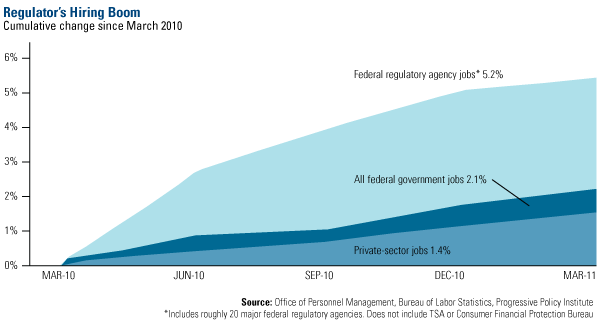
Cost per federal regulator

Social Security and Medicare: Scaling the Problem and Proposed Solutions.
The Philadelphia Federal Reserve, December 2, 2005. Kent Smetters, The Wharton School & NBER.

Two Main Problems with the Traditional Federal Budget
(1) Substantially underestimates unfunded liabilities by ignoring long-term liabilities
(2) Is biased against reforms that would reduce these unfunded liabilities

Re: (1) Underestimates Liabilities
*Budget does not track many unfunded obligations
They’re “off balance sheet”
*Examples
Social Security and Medicare
Medicaid
Federal Employee / Military pensions
* Instead, the budget focuses on a particular unfunded obligation: public debt
* Debt Held by Public Misses almost $60 Trillion in Liabilities
* Public debt is only one component of government’s true Fiscal Imbalance (FI)
* FI = debt held by public + PV of all future outlays – PV of all future revenue = $63 trillion
* On 19 March 2013, debt held by the public was approximately $11.888 trillion or about 75% of GDP. Intra-governmental holdings stood at $4.861 trillion, giving a combined total public debt of $16.749 trillion. As of July 2012, $5.3 trillion or approximately 48% of the debt held by the public was owned by foreign investors, the largest of which were the People’s Republic of China and Japan at just over $1.1 trillion each.

*But are these obligations “real”?
*Yes: the only difference between these obligations and regular debt is the policy options available for dealing with them.
*Options for reducing explicit debt:
Monetize it (except TIPS)
Increase taxes
Declare bankruptcy
*Options for reducing implicit debt:
Hard to monetize (since inflation protected)
Control outlays, increase taxes

Easy Fix / Hard Fix
* Social Security: The “Easy Fix”
Smaller problem
Nature of problem is also easier since it is cash payment (e.g., “just” price index)
* Medicare: The “Hard Fix”
7 times large (new Rx plan imbalance alone is larger than Social Security’s imbalance)
Nature of problem is also harder since in-kind payment and driven by tech change

Why Haven’t Fixed Income Markets Reacted with higher interest rates?

Options for Paying for $63 Trillion
* Confiscate all physical capital assets in the U.S. (actually does not go far enough!)
* Increase federal income taxes by 68% immediately and forever, assuming no reduction in labor supply or savings
* Increase the combined employer-employee payroll tax from 15.3% to over 32% and remove the payroll tax ceiling (but don’t credit benefits)
* Slash Social Security and Medicare by over half

Reference: Social Security and Medicare: Scaling the Problem and Proposed Solutions.
The Philadelphia Federal Reserve, December 2, 2005. Kent Smetters, The Wharton School & NBER.

The Government Accountability Office (GAO), the federal government’s auditor, argues that the United States is on a fiscally “unsustainable” path and that politicians and the electorate have been unwilling to change this path. Further, the subprime mortgage crisis has significantly increased the financial burden on the U.S. government, with over $10 trillion in commitments or guarantees and $2.6 trillion in investments or expenditures as of May 2009, only some of which are included in the public debt computation. However, these concerns are not universally shared.[93 link below]

Converting fractional reserve to full reserve banking

The International Monetary Fund published a working paper entitled The Chicago Plan Revisited suggesting that the debt could be eliminated by raising bank reserve requirements, converting from fractional reserve banking to full reserve banking.[50][51] Economists at the Paris School of Economics have commented on the plan, stating that it is already the status quo for coinage currency,[52] and a Norges Bank economist has examined the proposal in the context of considering the finance industry as part of the real economy.[53] A Centre for Economic Policy Research paper agrees with the conclusion that, “no real liability is created by new fiat money creation, and therefore public debt does not rise as a result.”[54] [Links below]

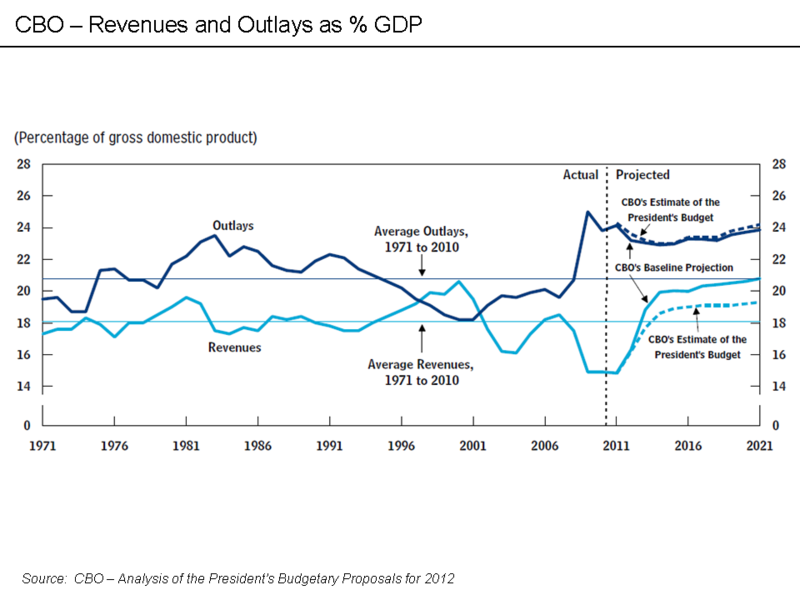
an inconvenient budget

Median Household Income

federal budget pie 2012Federal spending

US_Federal_Debt_by_Senate_Majority_Party_(1940_to_2009) U.S._Total_Deficits_vs._National_Debt_Increases_2001-2010 Regulator Hiring Boom-081911 red tape rising redtape Pre and Post Obamacare

Govt gowing 4X faster thna economy Obama Budget Govt spending slows growth GDP Gains from cutting budget Private sector job gains by cutting federal budget
Pre and Post Obamacare
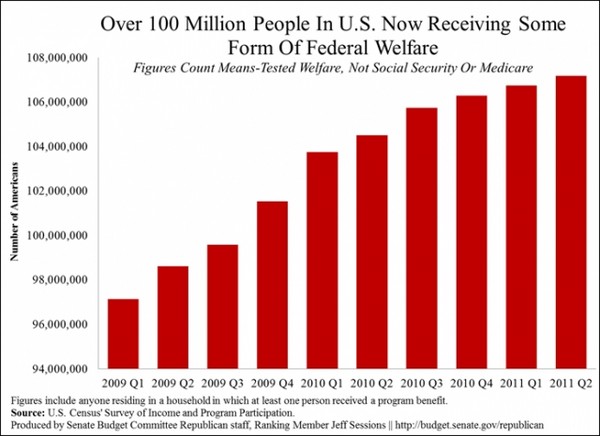
Receiving Welfare Persons not in labor force. Food-Stamps-Monthly March 2013 Your taxes at work you were warned about obama
feedTheAligator

http:/en.wikipedia.org/wiki/National_debt_of_the_United_States

http://www.pgpf.org/Special-Topics/Download-the-Citizens-Guide.aspx

[50] Ambrose Evans-Pritchard (October 21, 2012) “IMF’s epic plan to conjure away debt and dethrone bankers” The Telegraph http://www.telegraph.co.uk/finance/comment/9623863/IMFs-epic-plan-to-conjure-away-debt-and-dethrone-bankers.html
[51] Jaromir Benes and Michael Kumhof (August 2012) “The Chicago Plan Revisited” International Monetary Fund working paper WP/12/202 http://www.imf.org/external/pubs/ft/wp/2012/wp12202.pdf
[52] “Debt-Deflation versus the Liquidity Trap: the Dilemma of Nonconventional Monetary Policy” CNRS, CES, Paris School of Economics, ESCP-Europe, October 23, 2012 http://hal.cirad.fr/docs/00/74/79/04/PDF/12064.pdf
[53 “Credit and debt in Economic Theory: Which Way forward?” “Economics of Credit and Debt workshop, November 2012 http://works.bepress.com/cgi/viewcontent.cgi?article=1009&context=thorvaldgrung_moe
[54] “The economic crisis: How to stimulate economies without increasing public debt”, Centre for Economic Policy Research, August 2012 http://www.cepr.org/pubs/PolicyInsights/PolicyInsight62.pdf
[93] Lynch, David J. (Mar 21, 2013). “Economists See No Crisis With U.S. Debt as Economy Gains”. Bloomberg. Retrieved 25 March 2013. http://www.bloomberg.com/news/2013-03-22/economists-see-no-crisis-with-u-s-debt-as-economy-gains.html

Posted in Uncategorized | Leave a comment