Europe is belatedly discovering how unbelievably stupid it was to import millions of people from cultures that despise Western values and which often promote hatred toward the people who have let them in.
Hopefully enough Americans wake up to stop this invasion before it overwhelms us as it has most of Europe. Auzzies? Kiwis?
You might re-read the Bible and history of the Tower of Babel. How is WEF different?
There are no nations when there are no borders. There is no sovereignty for individuals when there are no republican nations to protect the rights of the minorities against the government and the majority.
If CO2 gas concentration (or partial pressure) in air doubles, then solubility of CO2 gas in ocean and water doubles. This is water everywhere, i.e., ocean, lakes, soil, plant and animal tissues, and raindrops.
When CO2 gas concentration in air decreases, then CO2 gas solubility in water decreases by the same proportion.
When temperature of the surface of the water increases, then the ratio of CO2 gas emissions from that liquid surface increases compared to CO2 absorption into the liquid surface. The ratio of this partition of a gas between the liquid phase matrix and the gas phase matrix is known as the Henry’s Law coefficient.
Henry’s Law coefficients are also known as Arrhenius Constants, which vary with temperature.
This law was discovered by the many experiments on many combinations of gases and liquids documented by Dr. William Henry in England in the early 1800’s. These are documented in editions of the Royal Society of London (England). One of the peer reviewers of Dr. Henry’s works was John Dalton, who founded our existing system of atomic and molecular weights and some of the Ideal Gas Laws.
TKH = c(l)/c(g)
Where T is surface temperature is in Kelvin
KH = Henry’s Law constant
c(l) = concentration of the unreacted gas in the liquid surface
c(g) = concentration of the unreacted gas in mixture of the gases above the liquid surface.
There are many different uses for Henry’s Law in industry (blood gases, anesthesia, carbonated beverage, ammonia production, etc) so the equation has been derived for different purposes, for example solubility, volatility, and fugacity. Great care must be taken with the units in converting from one form to another. The above dimensionless version of the equation is convenient for CO2 (and other atmospheric gas discussions) because the defacto gold standard for CO2 by NOAA Mauna Loa is micromoles of net CO2 per mole of dried air, a dimensionless ratio, reported as ppm. They do not measure CO2 by volume (ppmv) because the water and water vapor have been removed by freezing which changes the sample volume.
Henry’s Law is a constant at a fixed given temperature for a given combination of gas and liquid because diffusion of a gas in a liquid is a function (inverse of thee square root of the molecular weight of the gas), which is constant.
Gases in atmosphere are always colliding with the surface. The absorption rate relative to the emission rate of the gas from the surface is the KH coefficient, i.e., the Henry’s Law constant. The absorption rate of all gases is inversely proportional to the temperature of the liquid. More gas is absorbed by colder water. Each gas and liquid combination has a unique KH, which is referenced onlinefor a given temperature.
A short video by a University of California chemistry professor, sorry I do not know his name.
The graphic below describes the hydration reaction of CO2 gas and water. As you can see it is a reversible reaction. (Stumm, Werner. Aquatic Chemistry. 1996)
The reaction products of the hydration reaction are not included in the Henry’s Law calculation. Only the unreacted gas is included in the Henry’s Law calculation. The reaction products are bicarbonate ions and carbonic acid ions. The ions become part of Dissolved Inorganic Carbon (DIC) and removed from KH. When the hydration reaction reverses, which it easily does by warming of the surface, CO2 gas is generated in the liquid surface re-entering the KH equation. That reverse reaction product CO2 gas can be emitted from the surface. Surface warming increases the rate of CO2 emission (and all gas emission) from ocean surface. Ocean holds about 50 times more CO2 than atmosphere, with deep water holding more CO2 than surface.
In the following graphic is by Daniel Mazza, PhD, professor of chemistry.
In the following graphic from the attached paper by Roger Cohen, PhD and William Happer, PhD describes the rate of change of Molar concentration of the CO2 hydration reaction products versus rate of change CO2 concentration in air. Note the unreacted CO2 gas dissolved in ocean is the nearly flat green line near the horizontal axis. Most CO2 gas becomes bicarbonate ion (HCO3–). Brackets [ ] indicate stoichiometric amounts.
In the following graphic by Jamal Munshi, PhD, professor of business statistics, we can see that the trend (i.e., rate of change) of CO2 gas concentration in air measured by NOAA Mauna Loa is not correlated with the trend of estimated CO2 generated from estimated fossil fuels usage. Adding CO2 from fossil fuels to air does not increase concentration of CO2 in air, because the increase is offset by an equal increase in solubility of CO2.
The rate of emission from the surface is faster than the rate of absorption because air is much less dense than water and thus migration away from surface is faster in air. There is a lag time between absorption and emission. The lag time varies with temperature of the surface. The late Murry Salby, PhD, professor of atmospheric physics, calculated the average global lag time for CO2 at about 6 months. The graphic below from Werner Stumm, PhD illustrates the non parallel rates of emission and absorption.
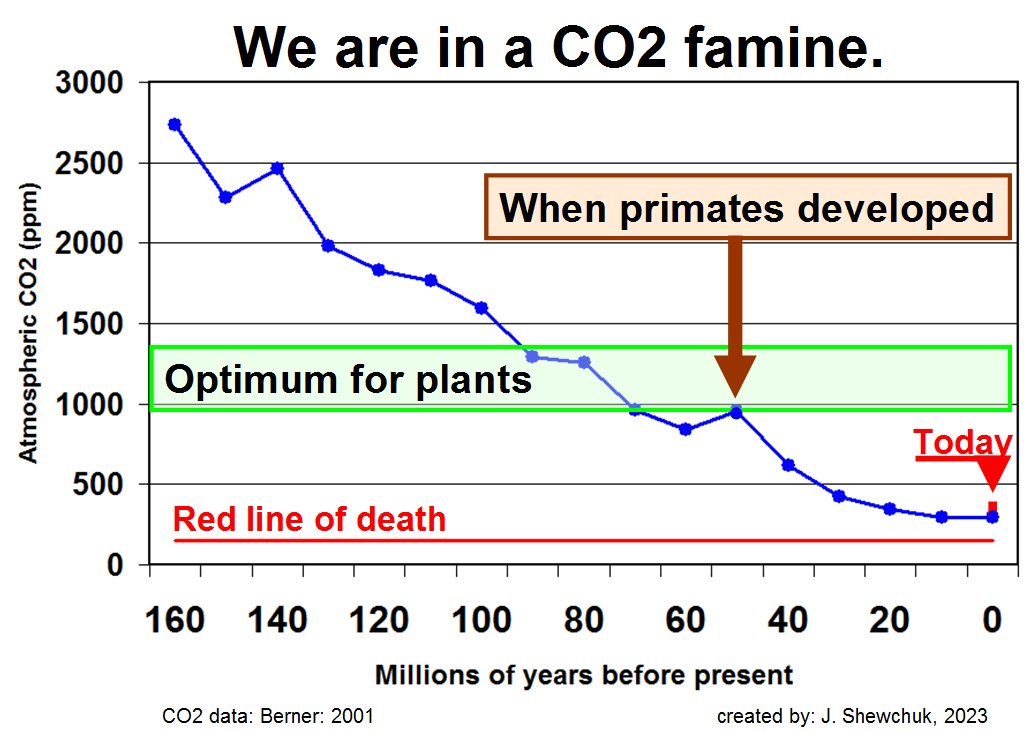
In conclusion, higher concentration of CO2 in air would be better for plants and all life on earth, but humans burning fossil fuels contribute almost nothing to the CO2 concentration and any increases or decreases are only temporary until the Henry’s Law constant partition ratio is rebalanced for the local surface area. CO2 in air increases and decreases locally, mostly based on warming and cooling of the local surface, ocean being about 70% of earth’s surface. There is no climate crisis and attempts to reduce CO2 are futile and extremely wasteful of resources.
Compilation of Henry’s law constants (version 5.0.0) for water as solvent By Rolf Sander, PhD. Air Chemistry Department, Max Planck Institute of Chemistry, P.O. Box 3060, 55020 Mainz, Germany. Published: 6 October 2023. https://henrys-law.org
Obama explains part of the Cloward-Piven revolutionary strategy. Cloward and Piven were radical professors at Columbia University, supposedly where Obama attended some college and graduated.
FRANCES FOX PIVEN: “At the heart of our argument in both books was the threat of disorder: the power of collective rule breaking. We argued that when people rose up and broke the rules which normally governed their behavior—like paying rent, or submitting to welfare conditions—they could impact social policy. When we first made this argument in the 1960s, it had an apparent truth to it: no matter where you looked, people were marching, rioting, and interrupting the system in which they were involved. It was a kind of strike writ large, and here I mean strike in the broadest sense. Even people who didn’t have steady jobs, who couldn’t do what we ordinarily think of as a labor strike, were able to sit in at the welfare office and organize mass claims for welfare benefits. They were equally capable of clogging the system.” …
“The strategy that we proposed in that essay, and that we’ve proposed in many other contexts, as in rent strikes, for example, is one of disruption. To understand its relevance today, you have to step back and look broadly at social life: at the complex system of cooperation and rule abiding behavior that underpins key social functions. Society is a scheme of cooperation—but that means that nearly everybody has to play their role, not only in factories, but in our schools, our healthcare, and our housing systems. Conversely, everyone has the power to withdraw their cooperation. Protest is effective when people recognize that they play a crucial role in larger social patterns and institutions. I think that remains very much relevant today.”
“One of the ways that people, poor people, have been silenced in contemporary American society is through systematic humiliation by American political leaders. That has of course been true since long before the 1970s, but can’t last forever. At a certain point, people come to realize that their role can become a lever through which they can shape public policy.”…
“I think that protest is more likely to arise in an electoral situation, in which elected leaders are worried about the allegiance of large numbers of people at the bottom. For a long time, there has been a tendency by activists to think that electoral work precludes protest. But really, in American history, protest itself has been much more likely when we’ve had some sort of foothold in the electoral system by the same groups that are the potential constituents of the movement.”
“I think it’s therefore more accurate and illuminating to think about the ways that protest and electoral politics build off of one another. Protest is more likely to be successful when at least some elected officials express sympathy for the plight of the discontented and the disenfranchised. If they’re ignored, or spat upon, or insulted, that is likely to subdue them and crush their aspirations. I think you can see that in the Civil Rights movement, for example, and you can see it in the labor movement. The Civil Rights Movement had elected allies in Washington DC, senators and congressmen who were responsible to voter constituencies that were Black or Hispanic. So there is a complimentary relationship between electoral power and protest power.”
Discussed below is the presentation by Professor Ole Humlum addressing the question: Are we currently in a climate crisis? This is a review by Ken Haapala, President of Scientific Environmental Policy Project of Professor Humlum’s live Zoom lecture and Q&A offered June 19, 2024 by ICSF (Irish Climate Science Forum). Professor Humlum’s Powerpoint slides and the video of his lecture are attached down below.
Professor Ole Humlum qualified at the University of Copenhagen and he served as Scientific Director at the Arctic Station in Greenland. During his career, he was Honorary Senior Lecturer at the University of St. Andrews, Scotland, Visiting Associate Professor, Faroese Natural Museum, Tórshavn, Faroe Islands, and Full Professor, Physical Geography at the University Centre in Svalbard, Norway, and Full Professor, Physical Geography, at the University of Oslo. Post-retirement, he is director of the Arctic HERO (Arctic Historical Evaluation and Research Organisation). Each month he publishes his http://www.climate4you.com/ updates, summarised annually as a GWPF “State of the Climate” publication. In this lecture, Prof Humlum uses the latest meteorological and climatological data to objectively assess the current state of earth’s climate, based solely on real-world objective observations, with no media hype, no spin. His conclusions provide no evidence of a climate ‘crisis’.
A Climate Crisis? On June 19, Meteorologist Ole Humlum made a thought-provoking address to the Irish Climate Science Forum (ICSF) and CLINTEL addressing the principal question: Are we currently in a climate crisis? The Climate & Energy Realists of Australia provided a video of the event as well as a follow along transcript. As with John Clauser, the slides were unusually good, and thanks to Jim O’Brien of ICSF they are posted on the SEPP website. In discussing the presentation TWTW will reference the slides. Professor Ole Humlum is well qualified to discuss “The State of Earth’s Climate 2024 – No Evidence of a Planetary ‘Crisis’!” His qualifications are stated in the introduction of the video. They are:
“Prof Ole Humlum used meteorological and climatological data to objectively assess the state of earth’s climate. Global air temperatures in 2023/24 are reported to be the “highest on record” – how significant is that? Global temperature records do confirm that observed average global air temperature rise is about +0.15° C per decade – is that serious? Since 2004, the global oceans above 1900 m depth on average have warmed about 0.037° C – are the oceans “boiling”? Are recent variations between El Niño and La Niña episodes in any way unusual? To what extent is atmospheric CO2 concentration actually related to human contributions? Is rising sea level a threat? Are changes in sea ice extents in the Arctic and Antarctic in any way alarming? Are there significant trends in tropical storm and hurricane activity? Are there alarming trends in global precipitation? Ole provides all the hard facts – and will conclude that these observations reveal that there is no evidence of an “existential climate catastrophe.”
Professor Humlum bases his findings on observations from Nature, not speculative models. In physical science Nature Rules, it is the ultimate and final judge. Contrary to the assertions of the UN, IPCC, and many government collaborators, if theories, concepts, ideas are contrary to what nature reveals to us, the ideas and theories are simply wrong. And millions of dollars in supporting publicity or propaganda does not make them right.
Humlum analyzes the current state of the climate using ten subtopics:
1. Atmospheric temperature 2. Ocean temperature 3. Sea level 4. Sea ice 5. Snow 6. Wind and storms 7. Global precipitation 8. Global cloud cover 9. Climate change: importance of oceans 10. Final reflections and conclusions
For atmospheric temperature he uses the surface air temperature numbers from the Hadley Center Climate Research Unit (HadCRUT). [Unlike others such as NASA-GISS and NOAA, this dataset does not include “imputed” data.] Humlum shows his calculations of the Surface air temperature anomaly for 2023 vs last ten 10 years. Importantly, he also shows the entire dataset for the USH MSU global temperature anomaly, which is calculated from satellite data [the only true global dataset of temperature trends].
Humlum also shows the NASA-GISS global temperature anomaly and shows a slide clearly demonstrating how NASA-GISS changed the temperature values a number of times between May 2008 to May 2024. For the most part, NASA-GISS cooled the data from 1885 to 1970 (with a few warming spikes during this period) and warmed the temperatures after 1975. This reflects poorly on the standards of integrity in science demonstrated by NASA-GISS and agencies in Washington that use this dataset. Humlum shows how from May 2008 to May 2024 NASA-GISS changed reported January temperatures over the period from 1910 to 2000 increasing it from 0.45°C in 2008 to 0.67°C May 2024.
Humlum discusses the urban heat island effect, focusing on Oslo Norway, and concludes: Much is still to be learnt about urban heat islands!
Using the UAH-MSU data he shows the differences in changes in the Arctic and Antarctic. Then he shows the recorded temperatures for six locations in the Arctic and concludes: As to temperature, the Arctic is more complicated than is often communicated.
Humlum then discusses ocean temperature recorded by Argo drifting floats that measure the temperature, salinity, and velocity (speed of ocean currents) of the upper 2000 meters (6500 feet) of the oceans. He concludes: Much is still to be learnt about the oceans!
Humlum addresses the other subtopics mentioned above. With sea levels, Humlum shows that short term data can produce all sorts of trends. Long-term data must be the focus of any honest researcher. For example, for Korsor, Denmark, the trend from January 1897 to December 2017 is plus 0.83 mm/year, or 0.033 inches per year or slightly more than 3 inches per century. For Oslo, Norway, the entire data record shows sea levels are falling at a rate 3.39 mm/year or 13 inches per century.
With topics such as sea ice, Humlum concludes: Much is still to be learned about sea ice! For snow, Humlum concludes: Snow cover is rather stable! Humlum shows that claims of more extreme weather events are false. He then goes into cloud cover and reflects.
“If all clouds suddenly were removed, then planet Earth would gain about 17 W/m2 in net radiation and warm.”
Humlum then shows two graphs that TWTW has never seen paired on one slide: 1) Global cloud cover (%); Satellite Application Facility on Climate Monitoring (CM SAF) from January 1982 to June 2019, and 2) UAH MSU global temperature anomaly for the same period. This indicates that the warming of the atmosphere in UAH MSU data may come largely from a reduction in cloud cover. Since the reduction in cloud cover started about 1995 and has not continued to fall since about 2004, it is not from recent requirements to convert fuel used by ships to low sulfur fuels. Further, cloud cover is not the only explanation for increasing atmospheric temperatures, which are not uniform, but only one possible contributor. As Humlum states:
“Much is still to be learnt about global cloud cover!”
This statement supports what John Clauser asserts, as discussed in the previous four TWTWs. No one has successfully modeled clouds. William van Wijngaarden and William Happer are working on it. Without successful modeling of clouds, the science is not settled, regardless of what some scientists claim. Further, global climate models are hopelessly simplistic, no matter how complex they may appear. Any projections/forecasts from them are pure speculation, not science built on nature.
Humlum concludes his slides with Principal question: Are we currently in a climate crisis?
1. Atmospheric temperatures: Ongoing corrections in data. Possible global increase of up to 1.5°C by 2100, and likely less. Antarctic temperatures remain stable. 2. Ocean temperatures: Much still to be learnt. Oceans are definitely not “boiling.” 3. Sea Level: 15-20 cm further global rise by 2100? [6 to 8 inches] 4. Sea Ice: Much still to be learnt. Arctic sea ice is not disappearing. 5. Snow: Snow cover is quasi-stable, and snow is not disappearing. 6. Wind and Storms: Recurrent (periodic?) variations. No trend in hurricanes. 7. Precipitation: Recurrent (periodic?) variations superimposed on upward trend since 1900. 8. Cloud Cover: Cloud cover declines since about 1980. This development is probably contributing to observed atmospheric and ocean warming.
Why did I not speak anything about CO2?
This is because CO2, although being very important for life, in my opinion, is not overly important to understand meteorology and climate.
Humlum then presents a simple diagram of what matters for air temperature – the oceans.:
“The global temperature signal originates at the ocean surface!
What controls the ocean surface temperature, controls the global climate.
Two overall conclusions and one suggestion for what should be the main climate research focus:
1. Observed data do not support the notion of a climate crisis, but reveals many and partly recurrent natural variations. 2. Ocean surface temperature controls the atmospheric temperature.
PROBABLY THE MOST IMPORTANT CLIMATE RESEARCH QUESTION:
Derive from the ideal gas law the dimensionless version of Henry’s Law constant in ppm for CO2 gas and seawater at 25C. I only asked the question. I did not touch anything in the AI answer. Even the formatting is from the AI engine.
From the ideal gas law, we know that:
pV = nRT
where p is the partial pressure of CO2, V is the volume of seawater, n is the number of moles of CO2, R is the gas constant, and T is the temperature in Kelvin.
We can rearrange the equation to solve for n:
n = pV / RT
The Henry’s Law constant (H) is defined as the solubility of CO2 in seawater at a given temperature and pressure. It is given by:
H = n / p
Substituting the expression for n from above, we get:
H = (pV / RT) / p
Simplifying, we get:
H = V / RT
The dimensionless Henry’s Law constant (k) is defined as:
k = H / (c_gas * M_w)
where c_gas is the concentration of CO2 in the gas phase (in mol/L) and M_w is the molar mass of seawater (approximately 55.4 g/mol).
Substituting the expression for H, we get:
k = (V / RT) / (c_gas * M_w)
To convert the concentration of CO2 in the gas phase to ppm, we can use the following conversion factor:
1 atm = 101325 Pa = 1.01325 × 10^5 Pa
The partial pressure of CO2 in the atmosphere is approximately 0.0004 atm or 4.08 × 10^4 Pa. Converting this to ppm, we get:
k = (1.0 L / (8.3145 J/mol·K * 298.15 K)) / (0.0408 mol/L * 55.4 g/mol)
k ≈ 0.0434
Therefore, the dimensionless Henry’s Law constant for CO2 in seawater at 25°C is approximately 0.0434.
The result 0.0434 is dimensionless, which means it does not have any units. This is because the dimensionless version of Henry’s Law constant was derived using the ideal gas law, and the constant is expressed as a ratio of partial pressure to aqueous-phase concentration.
How does the value of 0.0434 change when considering different temperatures or pressures?
The value 0.0434 is a dimensionless ratio derived from the ideal gas law, representing the solubility of CO2 in seawater at 25°C. As we explore the effects of temperature and pressure on this value, we’ll examine how it changes under different conditions.
Temperature:
The ideal gas law states that the volume of a gas is inversely proportional to the pressure and directly proportional to the temperature. This means that as temperature increases, the volume of the gas increases, and as temperature decreases, the volume decreases. Since the value 0.0434 represents the ratio of gas-phase concentration to aqueous-phase concentration, it is not directly affected by temperature changes.
Pressure:
The ideal gas law also states that the pressure of a gas is inversely proportional to the volume. This means that as pressure increases, the volume decreases, and as pressure decreases, the volume increases. Since the value 0.0434 represents the ratio of gas-phase concentration to aqueous-phase concentration, it is not directly affected by pressure changes.
Conclusion:
In summary, the value 0.0434 remains constant and unaffected by changes in temperature or pressure. This is because the ideal gas law, which is used to derive this value, does not explicitly account for temperature or pressure changes. The value 0.0434 represents a fundamental property of the solubility of CO2 in seawater at a specific temperature and pressure, and it does not change under different conditions.
A common misconception propagated by the media and alternative energy companies today is that man contributes to the increasing concentration of carbon dioxide (CO2) in the atmosphere. This is simply not true. Atmospheric CO2 concentration is controlled by fundamental laws of physics and chemistry. Man could increase his current release of carbon dioxide from the burning of natural gas and fossil fuels by a factor of ten and the net total amount of CO2 in the atmosphere would be roughly the same as it is today. Conversely, if man eliminated his CO2 releases, the atmospheric concentration would remain the same as it is today. CO2 is naturally maintained in dynamic equilibrium with the environment.
The total amount of CO2 in the atmosphere is independent of biogenic and anthropogenic CO2 generation and primarily dependent on temperature gradients on the surface of the oceans. The Earth’s atmosphere contains a trace amount of CO2 at 0.04% in a gaseous mixture of predominately nitrogen, oxygen, and argon. All life forms on Earth are carbon based. Plants acquire their carbon from gaseous CO2 in the atmosphere and convert it to plant cells through photosynthesis. Mammals acquire their carbon by eating plants or other animals.
Biogenic CO2 is produced naturally by animals, plants, bacteria and the decomposition of organic matter. Some CO2 is deeply sequestered for millennia in earth or in water as stone (aragonite, limestone, calcium carbonate, CaCO3) and some is continuously recycling between atmosphere, ocean surface, plants, soil, and sea life, like plankton and algae. When deeply as stone, CO2 is re-emitted released into the atmosphere and ocean by very high heat burning the rock, for example volcanic activity, most of which occurs in deep ocean waters.
Anthropogenic CO2 is produced by burning hydrocarbon fuels, land use changes, and the production of cement. The ocean contains about 50 times more CO2 gas than the atmosphere. Ocean surface alone contains about 100 times more CO2 gas than emitted by human use of fossil fuels. Concentration of CO2 gas and dissolved ionic forms of carbon increase significantly with ocean depth, density and the colder temperature of deep ocean. Dense, cold, deep water holds far more CO2 gas and other carbon forms than surface water. Surface ocean holds far more CO2 gas than atmosphere. CO2 gas molecules in the atmosphere are continuously colliding with earth’s surface and being absorbed. Since the ocean is about 70% of earth surface, most CO2 is absorbed into ocean surface. Simultaneously, earth’s surface, primarily ocean, is emitting CO2 into the atmosphere. The ratio of absorption versus emission is known as Henry’s Law constant. The Henry’s Law constant is a ratio that varies primarily with the temperature of the ocean surface, but also the temperature of water everywhere in plants, soil, animals, raindrops, etc. There is a Henry’s Law constant for all gas and liquid combinations and CO2 gas and seawater is only one example combination. Ocean surface temperature is continuously changing by day and night, clouds, seasons, currents, winds, latitude, etc. Colder water increases the ratio of CO2 gas absorption; warmer water increases the ratio of CO2 gas emission; temperature of the surface interface between the gas and liquid changes the Henry’s Law constant.
Seasons also cause large changes in the CO2 concentration in the air due to seasonal changes in absorption and emission of CO2 by plants and sea life such as plankton and algae. The amount of these seasonal natural changes dwarf human CO2 gas emissions. For example, in the Northern Hemisphere’s springtime earth’s surface is rapidly warmed by the sun and thus CO2 gas concentration in air steeply increases to its seasonal maximum as CO2 gas emission from warmer ocean and soil exceeds CO2 gas absorption. Then, coming into the Northern Hemisphere’s summer and autumn, plant life on land and ocean is growing vigorously by absorbing CO2 gas from air to use in photosynthesis and growth. So, like clockwork, every year in summer and autumn there is a rapid decline in atmospheric CO2 gas concentration as plant life reaches maximum growth. But, simultaneously in the same summer and autumn season, ocean and land surface have also warmed, and thus natural CO2 gas emissions are increasing relative to natural CO2 absorptions, partially offsetting the rapid increase in seasonal absorption of CO2 gas by land and aquatic plants. Every year there is a repeating shark’s teeth pattern of rapid increase followed by rapid decrease in net atmospheric CO2 gas concentration as CO2 gas emitted by all sources cycles back and forth continuously with CO2 absorbed by all CO2 sinks.
Notice this cycling of CO2 gas described above is natural and is not controlled by humans! The amount of cycling CO2 is much larger than the amount of CO2 emitted by humans and the human CO2 is immediately mixed with the natural CO2. Estimates vary, but deep ocean contains about 38 to 40 times more carbon than ocean surface and about 50 times more than atmosphere. Notice in these graphics that the cycling of both absorption and emission in and out of ocean (~92 gigatons and ~90 gigatons respectively) are over 10 times more than the ~5.5 gigatons of CO2 emitted from fossil fuels. The CO2 from fossil fuels immediately becomes part of the much larger natural carbon cycle.
Estimates vary of the carbon cycle, but CO2 from human use of fossil fuels is negligible compared to the natural cycle.
Discussion of Applicability and Operation of Henry’s Law and Raoult’s Law in the Atmospheric Biospheric Exchange:
In his classic and very detailed textbook on Aquatic Chemistry, Dr. Werner Stumm covers many different aspects of Henry’s Law, including CO2 in water and seawater.
“The physicochemical significance of Henry’s Law is this: there is a linear relationship between the activity of a volatile species in the liquid phase and its activity in the gas phase.”…”Henry’s Law is an observational result for a two-phase equilibrium A(l) = A(g) under dilute solution conditions and for low pressures… “The distribution of gas molecules between the gas phase and the water phase depends on the Henry’s Law equilibrium distribution. In the case of CO2, SO2 and NH3, the dissolution equilibrium is pH dependent because the species in the water phase – CO2(aq), H2CO3, SO2, H2O(aq), NH3(aq) – undergo acid base reactions.”
Henry’s Law is the fundamental technology underlying the multibillion dollar per year scientific instrument industry of gas chromatography, which is the crucial technology for separation, identification, quality and process control of virtually all chemical compounds in almost all industries, including EPA, NOAA, etc. and environmental laboratories.
Here is a recent reference for Henry’s Law in water. Compilation of Henry’s law constants (version 5.0.0) for water as solvent By Rolf Sander, PhD. Air Chemistry Department, Max Planck Institute of Chemistry, P.O. Box 3060, 55020 Mainz, Germany. Published: 6 October 2023. https://henrys-law.org
“Abstract. Many atmospheric chemicals occur in the gas phase as well as in liquid cloud droplets and aerosol particles. Therefore, it is necessary to understand their distribution between the phases. According to Henry’s law, the equilibrium ratio between the abundances in the gas phase and in the aqueous phase is constant for a dilute solution. Henry’s law constants of trace gases of potential importance in environmental chemistry have been collected and converted into a uniform format. The compilation contains 46,434 values of Henry’s law constants for 10,173 species, collected from 995 references.” It is available on the internet at https://henrys-law.org
Ammonia (NH3) and references on page 10,915. Carbon dioxide (CO2) and references begin on page 11,190
Henry’s Law does not apply to the reaction products when there is an irreversible or permanent chemical reaction. Dr. Sander explains in his paper in section 2.5, copied below:
“2.5 Effective Henry’s law solubility constants. Hs,eff The Henry’s law constants mentioned so far describe the equilibrium between a chemical species in the gas phase and exactly the same species in the aqueous phase. This type is called the “intrinsic” Henry’s law constant. Once transferred, some species react in the aqueous phase. If these chemical reactions are fast and result in irreversible destruction, Henry’s law cannot be applied. If, however, the species enters a fast equilibrium in the aqueous phase, it is possible to define an “effective” Henry’s law constant Hs,eff, using a “total concentration” ctot. Depending on the chemical class, there are different ways to define such a total concentration.”
The graphic further down below is from Werner Stumm. It illustrates the cyclical, reversible hydration reaction of CO2 and water.
Carbonic acid (H2CO3) is a very minor (only ~0.3% of the CO2) transitory ionic form, almost impossible to measure because it is so transitory in the forward and reverse reactions. H2CO3 exists in water only as ionic species. CO2 hydrates in seawater to form about 90% bicarbonate ion (HCO3–). HCO3– and H2CO3 are reversible by local temperature and chemical conditions to reform aqueous CO2 gas. This subject is covered in more and more detail in the aquatic chemistry textbook by Werner Stumm referenced above.
You can read about CO2 and Henry’s Law with many methods on the following webpage by the U.S. National Institute of Standards and Technology (NIST.) https://webbook.nist.gov/cgi/cbook.cgi?ID=C124389&Units=SI&Mask=10#Solubility Discussion of Henry’s Law and Raoult’s Law with respect to CO2 interactions in the Earth’s CO2 cycle:
Raoult’s Law and Henry’s Law are two fundamental concepts in chemistry and physical chemistry respectively that describe the behavior of liquid solutions. Both laws help us understand the interactions between the solvent and the solute in a solution, but they differ in their applications and underlying principles. Raoult’s law can be derived from Henry’s law if an ideal solution and an ideal gas are assumed.
Raoult’s Law Raoult’s Law states that the vapor pressure of a solute molecule above a solution is equal to the arithmetic product of the vapor pressure of the pure solute at the same temperature times the mole fraction of the solute present in the solution. This can be represented by a straight line on a graph of vapor pressure vs. mole fraction. Raoult’s law applies to ideal solutions in higher concentrations, where the interactions between the solvent and solute molecules are negligible. Raoult’s Law is useful for predicting the vapor pressure of a solution and is often used in the calculation of the boiling point elevation and freezing point depression of a solution. Raoult’s Law typically describes ideal behavior of pure and high concentration solvents in dynamic equilibrium with the partial vapor pressure of that solvent in the gas phase above the solution.
Henry’s Law Henry’s Law, on the other hand, applies to solubility or concentration of non-ideal, very dilute gases within liquid matrices, both ideal and non-ideal. A Henry’s Law constant is a proportional ratio observed in thousands of experiments with thousands of combinations of gases and liquids. A Henry’s Law constant for a specific surface temperature the partition ratio of (a) divided by (b), where (a) is the partial pressure or concentration of a specified gas in a liquid matrix, and (b) is the partial pressure or concentration of that same gas in the gas phase matrix above the liquid surface. Henry’s Law is useful for predicting the ratio of gas emission vs gas absorption from and to a liquid surface at a specified temperature. Henry’s Law states that the solubility of a dilute gas in a liquid is proportional to the partial pressure of the dilute gas in contact with the liquid. This can be represented by a straight line on a graph of solubility vs. partial pressure. Practically, the partial pressure of a dilute gas in a liquid is extremely difficult or impossible to precisely measure. Alternatively, Henry’s Law can also be stated as the ratio of (a) the concentration of a dilute gas dissolved in a liquid divided by (b) the concentration of the same gas above and in contact with the liquid. Henry’s law applies to the solubility of a specified dilute and unreacted gas in a specified liquid at a specified liquid surface temperature. Henry’s Law is used to calculate gas concentrations in blood and other biological fluids and tissues by controlling the partial pressure of the inhaled gas, for example an anesthetic gas. Henry’s Law describes non-ideal behavior in that part of the gas may react with the liquid matrix and in that case the reacted part is excluded from the Henry’s Law ratio, and also the ratio applies to low concentrations (approaching infinite dilution).
Summarizing and simply said: total CO2 is a very low concentration, i.e., trace gas in the atmosphere, but it is essential to all life. CO2 gas in ocean is also very low concentration. The human contribution to this trace amount is trivially negligible and being continuously mixed with the much large total amounts in air and ocean. Addition to the atmosphere of the relatively (compared to the total) small amounts of CO2 gas from fossil fuels is rapidly and continuously absorbed by the natural environment until the natural Henry’s Law ratio is restored. Attempts to sequester or remove CO2 from the atmosphere result in rapid replacement of that CO2 by the environment until the natural Henry’s Law ratio is restored. CO2 gas in air is in dynamic equilibrium in the environment. Like almost all perturbations in nature, the rate and scale of restoration of a perturbed equilibrium is proportional to the rate of change and relative mass of the perturbation (Le Chatelier’s principle and the Law of Mass Action.)
Key Differences The main differences between Raoult’s Law and Henry’s Law are:
Application: Raoult’s Law applies to the vapor pressure of an ideal gas above an ideal liquid solution, and high concentrations. Henry’s Law applies to solubility of a low concentration gas in a liquid solution, ideal or not, so long as the gas is dilute, and any products of reaction of the gas with the liquid (or any component in the liquid) are not included in the ratio. Both Raoult’s Law and Henry’s Law applies only to unreacted solutes.
Raoult’s Law applies to concentrated, pure, or dilute vapors (i.e., evaporated liquids or dissolved and/or evaporated solids). Henry’s Law applies to a specified dilute gas within a gas phase matrix transitioning to and from that same specified dilute gas within a liquid phase matrix. The rates of these two Henry’s phase-state changes are not parallel because of the large pressure and density difference between a liquid phase matrix and a gas phase matrix.
In Raoult’s Law the ratio is (a) divided by (b) where (a) is the amount of the solute in the solvent liquid, and (b) is the amount of solvent.
In Henry’s Law, the ratio is (a) divided by (b), where (a) is the amount of solute gas (e.g., CO2) in the liquid mixture (e.g., seawater), and (b) is the amount of the same solute gas in the mixture of gases (e.g., air) above the liquid.
Principles: Raoult’s Law describes the discovery by experimental observations that the vapor pressure of a solute molecule above a liquid solution surface is equal to the vapor pressure of that pure solute at the same temperature times the molar fraction of that solute in the liquid solution; doubling the concentration of solute A in the solution results in doubling the vapor pressure of A above the solution surface. Measuring the vapor pressure of the solute above the surface predicts the amount of solute in the liquid. Or, measuring the vapor pressure of a solute molecule above a solution predicts the concentration of the solute molecule in the liquid.
Henry’s Law describes the discovery by experimental observations that the solubility of any gas in any liquid is directly proportional to the partial pressure of that gas which is in contact with the liquid surface; doubling the concentration of the gas in the gas phase above and in contact with the liquid will double the solubility of that gas in the liquid. An increase in partial pressure of a specific gas above the liquid surface will result in an equal increase in the partial pressure (i.e., solubility) of the same gas within the liquid surface. And vice versa, when partial pressure of the gas decreases above the liquid surface, such as by CO2 sequestration or surface winds, then the gas will be emitted from the liquid surface until the Henry’s ratio is restored for the specified gas/liquid combination at the specified surface temperature. Time to absorption gases into liquids is longer than time to emit gases from liquid.
Henry’s Law expressed analogously to Raoult’s Law: the quantity of a gas dissolved in a liquid is proportional to the quantity of the gas in the gas phase in contact with the liquid.
Derivation: Henry’s law constant is a proportionality coefficient describing the distribution of a gas between the liquid phase and the gas phase above and in contact with the liquid surface. Henry’s coefficient can be defined as solubility or as volatility or in dimensionless form. However, great care must be taken with units when converting one form to the other to avoid confusion and mistakes. The temperature dependence of Henry’s Law constants has been derived. (1)
In climatology with atmospheric gases such as CO2 it is convenient to use the dimensionless form of Henry’s law constant because the defacto gold standard for atmospheric gases, such as CO2 reported by the Global Monitoring Laboratory at NOAA-Scripps Mauna Loa, (GML) has routinely for many decades measured micromoles of CO2 per mole of freeze-dried air, which is identical to ppm and reported as ppm. Conveniently, in the dimensionless version the molar units cancel out in the division arithmetic. (Note: ppmv results in significant errors since water and water vapor have been frozen out of the air samples before measurement which requires changing the units (GML’s units are micromoles CO2 per mole of dried air, which is ppm, not moles per air volume, which is ppmv) due to high variability of volume with changes in humidity and water content in air. For example, according to NOAA GML calculations for the year 2020, the difference in the measured amount of CO2 in their freeze-dried air samples (413 ppm) vs the measured amount of CO2 in their wet air samples (400.6 ppm) was 4.8 times larger than the average annual increase in CO2 concentration, which was average 2.58 ppm increase for 2020.
Scope: Raoult’s Law is limited to ideal solutions and the vapor pressure above the solution, while Henry’s Law applies to a wider range of physical chemical systems, including non-ideal solutions and gases, and mixed phases such as biological fluids. A specified gas solute has a unique Henry’s Law constant for a specified liquid solvent at a specified temperature. Henry’s Law constants are easily looked up in reference books and online, having been determined experimentally thousands of times as referenced in the works of Dr. Rolf Sander. Most importantly, and this is commonly misunderstood, Henry’s Law only applies to the unreacted gas solute; that is, Henry’s Law does not apply to any reaction products resulting from a solute gas reacting (i.e., a change of molecular structure) with the liquid solvent, nor does Henry’s Law apply to the products of the gas solute resulting from reactions with any other solutes in the liquid matrix. To be clear, Henry’s Law does not apply to the carbonate, carbonic acid and bi-carbonate reactions and their subsequent reaction products such as calcium carbonate which occur in seawater after CO2 gas has hydrated and become an ionic reaction product. However, these ionic reactions subsequent to CO2 hydration are rapidly (seconds) reversible, producing again unreacted aqueous CO2 gas in seawater, which may potentially emit CO2 gas from seawater surface, and again must be included in the Henry’s Law ratio. The hydration kinetics constant of unreacted aqueous CO2 gas is ~ 15 kcal/mol at 25°C only ~1 kcal/mol less than ~ 16 kcal/mol at 20-25°C to dehydrate H2CO3 to unreacted aqueous CO2 gas (Stumm, W. 1996. Aquatic Chemistry. https://archive.org/details/aquaticchemistry0000stum/page/192/mode/2up). This sensitive reaction may be activated forward or reversed variously by:
By sunlight changes at ocean surface, due to various causes,
by warming the seawater, e.g., via warm upwelling convection of other water currents due to various causes,
surface seawater oversaturated with aqueous CO2gas, e.g., via an upwelling current oversaturated with CO2 gas from deep ocean, or
changing seawater alkalinity, pH, e.g., by dilution with rainfall runoff from rivers to ocean (which is lower pH, lower alkalinity than seawater)
changing seawater salinity, e.g., by rainfall runoff from rivers to ocean
Increasing surface winds and/or sea surface agitation/waves. These actions increases sea surface area thus increasing depletion of sea surface of aqueous CO2 gas from ocean surface into air causing the bicarbonate and carbonic acid reactions to reverse and produce more aqueous CO2 gas in the seawater surface. The following graphic from the Werner Stumm (reference below) may be useful:
The unreacted CO2gas dissolved in the ocean water comprises only about 1% of the initial CO2 reactant amount absorbed into ocean surface, dependent dominantly on surface temperature, while the carbonate, carbonic acid, bi-carbonate ionic reaction products comprise about 99%.
The dimensionless Henry’s Law coefficient is the ratio of the concentration of the gas in the liquid phase divided by concentration of the gas in the gas phase [(cl)/(cg)], that is, moles of unreacted, non-ionic, non-hydrated CO2gas per kilogram of ocean water divided by the moles of unreacted CO2 gas per kilogram of air above the ocean water surface.
The Henry’s Law ratio is a constant for any given combination of solute gas and solvent liquid at a given surface temperature because the diffusion rate of any gas is the inverse of the square root of the molecular weight of the gas; the is Graham’s Law. The molecular weight of a gas is a constant.
Conclusion: Raoult’s Law and Henry’s Law are two important concepts in chemistry and physical chemistry describing the behavior of solutions and gases. While both laws are useful for calculating the properties of volatile solutes and liquid solutions, they differ in their applications and underlying principles.
Raoult’s Law is used to calculate the vapor pressure of solutes above ideal liquid solutions at a given temperature or to predict the amount of a solute mixed in a solvent by measuring the vapor pressure of the solvent above the liquid at a given temperature. Henry’s Law is used to calculate the solubility rate of a gas in a liquid, or to calculate the ratio of the amount of a gas in a liquid versus the amount of the same gas in above the liquid at a given surface temperature.
Raoult’s Law is silent with regard to reaction of the gas, liquid or solid solute with the liquid solvent. Henry’s Law does not apply to the reaction products of gases and liquids, nor does it apply to concentrated gases, nor to non-gas phase solutes. Henry’s Law defines the ratio of a continuous, simultaneous bidirectional gas exchange across a gas/liquid surface interface; the Henry’s Law partition ratio is dynamic, being mediated primarily by temperature of the gas/liquid surface interface.
Compilation of Henry’s law constants (version 5.0.0) for water as solvent By Rolf Sander, PhD. Air Chemistry Department, Max Planck Institute of Chemistry, P.O. Box 3060, 55020 Mainz, Germany. Published: 6 October 2023. https://henrys-law.org
Congress passed criminal Contempt of Congress charges against U.S. Attorney General (AG) Merrick Garland. (The only previous occurrence in history was AG Eric Holder under President Obama.) Then, as required by law, Congress referred that criminal charge to the U.S. Department of Justice (DOJ).
Now DOJ, which reports to AG Garland, has written to Congress that it will not prosecute AG Garland.
Congress, through U.S. Marshals and its Sergeants of Arms now must arrest and jail Garland. Congress will need to impeach Garland, appoint a Special Prosecutor and try Garland in the U.S. Senate. Federal courts in Washington, D.C. are hopelessly (>80%) biased, i.e., no hope of Speaker Johnson’s referral to D.C. Federal Court.
“This is the way. This is the only way. Shout it from the mountaintops this week. Nothing changes in this country until there’s a changing of the crooked guard at Justice. DOJ is the narrow strait thru which all DC corruption passes.” ~ Mike Benz
You must be logged in to post a comment.