Fascism is the method of oligarchs not patriots

Oligarchs on the left wing want you to believe that fascism is a tyranny of the right-wing. But that is not true. It is not true logically today nor was it true logically when fascism was created and practiced by Mussolini in Italy and Hitler in Germany. Allow me to explain.

Socialism is control of the economy and the people by the government. Communism is ownership of the economy and the people by the government, the elimination of individuality. Fascism is control of the government by an authoritarian oligarchy or dictator. The government controlled by fascists may be socialist or communist, Islamic or Bathist; the oligarchy does not care. However, it is a logical contradiction to describe a democratic government as fascist or to describe as fascist a political leader who is fighting for individual rights.

Yet exactly that contradiction is being pushed by leftist billionaire oligarchs like Tom Steyer. See article at the link below.

Fascism was created as a response to the militant communism that was spreading rapidly after the Russian Revolutions. Fascism is national socialism also known as Nazism. Fascism was specifically nationalist as a direct response to the claim and practice of socialism and communism to be an international movement that replaced the feudal tyrannies of centuries of royal families who were tied together by blood. The corporations and industries in fascist countries were owned and controlled by wealthy and powerful families who were once members of their royal courts, and owed them fealty, until the oligarchy handed power to politicians, which corrupted politicians into madness and violence just as it had royalty. This was the oligarchy then and it still is today, protecting its status quo, power and wealth. The oligarchy controls but does not own the government or the economy; we are living in fascism and beginning to rebel from it.

Fascism is to the right of socialism and communism, but just barely. However, socialists and communists position fascism as far right, when in fact fascism is far left wing …just not as far left as socialism and communism. Identical to socialism and communism, fascism is denial of individual liberty by government. Nothing about that is right or right wing.

So long as the oligarchy is in control, the wealthy and powerful oligarchs are remain politely hidden by a veil of noblesse oblige philanthropy, satisfied to control events and people by pulling strings behind the curtains from within foundations, NGOs, and banks, corporations, and associations. People only hear from them when their control is threatened or when they stroke each other or themselves. Then they turn up the volume and dominate the press coverage enveloping the people. And of course oligarchy already control the press and PR industries, they are corporations, bought and controlled. But, President Trump and the 61 million Americans (and growing rapidly) have threatened the control of the oligarchy. Hear them scream like the spoiled babies they are.

Today, the oligarchy and their henchmen in the mainstream media are screaming mad. They point their fingers and powers at President Trump, calling Trump a fascist, when in fact they are the fascists. They are the rich and powerful who for generations have controlled corporations and government. They are identical to the powerful families who controlled the steel, chemical, manufacturing and press industries in Italy and Germany before WWII. They supported Mussolini and Hitler to protect their status from loss of control to socialism and communism, so national socialism was created. And today just as back then, they truly believe their empire, their Reich, will rule for a thousand years.

Socialists and communists fear God and religion. They actively work to defeat belief in God, because the moral values and natural laws created and taught by God contradict their belief in humanism. Their religion is humanism. Today, the oligarchy uses socialism and communism as the opiate of the people because valueless people are easily controlled. Identical to the Bolsheviks, Stalinists and Maoists in Russia and China before and during WWI and WWII, the oligarchy itself never intended to practice communism, because, as should be obvious after the foregoing discussion, doing so would require them to give up their power and privilege. Socialism and communism were and are the opiate of the people.

As happens so routinely that it is boring, leftists accuse their opponents of doing exactly what the leftists themselves are doing. It is their defense mechanism, a knee jerk, to protect their status quo. Truth is irrelevant for them. It is another example of using any means necessary to achieve their end goal, including sacrificing an entire generation of young Americans. The end goal of oligarchy is protecting their power, wealth and status. Never forget it. These are dangerous times.

https://thenationalsentinel.com/2018/10/30/insane-left-wing-billionaire-tom-steyer-sponsors-facebook-ad-comparing-potus-trump-to-saddam-hussein/

Posted in Uncategorized | 1 Comment

The world’s largest fraud, ever.

Since 1980 I have said openly that global warming is the second largest fraud in history. Then I would usually explain details on the global warming fraud, perhaps boring some people. But, this past week the UN revealed the scope of their global warming fraud by demanding – with fear mongering threats – over $100 TRILLION between now and 2030, or else – they scream – life on earth will end. They are screaming FIRE in a theatre, and give us your money so we can put out the fire, but there is no fire.

Only a handful of people have ever asked me, what is the largest fraud in history? My simple answer has been: the conversion of assets globally into U.S. dollar-based debt. Assets turned into liabilities. A debt-based global economy, instead of an asset-based economy wherein you own your private property. It’s one of these stories that is happening right in front of us, we are all participating in it, but it is so big we have difficulty describing it and its tentacles that extend everywhere, and it is even more difficult to understand. In fact the global warming fraud is one of those tentacles. As is Obamacare, etc.

Former Assistant Secretary of Housing under George H.W. Bush, Catherine Austin Fitts explains this world’s largest fraud with many examples all across the economy. She blows the whistle on how the financial terrorists are deliberately imploding the US economy and transferring gargantuan amounts of wealth offshore as a means of sacrificing the American middle class and their assets. “Fitts documents how trillions of dollars went missing from government coffers in the 90′s and how she was personally targeted for exposing the fraud. Fitts explains how every dollar of debt issued to service every war, building project, and government program since the American Revolution up to around 2 years ago — around $12 trillion — has been doubled again in just the last 18 months alone in bank bailouts. “We’re literally witnessing the leveraged buyout of a country and that’s why I call it a financial coup d’état, and that’s what the bailout is for,” states Fitts.”

46 minute video, well worth the time.

https://youtu.be/6nU7wGe2A6k


Posted in Uncategorized | 1 Comment

White supremacy? White nationalism?

‘”White supremacy” or “white nationalism” is really a war on white people generally. The ideology that drives the left and divides our country is “identity politics” – the idea that the world consists of two groups – “people of color” who are guiltless and oppressed, and white people who are guilty and oppressors. This is the real race war. Its noxious themes inform the mindless, hysterical hatred for President Trump, and the equally mindless support for racists mobs like Black Lives Matter and Antifa. It is a war from which no good can come. But it won’t be stopped unless enough people have the courage to stand up and name it for what it is.”

“The organizers of the “Unite the Right” demonstration in Charlottesville were repellent racists… What “Unite the Right” actually demontrated was that the assortment of neo-Nazis, pro-Confederates and assorted yahoos gathered under the banner of “Alt-Right” is actually a negligible group. This was a national show of strength that actually attracted only a few hundred people. Compare that to the tens of thousands who can be readily marshalled by two violent groups of the left – Black Lives Matter and Antifa – and you get an idea how marginal “white supremacists” are to America’s political and cultural life.”

“Yet “white supremacy” and all its evils became the centerpiece of all the fake news reporting on the event, including all the ludicrous attacks on the president for not condemning ENOUGH a bogeyman the whole nation condemns, and that no one but a risible fringe supports. Talk about virtue signaling!”

“Let’s start by noticing the obvious. The biggest hate group in America – by a wide margin – is the anti-Trump chorus, which has advanced from calling him “unfit to be president” to accusing him (in the words of CNN’s Ana Navarro) of being “unfit to be human.” In between are malignant accusations that he is a “neo-Nazi,” a “white nationalist” and a “white supremacist” – all revelations about Trump’s character that somehow remained hidden during the thirty years he was a public figure and before he ran against Hillary Clinton. Nor is the hate confined to Trump alone… The attacks from the anti-Trump left also include the charge that America itself is a “white supremacist” country.”

“In contrast to the trivial representatives of organized Nazism, there are – to take one obvious example – tens of thousands of members of the American Communist Party, also a defeated totalitarian foe. Yet no one seems alarmed. … Black Lives Matter is an overtly racist and violent group that is led by avowed communists and has allied itself with Hamas terrorists. It is an organization officially endorsed by the Democratic Party and lavishly funded by tens of millions of dollars contributed by Democratic donors…But “white nationalists,” and Klan members can’t attract a sufficient number of supporters to even constitute a “march.”

“Not withstanding the marginal existence of actual Klansmen and “neo-Nazis” in American culture and institutions, the term “white supremacy” currently turns up 3.7 millions references in a Google search – a tribute to its rampant misusage. Of these references, 1.2 million are linked specifically – and absurdly – to Donald Trump. The term “white nationalism” turns up 4.2 million references, of which 2.1 million are linked directly to the president. Only a slightly lower number – 1.8 million – link Trump to “Nazi.”

“Obviously, the terms “white supremacy and “white nationalism” can’t actually mean what they say. If they did, one would have to conclude that half the country had simply lost its mind and morals. The left is simply relentless in its committment to identity politics, which is a not so subtle form of racism. This animus is rooted in a racial and gender collectivism that is antagonistic to the fundamental American idea of individual rights applied universally and without regard to origins – to race, ethnicity or gender. The war to defend this idea is what created Trump’s candidacy and shaped his political persona.”

“If we are loyal to our country we will be loyal to each other; if we have patriotism in out hearts there will be no room for prejudice; we are black and brown and white but we all bleed patriot red.” ~ from President Trump’s inaugural address

~ David Horowitz, reformed communist. Excepts from “The Left’s Racist War against Trump and America.”

Posted in Uncategorized | Leave a comment

The border

Mexico offered them asylum. But they are still marching to the U.S border. That means they are not running from something.

If they are not running from some form of persecution, then they have no legal basis to even apply for asylum under U.S. law. But that won’t stop these people from bogging down ICE, the border patrol, and the courts for years. UN is irrelevant. It is U.S. law that must be changed. The problem is that GOP and Dems do not want to stop the flow of aliens. For different reasons, neither of which are humanitarian, both parties want the invasion to continue.

First, the UN and its resolutions and agreements do not supercede, represent or replace U.S. law. Second, the UN is neither a nation nor a sovereign entity, nor a jurisdiction, therefore the U.S. may not make treaties with the UN. Treaties are between nations. Third, the UN may believe that people have a right to seek asylum in another country. But, as with many other so-called rights under the UN, there is no such right in the U.S. Constitution or Bill of Rights and there is no authority granted to the U.S. government to create or recognize such rights. Laws don’t create rights in our republic, rather the republic was created by exercising our God-given natural rights.  Fourth, under current U.S. law, foreign persons may apply for asylum in the U.S., but there is no obligation to accept those applications and there is no right to be admitted to the United States. Fifth, the U.S. Constitution and its Bill of Rights were specifically designed to protect the rights of the citizens of the United States ONLY from the U.S. government as well as from foreign and domestic enemies and from invasions. The U.S. Constitution and Bill of Rights were not designed to protect any persons other than U.S. citizens, whether from humanitarian abuses or any other reasons. Sixth, the U.S. Constitution does not authorize the U.S. government to defend other nations or their people except in case a treaty is signed with that nation.


Posted in Uncategorized | Leave a comment

The Trail

John and I guided about a dozen boys backpacking the Appalachian Trail beginning from its southern end. Requires impressive logistics.

There are thousands of people marching and riding across Mexico to the U.S. border.  Who is doing those logistics and who is paying for it?  Interested people want to know.


Posted in Uncategorized | Leave a comment

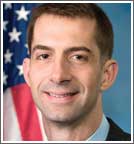
Immigration in the National Interest, by Tom Cotton

Last year, for the first time in our nation’s history, the American people elected as president someone with no high government experience—not a senator, not a congressman, not a governor, not a cabinet secretary, not a general. They did this, I believe, because they’ve lost faith in both the competence and the intentions of our governing class—of both parties! Government now takes nearly half of every dollar we earn and bosses us around in every aspect of life, yet can’t deliver basic services well. Our working class—the “forgotten man,” to use the phrase favored by Ronald Reagan and FDR—has seen its wages stagnate, while the four richest counties in America are inside the Washington Beltway. The kids of the working class are those who chiefly fight our seemingly endless wars and police our streets, only to come in for criticism too often from the very elite who sleep under the blanket of security they provide.

Donald Trump understood these things, though I should add he didn’t cause them. His victory was more effect than cause of our present discontents. The multiplying failures and arrogance of our governing class are what created the conditions for his victory.

Immigration is probably the best example of this. President Trump deviated from Republican orthodoxy on several issues, but immigration was the defining issue in which he broke from the bipartisan conventional wisdom. For years, all Democrats and many Republicans have agreed on the outline of what’s commonly called “comprehensive immigration reform,” which is Washington code for amnesty, mass immigration, and open borders in perpetuity.

This approach was embodied most recently in the so-called Gang of Eight bill in 2013. It passed the Senate, but thankfully we killed it in the House, which I consider among my chief accomplishments in Congress so far. Two members of the Gang of Eight ran for my party’s nomination for president last year. Neither won a single statewide primary. Donald Trump denounced the bill, and he won the nomination.

Likewise, Hillary Clinton campaigned not just for mass immigration, but also on a policy of no deportations of anyone, ever, who is illegally present in our country. She also accused her opponent of racism and xenophobia. Yet Donald Trump beat her by winning states that no Republican had won since the 1980s.

Clearly, immigration was an issue of signal importance in the election. That’s because immigration is more than just another issue. It touches upon fundamental questions of citizenship, community, and identity. For too long, a bipartisan, cosmopolitan elite has dismissed the people’s legitimate concerns about these things and put its own interests above the national interest.

No one captured this sensibility better than President Obama, when he famously called himself “a citizen of the world.”  With that phrase, he revealed a deep misunderstanding of citizenship. After all, “citizen” and “city” share the same Greek root word: citizenship by definition means that you belong to a particular political community. Yet many of our elites share Mr. Obama’s sensibility. They believe that American citizenship—real, actual citizenship—is meaningless, ought not be foreclosed to anyone, and ought not be the basis for distinctions between citizens and foreigners. You might say they think American exceptionalism lies in not making exceptions when it comes to citizenship.

This globalist mindset is not only foreign to most Americans. It’s also foreign to the American political tradition.

Take the Declaration of Independence. Our cosmopolitan elites love to cite its stirring passages about the rights of mankind when they talk about immigration or refugees. They’re not wrong to do so. Unlike any other country, America is an idea—but it is not only an idea. America is a real, particular place with real borders and real, flesh-and-blood people. And the Declaration tells us it was so from the very beginning.

Prior to those stirring passages about “unalienable Rights” and “Nature’s God,” in the Declaration’s very first sentence in fact, the Founders say it has become “necessary for one people to dissolve the political bands” that tie them to another—one people, not all people, not citizens of the world, but actual people who make up actual colonies. The Founders frequently use the words we and us throughout the Declaration to describe that people.

Furthermore, on several occasions, the Declaration speaks of “these Colonies” or “these States.” The Founders were concerned about their own circumstances; they owed a duty to their own people who had sent them as representatives to the Second Continental Congress in Philadelphia. They weren’t trying to free South America from Spanish or Portuguese dominion, much as they might have opposed that dominion.

Perhaps most notably, the Founders explain towards the end of the Declaration that they had appealed not only to King George for redress, but also to their fellow British citizens, yet those fellow citizens had been “deaf to the voice of justice and of consanguinity.” Consanguinity!—blood ties! That’s pretty much the opposite of being a citizen of the world.

So while the Declaration is of course a universal document, it’s also a particular document about one nation and one people. Its signers pledged their lives, their fortunes, and their sacred honor to each other, in English, right here in America—not in Esperanto to mankind in the abstract.

The Constitution affirms this concept of American citizenship. It includes only one reference to immigration, where it empowers Congress to establish a “uniform Rule of Naturalization.” It’s worth pondering a couple points here.

First, what’s that word uniform doing? The Constitution uses the word only three times, when requiring uniform rules for naturalization, bankruptcies, and taxation. These are things that could either knit our Union together or blow it apart—taxation by the central government, the system of credit upon which the free enterprise system depends, and the meaning of citizenship. On these, the Framers insisted upon a uniform, nationwide standard. Diverse habits and laws are suitable for many things in our continental republic, but not for all things. In particular, we can only have “one people” united by a common understanding of citizenship.

Second, the word naturalization implies a process by which foreigners can renounce their former allegiances and become citizens of the United States. They can cast off what accident and force have thrust upon them—race, class, ethnicity—and take on, by reflection and choice, a new title: American. That is a wonderful and beautiful thing, and one of which we are all justly proud. Few Americans love our land so much as the immigrants who’ve escaped the yoke of tyranny.

But our cosmopolitan elites take this to an extreme. They think because anyone can become an American, we’re morally obligated to treat everyone like an American. If you disagree, you’re considered hard-hearted, bigoted, intolerant, xenophobic. So the only policies that aren’t inherently un-American are those that effectively erase our borders and erase the distinction between citizen and foreigner: don’t erect barriers on the border; give sanctuary cities a pass; spare illegal immigrants from deportation; allow American businesses to import as much cheap labor as they want. Anything less, the elites say, is a betrayal of our ideals.

But that’s wrong. Just because you can become an American doesn’t mean you are an American. And it certainly doesn’t mean we must treat you as an American, especially if you don’t play by our rules. After all, in our unique brand of nationalism, which connects our people through our ideas, repudiating our law is kind of like renouncing your blood ties in the monarchical lands of old. And what law is more fundamental to a political community than who gets to become a citizen, under what conditions, and when?

While we wish our fellow man well, it’s only our fellow citizens to whom we have a duty and whose rights our government was created to protect. And among the highest obligations we owe to each other is to ensure that every working American can lead a dignified life. If you look across our history, I’d argue that’s always been the purpose of our immigration system: to create conditions in which normal, hard-working Americans can thrive.

Look no further than what James Madison said on the floor of the House of Representatives in 1790, when the very first Congress was debating our very first naturalization law. He said, “It is no doubt very desirable that we should hold out as many inducements as possible for the worthy part of mankind to come and settle amongst us, and throw their fortunes into a common lot with ours.”  “The worthy part,” not the entire world. Madison continued, “But why is this desirable? Not merely to swell the catalogue of people. No, sir, it is to increase the wealth and strength of the community.”

“To increase the wealth and strength of the community.” That’s quite a contrast to today’s elite consensus. Our immigration system shouldn’t exist to serve the interests of foreigners or wealthy Americans. No, it ought to benefit working Americans and serve the national interest—that’s the purpose of immigration and the theme of the story of American immigration.

When open-borders enthusiasts tell that story, it sounds more like a fairy tale. The way they tell it, America at first was a land that accepted all comers without conditions. But then, periodically, the forces of nativism and bigotry reared their ugly head and placed restrictions on who could immigrate. The forces of darkness triumphed, by this telling, with the Johnson-Reed Act of 1924. But they were defeated with the passage of the Immigration and Nationality Act of 1965, which again opened our shores and is still the law governing our immigration system today. Since 1965, everyone has lived happily ever after.

If I were to grade these storytellers, I would give them an F for history and an A for creative writing. The history of immigration in America is not one of ever-growing tides of huddled masses from the Pilgrims to today. On the contrary, throughout our history, American immigration has followed a surge-and-pause pattern. The first big wave was the Irish and German immigrants in the 1840s and 1850s. Then immigration tapered off during the Civil War. The second big wave was the central and southern European immigrants in the late 19th and early 20th centuries. That wave ended with the 1924 Act and the years of lower immigration that followed. And now we’re in the longest wave yet, the surge of immigration from Latin America and East and South Asia, which has followed from the 1965 Act.

In this actual history—not the fairy tale history—the 1924 Act is not an aberration, but an ebb in the regular ebb and flow of immigration to America. After decades of unskilled mass immigration, that law responded by controlling future immigration flows. One result of lower levels of immigration was that it allowed those earlier immigrants to assimilate, learn new skills, and move up the economic ladder, creating the conditions for mass affluence in the post-war era.

Now, there’s no denying that the story of American immigration has its uglier chapters: the Chinese Exclusion Act, the national-origins quota system imposed by the 1924 Act, the indifference to Jews in the 1930s. We ought to remember and learn from this history. One important lesson, though, is this: if the political class had heeded the concerns of working Americans during the second big wave, the 1924 Act would likely have passed earlier and been less restrictionist. The danger lies not in addressing the people’s legitimate, reasonable concerns about immigration, but in ignoring those concerns and slandering the people as bigots.

But then, we shouldn’t be surprised when politicians fail to understand fully the implications of their actions. Take the 1965 Act. That law ended the national-origins quota system, and at the time its importance was minimized. When President Johnson signed it into law, he said, “This bill . . . is not a revolutionary bill. It does not affect the lives of millions. It will not reshape the structure of our daily lives, or really add importantly to either our wealth or our power.”

How wrong he was.

The economy we’re living in today is in no small part a result of the 1965 Act, which opened the door to mass immigration of unskilled and low-skilled workers, primarily through unlimited family chain migration. And that’s not an economy anyone should be satisfied with.

Today, we have about a million immigrants per year. That’s like adding the population of Montana every year—or the population of Arkansas every three years. But only one in 15—one in 15 of those millions of immigrants—comes here for employment-based reasons. The vast majority come here simply because they happen to be related to someone already here. That’s why, for example, we have more Somalia-born residents than Australia-born residents, even though Australia is nearly twice the size of Somalia and Australians are better prepared, as a general matter, to integrate and assimilate into the American way of life.

In sum, over 36 million immigrants, or 94 percent of the total, have come to America over the last 50 years for reasons having nothing to do with employment. And that’s to say nothing of the over 24 million illegal immigrants who have come here. Put them together and you have 60 million immigrants, legal and illegal, who did not come to this country because of a job offer or because of their skills. That’s like adding almost the entire population of the United Kingdom. And this is still leaving aside the millions of temporary guest workers who we import every year into our country.

Unlike many open-border zealots, I don’t believe the law of supply and demand is magically repealed for the labor markets. That means that our immigration system has been depressing wages for people who work with their hands and on their feet. Wages for Americans with high school diplomas are down two percent since the late 1970s. For Americans who didn’t finish high school, they’re down by a staggering 17 percent. Although immigration has a minimal effect overall on the wages of Americans, it has a severe negative effect on low-skilled workers, minorities, and even recent immigrants.

Is automation to blame in part? Sure. Globalized trade? Yes, of course. But there’s no denying that a steady supply of cheap, unskilled labor has hurt working-class wages as well. Among those three factors, immigration policy is the one that we can control most easily for the benefit of American workers. Yet we’ve done the opposite.

I know the response of open-border enthusiasts: they plead that we need a steady supply of cheap unskilled labor because there are “jobs that no American will do.” But that just isn’t so. There is no job Americans won’t do. In fact, there’s no industry in America in which the majority of workers are not natural-born Americans—not landscapers, not construction workers, not ski instructors, not lifeguards, not resort workers, not childcare workers—not a single job that over-educated elites associate with immigrants. The simple fact is, if the wage is decent and the employer obeys the law, Americans will do any job. And for tough, dangerous, and physically demanding jobs, maybe working folks do deserve a bit of a raise.

“No American will do that job.” Let me just pause for a moment and confess how much I detest that sentiment. In addition to being ignorant of the economic facts, it’s insulting, condescending, and demeaning to our countrymen. Millions of Americans make our hotel beds and build our houses and clean our offices; imagine how they feel when they hear some pampered elite say no American will do their job. And finally, I must say, that sentiment also carries more than a whiff of the very prejudice of which they accuse those concerned about the effects of mass immigration.

But the harmful impact on blue-collar workers isn’t the only problem with the current system. Because we give two-thirds of our green cards to relatives of people here, there are huge backlogs in the system. This forces highly talented immigrants to wait in line for years behind applicants whose only claim to naturalization is a random family connection to someone who happened to get here years ago. We therefore lose out on the very best talent coming into our country—the ultra-high-skilled immigrants who can come to America, stand on their own two feet, pay taxes, and through their entrepreneurial spirit and innovation create more and higher-paying jobs for our citizens.

To put it simply, we have an immigration system that is badly failing Madison’s test of increasing the wealth and strength of the community. It might work to the advantage of a favored few, but not for the common good, and especially not the good of working-class Americans.

This is why I’ve introduced legislation to fix our naturalization system. It’s called the RAISE Act: Reforming American Immigration for a Strong Economy.

The RAISE Act will correct the flaws in the 1965 Act by reorienting our immigration system towards foreigners who have the most to contribute to our country. It would create a skills-based points system similar to Canada’s and Australia’s. Here’s how it would work. When people apply to immigrate, they’d be given an easy-to-calculate score, on a scale of 0 to 100, based on their education, age, job salary, investment ability, English-language skills, and any extraordinary achievements. Then, twice a year, the U.S. Citizenship and Immigration Services would invite the top scorers to complete their applications, and it would invite enough high-scoring applicants to fill the current 140,000 annual employment-based green-card slots.

We’d still admit spouses and unmarried minor children of citizens and legal permanent residents. But we’d end the preferences for most extended and adult family members—no more unlimited chain migration. We’d also eliminate the so-called diversity visa lottery, which hands out green cards randomly without regard to skills or family connections, and which is plagued by fraud. We’d remove per-country caps on immigration, too, so that high-skilled applicants aren’t shut out of the process simply because of their country of origin. And finally, we’d cap the number of refugees offered permanent residency to 50,000 per year, in line with the recent average for the Bush era and most of the Obama era—and still quite generous.

Add it all up and our annual immigrant pool would be younger, higher-skilled, and ready to contribute to our economy without using welfare, as more than half of immigrant households do today. No longer would we distribute green cards essentially based on random chance. Nor would we import millions of unskilled workers to take jobs from blue-collar Americans and undercut their wages. And over a ten-year period, our annual immigration levels would decrease by half, gradually returning to historical norms.

Given current events, this legislation is timelier than ever. Earlier this month, President Trump announced that he would wind down, over six months, the unconstitutional Deferred Action for Childhood Arrivals program, also known as DACA. President Obama abused his authority with DACA—which purported to give legal status to illegal immigrants who arrived here as children and who are now in their twenties and thirties—because, as we’ve seen, the Constitution reserves to Congress the power to make uniform laws of naturalization.

Because of President Obama’s unlawful action, about 700,000 people are now in a kind of legal limbo. President Trump did the right thing as a matter of law by ending DACA, though as a matter of policy he’d prefer its beneficiaries don’t face deportation. Democrats agree, as do a lot of Republicans. So the question isn’t so much about deportation, but rather if and what kind of compromise Congress can strike.

Here’s where the RAISE Act comes in. We can, if we choose, grant citizenship to those illegal immigrants who came here through no fault of their own as kids and who’ve otherwise been law-abiding, productive citizens. But if we do, it will have the effect of legalizing through chain migration their parents—the very people who created the problem by bringing the kids here illegally. Some like to say that children shouldn’t pay for the crimes of the parents, but surely parents can pay for the crimes of the parents. And that’s to say nothing of their siblings and spouses, and then all the second- and third-order chain migration those people create. So simply codifying DACA without ending chain migration would rapidly accelerate the wave of unskilled immigrant labor that’s been depressing the wages of working Americans.

An obvious compromise, then, is to pair any attempt to codify DACA with reform of the green card system to protect American workers. A stand-alone amnesty will not do. Nor will an amnesty with vague promises of “border security,” which never seem to materialize or get funded once the pressure is off Congress. But if we codify DACA along with the reforms in the RAISE Act, we will protect working Americans from the worst consequences of President Obama’s irresponsible decision.

President Trump has said that chain migration must be ended in any legislative compromise, and he’s highlighted the RAISE Act as a good starting point for those negotiations. I support that approach, and I’m committed to working with my colleagues, Democrats and Republicans alike, on a deal that protects American workers and strengthens our community.

Immigration has emerged in recent years as a kind of acid test for our leaders—a test they’ve mostly failed. Our cosmopolitan elite—in both parties—has pursued a radical immigration policy that’s inconsistent with our history and our political tradition. They’ve celebrated the American idea, yet undermined the actual American people of the here and now. They’ve forgotten that the Declaration speaks of “one people” and the Constitution of “We the People.” At the same time, they’ve enriched themselves and improved their quality of life, while creating a new class of forgotten men.

There’s probably no issue that calls more for an “America first” approach than immigration. After all, the guidepost of our immigration policy should be putting Americans first—not foreigners and not a tiny elite. Our immigration policy should serve the “wealth and strength” of our people, as Madison said in that first Congress. It should not divide our nation, impoverish our workers, or promote hyphenated Americanism.

Citizenship is the most cherished thing our nation can bestow. Our governing class ought to treat it as something special. We ought to put the interests of our citizens first and welcome those foreigners best prepared to handle the duties of citizenship and contribute positively to our country. When we do, our fellow Americans will begin to trust us once again.

Immigration in the National Interest

Tom Cotton
U.S. Senator from Arkansas


Tom CottonTom Cotton was elected to the U.S. Senate from Arkansas in 2014, following one term in the U.S. House of Representatives. He serves on the Senate Banking Committee, the Senate Intelligence Committee, and the Senate Armed Services Committee. A graduate of Harvard College, he studied government at the Claremont Graduate School and received his J.D. from Harvard Law School in 2002. In 2005, he was commissioned as a 2nd Lieutenant in the U.S. Army, rose to 1st Lieutenant, and served deployments in Iraq with the 101st Airborne and in Afghanistan with a Provincial Reconstruction Team. His military decorations include the Bronze Star Medal, Combat Infantry Badge, and Ranger Tab.

https://imprimis.hillsdale.edu/immigration-national-interest/

Posted in Uncategorized | 2 Comments

Russian Collusion? by Mollie Hemingway

We keep being told that President Trump is not normal. This much has been blindingly obvious. He had never run for office or otherwise served in a public capacity. He has been accused, not without reason, of breaking all manner of political norms. America’s most nontraditional president was never going to conduct business as usual from the West Wing. Less than a year into his first term, he has already caused much anguish in Washington. This should be no surprise—while running for office Trump repeatedly promised to “drain the swamp” and shake things up. Americans knew who they were voting for, and history will judge the results.

That said, Trump’s nascent presidency has coincided with perhaps the greatest violation of political norms this country has ever seen—a violation that has nothing to do with Trump’s behavior. Since the election last November, there has been a sustained, coordinated attack on Trump’s legitimacy as president following his victory in a free and fair election. This has the potential to cause far more lasting damage to America than Trump’s controversial style.

Democratic operatives and their media allies attempted to explain Trump’s victory with a claim they had failed to make stick during the general election: Trump had nefarious ties to Russia. This was a fertile area for allegations, if for no other reason than that Trump had been reluctant to express criticism of Russian President Vladimir Putin. By contrast, Secretary of State Hillary Clinton repeatedly condemned Russia’s 2011 elections, saying they were “neither free nor fair” and expressing “serious concerns” about them. She publicly called for a full investigation while meeting with top Russian officials. This made Putin livid. “Mr. Putin said that hundreds of millions of dollars in ‘foreign money’ was being used to influence Russian politics, and that Mrs. Clinton had personally spurred protesters to action,” The New York Times reported.

Trump’s relationship with Putin was decidedly different. In December 2015, Putin called Trump “a really brilliant and talented person.” Trump replied: “It is always a great honor to be so nicely complimented by a man so highly respected within his own country and beyond.” He added, “I have always felt that Russia and the United States should be able to work well with each other towards defeating terrorism and restoring world peace, not to mention trade and all of the other benefits derived from mutual respect.”

Then rumors surfaced in the summer of 2016 that Russia probably had something to do with the alleged hack of the Democratic National Committee email system, as well as the successful “phishing” of Democratic insider John Podesta’s inbox. Russia was also alleged to have tried to hack the Republican National Committee, but without success. It remained an open question whether the Russians were trying to help Trump or were simply trying to create chaos in the election. Regardless, these Democratic Party emails were published by WikiLeaks, and they confirmed what many critics had said about Clinton and the DNC—the DNC had engineered the primary to ensure a Clinton victory; the Clinton campaign had cozy, borderline unethical relations with members of the mainstream media; Clinton expressed private positions to Wall Street banks that were at odds with her public positions; and various other embarrassing details indicating her campaign was in disarray.

According to Shattered, a well-sourced book about the Clinton campaign written by sympathetic reporters, Clinton settled on a Russia excuse within twenty-four hours of her concession speech. [Campaign manager Robby] Mook and Podesta assembled her communications team at the Brooklyn headquarters to engineer the case that the election wasn’t entirely on the up-and-up. For a couple of hours, with Shake Shack containers littering the room, they went over the script they would pitch to the press and the public. Already, Russian hacking was the centerpiece of the argument.

The Russian collusion story involves a lot of details, but there are two basic tactics that Trump’s enemies have used to push the narrative: they have put seemingly innocuous contacts with Russians under a microscope, and they have selectively touted details supplied by a politicized intelligence apparatus. And this has all been amplified by a media that has lost perspective and refuses to be impartial, much less accurate.

Meetings with Russians

If most of us can now agree that Putin’s Russia is a potential threat to the United States, we shouldn’t forget that the Washington establishment regarded this as a radical opinion not so long ago. Shortly after President Obama was elected in 2008, Time magazine ran a cover with him asking a Russian bear, “Can we be friends?” The media generally celebrated Secretary of State Clinton’s attempt at a Russian “reset” in 2009. Obama was later caught on a hot mic promising Putin more “flexibility” once he was reelected. And during Obama’s reelection campaign in 2012, when his opponent Mitt Romney characterized Russia as our greatest geopolitical foe, Obama mocked him by saying, “The 1980s called. They want their foreign policy back.” The New York Times editorial page said of Romney’s Russia comments that they “display either a shocking lack of knowledge about international affairs or just craven politics. Either way, they are reckless and unworthy of a major presidential contender.”

Trump’s election changed all that. Not since the heyday of McCarthyism in the 1950s have so many in Washington been accused of consorting with Russians who wish to undermine American democracy.

The Washington Post reported in mid-January that Mike Flynn, Trump’s incoming National Security Advisor, had spoken via telephone with Russian ambassador Sergey Kislyak on December 29, the day the Obama administration announced the expulsion of 35 Russian officials in retaliation for the DNC hacking. Although such conversations are perfectly legal, the Post suggested, quite incredibly, that Flynn might have violated the Logan Act, which bars U.S. citizens from correspondence intending to influence a foreign government about “disputes” with the United States. The Logan Act, which has a long record of being cited by cranks, has not been enforced since it was passed (in 1799!) because it is widely considered to be grossly unconstitutional. In addition to the Post, The New York Times, Foreign Policy magazine, and other outlets credulously repeated the same ludicrous talking point about Logan Act violations.

Let it also be noted that Flynn, while a critic of Russia and of the Iran nuclear deal that Russia helped put together, also was paid to speak at a dinner hosted by the Russian TV network Russia Today.

When then-Senator Jeff Sessions was asked, during his confirmation hearing to be U.S Attorney General, about allegations of Russian attempts to compromise the Trump campaign, he noted that he had been a Trump surrogate and hadn’t heard of any meetings for this purpose. When it turned out Sessions had met with Kislyak in a different capacity—as a U.S. Senator on the Armed Services Committee—the ensuing uproar in the media led him to recuse himself from any investigation into Russian meddling. Of course, it was Kislyak’s job to facilitate as many meetings as possible with top officials across the political spectrum, and he was seen at meetings with House Minority Leader Nancy Pelosi and Senator Claire McCaskill, two prominent Democrats, as well as other Republicans. Indeed, such meetings between foreign ambassadors and U.S. elected officials are routine.

It’s true that Trump was associated with people who had ties to Russians. His former campaign manager Paul Manafort had previously done political consulting work in Ukraine for Russia-aligned groups. Carter Page, a foreign policy advisor with a limited role, is a Naval Academy graduate, businessman, and academic who has been open about his belief that America’s anti-Russian foreign policy has been counterproductive. And Roger Stone, a campaign advisor with a reputation for outlandish campaign work, reportedly spoke with WikiLeaks founder Julian Assange as well as Guccifer 2.0, who may be a Russian hacker.

But perhaps no meeting attracted as much scrutiny as one in June 2016 between Donald Trump, Jr., Paul Manafort, Jared Kushner, and various Russians, including a Russian lawyer. According to email correspondence, the Trump associates were told they would receive opposition research on Clinton that may have been provided by the Russian government. No research was handed over, but critics said that the language in the emails supported claims of attempted collusion. After weeks of accusations, the story quickly ran out of steam when it was revealed that the Russian lawyer, who was to have provided the information, had employed a shadowy opposition research firm known as Fusion GPS—a business that had strong ties to Democratic interests, had previously tried to smear Mitt Romney donors and critics of Planned Parenthood, and had played a key role in a recent and infamous attempt to smear Trump.

Politicized Intelligence

Many allegations concerning Russia have been taken seriously based solely on the institutional credibility of the accusers. It appears that members of America’s intelligence community are some of the President’s most passionate opponents.

Late last December, the Department of Homeland Security and the FBI put out a 13-page report touted as definitive proof of Russian state involvement in the DNC server hack and the phishing attack on John Podesta’s emails. It was remarkably paltry—vague and non-specific in a way that really didn’t help clarify the precise nature of Russia’s involvement. Cyberwarfare expert Jeffrey Carr wrote that the report “adds nothing to the call for evidence that the Russian government was responsible” for the hacks. It listed every threat ever reported by a commercial cybersecurity company that was suspected of having a Russian origin, Carr noted, lumping them under the heading of Russian Intelligence Services, without providing any supporting evidence that such a connection existed. Former Air Force cyberwarfare officer Robert Lee said the report was of limited use to security professionals, in part because of poor organization and a lack of crucial details.

Senior intelligence appointees tried again in early January, with a report from the Office of the Director of National Intelligence. It was also lacking in specifics. But comments from high profile Democrats, supported by a leak campaign to media outlets, did have an effect. By late December, more than half of Democrats believed—despite the lack of evidence—that “Russia tampered with vote tallies in order to get Donald Trump elected President,” according to a YouGov.com poll.

When Trump responded to these reports with dismissals and a few begrudging admissions of minor contacts with Russians, critics gleefully warned him that partisans at intelligence agencies would retaliate. Senate Minority Leader Chuck Schumer (D-NY) said, “Let me tell you, you take on the intelligence community, they have six ways from Sunday at getting back at you. So even for a practical, supposedly hard-nosed businessman, he’s being really dumb to do this.” Former George W. Bush speechwriter and current never-Trump activist David Frum echoed this sentiment: “CIA message to Trump: you mess with us, get ready for a leakstorm of Biblical proportions.” Essentially, intelligence agencies were being publicly encouraged to abuse their power to stop Trump before he had even assumed office.

In January, the big story dropped. “Intel chiefs presented Trump with claims of Russian efforts to compromise him,” blared the headline from CNN. According to highly placed anonymous sources, top intelligence appointees had informed Obama, Vice President Joe Biden, and Trump that “Russian operatives claim to have compromising personal and financial information about Mr. Trump.” A former British intelligence operative had compiled a damaging “dossier” on the President-elect. CNN reported that intelligence officials considered this operative’s past work credible. But he had paid his Russian sources for the compromising information, and CNN published its report on the dossier without confirming any of the allegations. Within the hour, BuzzFeed published the actual text of the dossier. It said, among other things, that a senior Trump advisor and three of his colleagues had met with Kremlin operatives in Prague in late August or early September to undermine the Clinton campaign. And the Russians were said to have a kompromat file on Trump, including an amazing story about him renting a hotel room the Obamas had used and paying prostitutes to urinate on the bed.

One of the claims was quickly disproven: Michael Cohen, Trump’s lawyer who was alleged to have gone to Prague for a clandestine meeting with Kremlin operatives, had never been to Prague. And to date, no media organization has provided any independent evidence to confirm a single claim made in the dossier. It was soon revealed that the firm that had hired the former British operative and put together the dossier was the aforementioned Fusion GPS. What’s more, the FBI allegedly sought to pay the British operative to continue gathering dirt on Trump.

Aside from a lack of concern about the accuracy of the charges against Trump, intelligence chiefs were not discriminating about who got caught up in their anti-Trump crusade. In March, House Intelligence Committee Chairman Devin Nunes (R-CA) announced that “unmasking” of Trump transition team members had occurred during the last three months of the Obama presidency—that is, significant personal information from and about Trump associates had been collected and widely disseminated.

“I recently confirmed that, on numerous occasions, the intelligence community incidentally collected information about U.S. citizens involved in the Trump transition,” Nunes said. The information collected, he added, had little or no foreign intelligence value, and nothing to do with Russia. Obama’s National Security Advisor Susan Rice, UN Ambassador Samantha Power, and National Security Council spokesman Ben Rhodes were later reported to be involved in this rampant unmasking activity.

Trump created one of the biggest firestorms of his presidency in May when he fired FBI Director James Comey. The embattled FBI head, who let Hillary Clinton slide after her illegal handling of classified information, had been routinely criticized by both Democrats and Republicans and was officially fired for general ineptness. However, Trump said it was also because Comey was playing games with the Russia investigation. In his letter relieving him of his duties, Trump mentioned that Comey had told him three times he was not under investigation. Many journalists scoffed at this claim, since Comey was publicly intimating otherwise. When he was fired, stories favorable to Comey about private meetings between Comey and Trump came out in the media.

In testimony before the Senate Intelligence Committee a few weeks later, Comey admitted he had, in fact, told Trump at least three times he was not under investigation by the FBI. Comey also admitted under oath that his leaks to The New York Times were designed to force the hiring of a special prosecutor. His strategy paid off when his close friend and former colleague Robert Mueller was appointed to head an investigation of Russian meddling in the 2016 campaign. That investigation has since spiraled out to include leads “that have nothing to do with Russia,” according to media reports.

The egregious behavior of influential officials such as Comey has encouraged people to think that the verdict of the intelligence community was more conclusive than it was. During a 2016 presidential debate, Clinton said, “We have 17 intelligence agencies, civilian and military, who have all concluded that these espionage attacks, these cyberattacks, come from the highest levels of the Kremlin and they are designed to influence our election.” Clinton’s claim wasn’t true. It was only three agencies—the FBI, the CIA, and the National Security Agency—that made the claim. Yet media outlets such as NBC, CBS, CNN, and The New York Times repeated the number 17. In late June, The New York Times corrected a story that made the false claim. So did the Associated Press.

In general, the media have overstated the confidence and public evidence in support of Russian hacking. One group of skeptical intelligence analysts, the Veteran Intelligence Professionals for Sanity (VIPS), issued a memo in late July arguing that the hack of the DNC emails wasn’t a hack at all, but an internal leak. VIPS is generally thought to be sympathetic to the Left—the same group had cast doubt on the quality of intelligence that led the United States to invade Iraq in 2003. The VIPS memo raises questions about why the FBI failed to perform an independent forensic analysis of the Democratic emails or servers in question. In fact, no federal agency performed a forensic analysis, leaving that to CrowdStrike—a company with strong ties to the Clinton campaign that had an incentive to blame foreign governments for the attack. Surely, more forensic scrutiny of the centerpiece of the Russia hack claim is in order.

To date, despite all the misleading claims in news reports, the only actual crime related to the Trump-Russia investigation is the criminal leaking of classified information about U.S. citizens by intelligence officials.

Media Problems

A compliant media responded to the Clinton campaign’s “blame Russia” strategy by pushing stories alleging wrongdoing by Russia. Many of the early ones fell apart. The Washington Post published a story saying that “fake news”—a term originally used to describe the dissemination of blatantly false news reports intended to go viral on social media—was a Russian operation designed to help Trump. An editor’s note was appended backing away from the report a couple weeks later. (Trump would famously appropriate the term “fake news” to describe reports from the mainstream media he found unfair.) A few weeks later, the Post ran an even more incendiary story alleging that Russian hackers had penetrated the U.S. electrical grid. This turned out to be false. One media outlet headline read: “Trump, Russian billionaire say they’ve never met, but their jets did.” Presumably, these inanimate objects exchanged pleasantries and discussed sensitive foreign policy matters.

CNN has had particular trouble. Breathless headlines such as “Trump aides were in constant touch with senior Russian officials during campaign” fail to be supported with evidence. Anonymous officials would say that such communications “are not unusual” and investigators had not “reached a judgment” of any nefarious intent. Other CNN stories had bigger problems, such as the one reporting that Comey would testify he never told Trump he was not under investigation. As mentioned previously, Comey admitted under oath that he’d said this three times, just as Trump claimed. Another story reporting a problematic meeting between a Trump associate and a Russian, again based on a single anonymous source, was quietly retracted, and three employees who worked on it were dismissed.

Journalism in the Trump era has become far too dependent on unreliable and anonymous sources. And considering the steady drumbeat in the media about Trump having a strained relationship with facts, there is plenty of irony in the fact that the media have had to correct or retract an unprecedented number of stories about him and his administration.

There are three primary ways of viewing the Trump-Russia narrative.

View one is that Russians hacked the election and Donald Trump committed treason by knowingly colluding with them. The Obama administration didn’t surveil Trump or his associates, but if it did, it was simply doing its job.

View two is that Russia was probably involved in the hacking and releasing of emails from the DNC and John Podesta. Some Trump associates had ties to Russia, but there is no evidence of Trump or his campaign colluding with Russia.

View three is that the Russia story is a complete fiction concocted by sore losers unable to deal with the reality of their electoral loss.

It shouldn’t be difficult to ascertain which one of these views is most grounded in facts. Despite his friendly rhetoric toward Russia and Putin during the campaign, Trump’s presidency has been marked by a bombing of Russia-backed Syria, bombing of the Russia-aligned Taliban in Afghanistan, stricter enforcement of economic sanctions, support for the expansion of NATO, liquid natural gas exports to Europe that undercut Russia’s economy, the selling of U.S. missile defense to Poland and Romania, and opposition to the Russian-negotiated Iran nuclear deal.

In the meantime, the self-styled anti-Trump “resistance” has created a standard it must meet to justify the broken norms and political trauma to which it has subjected the country. That standard is nothing less than proof that Donald Trump is a traitor put into the White House through collusion with Russia to undermine our electoral system. The better part of a year into his presidency, Trump’s enemies have not come close to meeting that standard.


Mollie Hemingway is a senior editor at The Federalist and a Fox News contributor. She received her B.A. from the University of Colorado at Denver. She has been a Philips Foundation Journalism Fellow, a Lincoln Fellow at the Claremont Institute for the Study of Statesmanship and Political Philosophy, and a Pulliam Distinguished Visiting Fellow in Journalism at Hillsdale College. She has written for numerous publications, including The Wall Street Journal, The Washington Post, and Christianity Today, and is the author of Trump vs. the Media.

https://imprimis.hillsdale.edu/russian-collusion/

Posted in Uncategorized | Leave a comment

Love

The bravest and the best are not the people at the top, but people at the bottom; they speak, read and write the truth to their family and friends daily. On the other hand, people at the top are protected by force and lawyers. When you are talking to family and friends you only have love to protect you, not force. If you have love, then they would not believe that you would use force. If there is no love, then they would already know that you would use force.

Posted in Uncategorized | Leave a comment

Climate madness

More than 100 scholars from 12 countries have issued a report contending “the global war on fossil fuels … was never founded on sound science or economics” and urging the world’s policymakers to “acknowledge this truth and end that war.”

Report in pdf form at this link.

It is somewhat technical, but I invite you to ask your questions here.

http://climatechangereconsidered.org/wp-content/uploads/2018/10/10-05-18-DRAFT-CCRII-Fossil-Fuels-Summary-for-Policy-Makers.pdf

Posted in Uncategorized | Leave a comment

Border madness

I hope that no one in this march to the border is hurt. But, the entire responsibility for this ill-advised march and any violence that may occur rests with Democrats. Any nation may rightfully defend its borders…to death if necessary. Was this not the meaning of the Alamo? If you claim to be a humanist or a Democrat, then stop your politician’s power madness before it is too late for these people.

Posted in Uncategorized | Leave a comment