
“If we lose citizenship, there are going to be unelected bureaucrats, millions of them, that are going to be judge, jury, and executioner of our fates by the rules and regulations that they make that we have no say in. …If we lose citizenship, then we’re going to see a lot of experts, elites, professionals in and out of the university world that’ll start to dismantle the Constitution.” From Hillsdale College’s free online course, taught by historian Victor Davis Hanson, “American Citizenship and Its Decline”
Do not fantasize. This is happening now. As introduction, Neil Oliver of Scotland/Britain holds forth in this 11 minute video on, “all manner of atrocities committed in our name.” Don’t miss it.
Imprimis MAY/JUNE 2020 | VOLUME 49, ISSUE 5/6
Four Months of Unprecedented Government Malfeasance
Heather Mac Donald (bio below)
Manhattan Institute
- Imprimis is a newsletter published by Hillsdale College, free to all in electronic or mailed hardcopy.
The following is adapted from a lecture delivered on June 18, 2020, for a Hillsdale College online symposium, “The Coronavirus and Public Policy.” Please read the original here: https://imprimis.hillsdale.edu/four-months-unprecedented-government-malfeasance/
Over the last four months, Americans have lived through what is arguably the most consequential period of government malfeasance in U.S. history. Public officials’ overreaction to the novel coronavirus put American cities into a coma; those same officials’ passivity in the face of widespread rioting threatens to deliver the coup de grâce. Together, these back-to-back governmental failures will transform the American polity and cripple urban life for decades.
Before store windows started shattering in the name of racial justice, urban existence was already on life support, thanks to the coronavirus lockdowns. Small businesses—the restaurants and shops that are the lifeblood of cities—were shuttered, many for good, leaving desolate rows of “For Rent” signs on street after street in New York City and elsewhere. Americans huddled in their homes for months on end, believing that if they went outside, death awaited them.
This panic was occasioned by epidemiological models predicting wildly unlikely fatalities from the coronavirus.
On March 30, the infamous Imperial College London model predicted 2.2 million deaths in the U.S. by September 1, absent government action. That prediction was absurd on its face, given the dispersal of the U.S. population and the fact that China’s coronavirus death toll had already levelled off at a few thousand. The authors of that study soon revised it radically downwards.
Too late. It had already become the basis for the exercise of unprecedented government power. California was the first state to lock down its economy and confine its citizens to their homes; eventually almost every other state would follow suit, under enormous media pressure to do so.
Never before had public officials required millions of lawful businesses to shut their doors, throwing tens of millions of people out of work. They did so at the command of one particular group of experts—those in the medical and public health fields—who viewed their mandate as eliminating one particular health risk with every means put at their disposal.
If the politicians who followed their advice weighed a greater set of considerations, balancing the potential harm from the virus against the harm from the shutdowns, they showed no sign of it. Instead, governors and mayors started rolling out one emergency decree after another to terminate economic activity, seemingly heedless of the consequences.
The lockdown mandates employed mind-numbingly arbitrary distinctions. Wine stores and pot dispensaries were deemed “essential” and thus allowed to stay open; medical offices were required to close. Large grocery stores got the green light; small retail establishments with only a few customers each day were out of luck. Michigan Governor Gretchen Whitmer notoriously used her red pen within megastores to bar the sale of seeds, gardening supplies, and paint.
It was already clear when these crushing mandates started pouring forth that shutting down every corner of the country was a reckless overreaction. By mid-March, two weeks before the Imperial College model was published, Italian health data showed that the coronavirus was terribly lethal to a very small subset of the population—the elderly infirm—and a minor health problem to nearly everyone else who was not already severely ill. The median age of coronavirus decedents in Italy was 80, and they died with a median of nearly three comorbidities, such as heart disease and diabetes. The lead author of the Imperial College model has admitted that up to two-thirds of all coronavirus fatalities would have died from their comorbidities by the end of 2020 anyway.
Three months later, this profile of coronavirus casualties still holds true. Public health interventions could have been targeted at that highly vulnerable population without forcing the American economy into a death spiral.
DISINFORMATION
By now it is impossible to attribute the media’s failure to publicize the facts about the coronavirus to mere oversight.
Every story that does not mention, preferably at the top, the vast overrepresentation of nursing home deaths in the coronavirus death count—above 50 percent in many countries and 80 percent in several of our states—is a story that is deliberately concealing the truth. Casual readers and viewers have been left with the false impression that everyone is equally at risk, and thus that draconian measures are justified.
The media have been equally uninterested in the scientific evidence regarding outdoor transmission. Coronavirus infections require what Japan calls the three Cs: confined spaces, crowded places, and close contact. The fleeting encounters on sidewalks and public parks that characterize much of city life simply do not result in transmission. And yet if you briskly approach someone on one of Manhattan’s broad and now empty sidewalks, the oncoming pedestrian may lunge into the street or press up against the closest wall in abject fear if you are not wearing a mask. You may be cursed at.
The public health establishment has been equally complicitous in creating this widespread ignorance. It has failed to stress at every opportunity that for the vast majority of the public, the coronavirus is at most an inconvenience. The public health experts did not disclose that outdoors was the safest place to be and that people should get out of their homes and into the fresh air.
Not coincidentally, the experts’ newfound power over nearly every aspect of American life was dependent on the maintenance of fear.
While the U.S. death toll from the coronavirus has been demographically circumscribed and lower than the previous flu pandemics of 1968, 1956, and 1918 when adjusted for population, the economic toll has cut across every sector of the country and every population group. Whole industries have seen their capital wiped out overnight.
Despite a better than expected employment report in early June, the long-term effects of the shutdowns and the continuing mandates to socially distance will prevent a full economic recovery for years to come. Forty-four million Americans are still out of work. Supply chains have been thrown into chaos. Fresh fruits and vegetables are being plowed under and livestock burned uneaten for lack of access to processing plants and markets. Small businessmen who have put their life savings into creating a service that customers want have seen their hard work go up in smoke. Without rent from their retail tenants, commercial landlords can’t pay their taxes. City budgets have been decimated. The additional $8 trillion in public debt taken on to try to substitute for the private economy will depress opportunity for generations.
And what has been the response to this economic carnage on the part of our ruling class? Branding strategies! Politicians have put cute names on what has been a taking of private property on an unprecedented scale. New York Governor Andrew Cuomo calls the state lockdowns “New York on Pause,” as if commerce can be indefinitely suspended and then magically resuscitated with the flick of a switch.
The politicians’ ignorance about the complexity of economic life was stunning, as was their hypocrisy. To a person, every elected official, every public health expert, and every media pundit who lectured Americans about the need to stay in indefinite lockdown had a secure (“essential”) job. Not one of them feared his employer would go bankrupt. Anyone who warned that the effects of the lockdowns would be more devastating than anything the coronavirus could inflict was accused of being a heartless capitalist who only cared about profits.
But to care about the economy is to care about human life, since the economy is how life is sustained. It is a source of meaning, as well as sustenance, binding humans to each other in a web of voluntary exchange. To its workers, every business is essential, and to many of its customers as well. Even judged by the narrowest possible definition of public health—lives lost—the toll from the lockdowns will exceed that of the virus, due to the cancellation of elective medical procedures, patients’ unnecessary fear of seeking medical treatment, and the psychological effects of unemployment.
In May, politicians started inviting a few scattered sectors of their state economies to reopen, with blue state governors and mayors being particularly parsimonious with their noblesse oblige. These blue state officials invoked “science” to justify yet another arbitrary set of guidelines to determine which businesses would be allowed to start up again and when. “Science,” we were told, dictated the timetable for reopening, based on rates of hospital bed vacancies and new infections.
In fact, the numerical benchmarks, enforced with draconian punctiliousness, seem to have been drawn out of a hat—they certainly had no evidence behind them. But even with official reopenings, many customers will be long reluctant to resume their normal habits of consumption and travel thanks to the uninterrupted fearmongering on the part of the media, the experts, and elected leaders.
Being fantastically risk averse is now a badge of honor, at least among the professional elites. A young tech columnist for The New York Times wrote an op-ed in May about cancelling a restaurant reservation in Missoula, Montana. Missoula County had been virus-free for weeks, and Montana’s case load had been negligible. Nevertheless, the columnist experienced a panic attack after booking a table, contemplating the allegedly lethal risk that awaited him in the reopened restaurant. Rather than being ashamed of his cowardice, the columnist was proud, he wrote, to have bailed out of his reservation in order to continue sheltering in place.
The absurd social distancing protocols make operating many businesses and much of city life virtually impossible. The six-foot rule is as arbitrary as the “metrics” for reopening. (The World Health Organization recommends three feet of social distance, and many countries have adopted that recommendation.) Keeping customers and employees six feet apart will render a city’s basic institutions unworkable, from restaurants to concert halls. The Metropolitan Opera has cancelled the first half of its 2020-2021 season while it figures out how to maintain social distancing among audience members and on the stage. Every other performing arts organization will face the same almost insuperable dilemma.
My 34-story apartment building in Manhattan, like many others, has imposed a one person per elevator ride rule, even though the elevator interiors are more than six feet across. I invite anyone who may also be waiting for an elevator to share my ride up; no one has ever accepted the offer, even though both I and my invitee are masked. Nor has anyone ever extended such an offer to me. Now translate this hysteria to Manhattan’s massive office towers. If New York City ever fully reopens, a similar social distancing rule for office elevators will lead to lines of workers around every midtown block each morning. As long as this fear lasts, city life is not possible.
FROM COLD WAR TO HOT
Then the cities started burning. What had been a cold war on the economy and civic life became a hot war.
Government officials, having shut down commerce due to unblemished ignorance of how markets work, now enabled the torching and looting of thousands of businesses due to the shirking of their most profound responsibility: protecting civil peace.
On Monday, May 25, a video of the horrific arrest and death of a black man suspected of passing a forged $20 bill in Minneapolis went viral. A police officer kept his knee on George Floyd’s neck for nearly nine minutes as Floyd begged for help breathing. Floyd was already handcuffed and thus posed a minimal risk. The officer ignored Floyd’s distress even as Floyd stopped talking or moving.
The officer’s behavior was grotesquely callous and contrary to sound tactics, and the officer will be prosecuted and punished under the law. His behavior was not, however, representative of the overwhelming majority of the ten million arrests that the police make each year. Indeed, there is no government agency more dedicated to the proposition that black lives matter than the police. Nevertheless, within 24 hours, the violence had begun.
On the night of Thursday, May 28, Minneapolis Mayor Jacob Frey ordered the city’s Third Police Precinct evacuated as the forces of anarchy descended upon it for a third day in a row. The building was promptly torched, sending a powerful sign that society would not defend its most fundamental institutions of law and order.
Soon cities across the country became scenes of feral savagery. The human lust for violence, the sheer joy of plunder and destruction, were unleashed without check. Police officers were shot at, run over, slashed with knives, and clubbed; two current and former law enforcement officers were killed in cold blood. Police cruisers and station houses were firebombed; courthouses were trashed. Looters drove trucks through storefronts and emptied the stores’ contents into the back of these newly repurposed vehicles of civil war. ATMs were ripped out of walls; pharmacies plundered for drugs.
Blue state governors and mayors ordered law enforcement to stand down or use at most (in New York City Mayor Bill de Blasio’s words) a “light touch” with the rioters. By the time these progressive public leaders realized that something more forceful needed to be done, it was too late. The fire of sadism and hatred could not be contained, but would have to burn itself out. Belatedly imposed curfews were universally ignored: why should anyone obey an edict from a government that refused to protect human life and livelihoods?
Perversely, the rioting exhibited features of the coronavirus shutdowns in even more literal form. If before, businesses were boarded up due to bankruptcy, now they were boarded up to prevent further theft. Small businesses, lacking the resources to outlast the shutdowns, now saw the final depletion of their inventories. The fortress mentality in residential buildings from coronavirus hysteria was replaced by an actual fortress, as building managements hastily erected plywood barriers over lobby windows and doors. The hyped-up fear of going outside into allegedly virus-infected public spaces became a justified fear of leaving one’s fortress and being sacrificed to the mob. Shelter-in-place became a necessity, not a product of government overreach. The fall of night became a source of terror for ordinary citizens and business owners.
Previously, securely-employed public officials breezily dismissed their constituents’ anguish over unemployment and growing business failures. Now those same officials, safe behind their security details and publicly-owned mansions, foreswore the activation of the National Guard and military. None of those officials owned businesses, so they faced no loss either from economic quarantine or from physical rampage.
DOUBLE STANDARDS
One thing did change markedly between the coronavirus lockdowns and the riot lockdowns, however: elite wisdom regarding social distancing. The politicians, pundits, and health experts who had condescendingly rebuked business owners for reopening without official permission, who had banned funerals and church services of more than ten people, and who had heaped scorn on protesters who had gathered in state capitols to express their economic distress, suddenly became avid cheerleaders for screaming crowds numbering in the thousands.
Most remarkably, public officials overtly admitted to choosing the forms of assembly that would be allowed based on the content of the protesters’ speech. Mayor de Blasio explained that protests over “400 years of American racism” are not the same as a “store owner or the devout religious person who wants to go back to services.” While the store owner or worshipper may be “understandably aggrieved,” he conceded, their grievances must still be suppressed in the name of coronavirus safety. Not the grievances of the protesters and rioters, however. New Jersey Governor Phil Murphy congratulated the Black Lives Matter activists and distinguished them from mere “nail salon” entrepreneurs protesting their ongoing business stasis. The two are in “different orbits,” Murphy said.
The politicians’ hypocrisy was a mere warm-up for that of the public health establishment. These were the people whose diktats had inspired the lockdowns and whose allegedly supreme knowledge of medical risk was allowed to cancel all other considerations in maintaining a functioning society. Nearly 1,200 of these same experts, including from the CDC, signed a public letter supporting the unsocially distanced protests on the grounds that “white supremacy is a lethal public health issue that predates and contributes to COVID-19.”
One could just as easily argue that a global depression, induced by the gratuitous crushing of trade and the hollowing out of capital, is a lethal public health issue of at least equal magnitude. But it turns out that public health is as much about politics as it is about science.
This shameless reversal should have torpedoed the lockdowns once and for all. If it turns out that mass gatherings were now not just allowable but to be encouraged, no rationale remained for preventing restaurants and stores from reopening. But instead, once media attention became a little less monomaniacally focused on the anti-police agitation, the familiar chorus rose up again, directed at everyone else: Stay socially distanced! Wear your outdoor masks! No gatherings of more than a few dozen! No entering “non-essential” stores! The same arbitrary “metrics” for business reopenings were still in place and still being enforced.
By now, the collapse of government legitimacy is complete. For three months, public officials abdicated their responsibility to balance the costs and benefits of any given policy. They put the future of hundreds of millions of Americans in the hands of a narrow set of experts who lack all awareness of the workings of economic and social systems, and whose “science” was built on the ever-shifting sand of speculative models and on extreme risk aversion regarding only one kind of risk.
The public officials who ceded their authority to the so-called experts were deaf to the pleas of law-abiding business owners who saw their life’s efforts snuffed out. They engineered the destruction of trillions of dollars of wealth, through thoroughly arbitrary decision making. And then they stood by as billions more dollars of work burned down. Public order and safety, equal treatment under the law, stability of expectations—all the prerequisites for robust investment have been decimated. The failure to quell the riots means that more are inevitable. Any future business faces possible destruction by another lockdown or by looting—which it will be is anyone’s guess.
***
The coronavirus lockdowns demonstrated our leaders’ ignorance of economic interdependence. After the riots, that ignorance has been shown to run far deeper. It is an ignorance about government’s most fundamental obligation: to safeguard life, liberty, and property. It is an ignorance about human nature and human striving.
Property and capital are not soulless abstractions, easily replaced by an insurance payout, as the rioters and their apologists maintain. (The Massachusetts Attorney General noted that burning is “how forests grow.”) Capital is accumulated effort and innovation, the sum of human achievement and imagination. Its creation is the aim of civilization. But civilization is everywhere and at all times vulnerable to the darkest human impulses. Government exists to rein in those impulses so that individual initiative can flourish. America’s Founders, schooled in a profound philosophical and literary tradition dating back to classical antiquity, understood the fragility of civil peace and the danger of the lustful, vengeful mob.
Our present leaders, the products of a politicized and failing education system, seem to know nothing of those truths. Pulling the country back from the abyss will require a recalling of our civilizational inheritance.
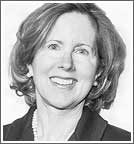
Heather Mac Donald is the Thomas W. Smith Fellow at the Manhattan Institute and a contributing editor of City Journal. She earned a B.A. from Yale University, an M.A. in English from Cambridge University, and a J.D. from Stanford Law School. She writes for several newspapers and periodicals, including The Wall Street Journal, The New York Times, The New Criterion, and Public Interest, and is the author of four books, including The War on Cops: How The New Attack on Law and Order Makes Everyone Less Safe and The Diversity Delusion: How Race and Gender Pandering Corrupt the University and Undermine Our Culture.
OCTOBER 2022 | VOLUME 51, ISSUE 10
The Economic Disaster of the Pandemic Response
Jeffrey A. Tucker (bio below)
Brownstone Institute
Read it in the original here: https://imprimis.hillsdale.edu/the-economic-disaster-of-the-pandemic-response/
The following is adapted from a talk delivered at Hillsdale College on October 20, 2022, sponsored by the student group Praxis.
On April 15, 2020—a full month after President Trump’s fateful news conference that greenlighted lockdowns to be enacted by the states for “15 Days to Flatten the Curve”—the President had a revealing White House conversation with Anthony Fauci, the head of the National Institute of Allergy and Infectious Diseases.
“I’m not going to preside over the funeral of the greatest country in the world,” Trump wisely said, as reported in Jared Kushner’s book Breaking History. The promised Easter reopening of the economy had not happened, and Trump was angry. He also suspected that he had been misled and was no longer speaking to coronavirus coordinator Deborah Birx.
“I understand,” Fauci responded meekly. “I just do medical advice. I don’t think about things like the economy and the secondary impacts. I’m just an infectious diseases doctor. Your job as president is to take everything else into consideration.”
That conversation reflected the tone of the debate, then and later, over the lockdowns and vaccine mandates. The economy—viewed as mechanistic, money-centered, mostly about the stock market, and detached from anything truly important—was pitted against public health and the preservation of life. The assumption seemed to be that you had to choose one or the other—that you could not have both.
It also seemed to be widely believed in 2020 that the best approach to pandemics was to institute massive human coercion—a belief based on the novel theory that if you make humans behave like non-player characters in computer models, you can keep them from infecting one another until a vaccine arrives to wipe out the pathogen.
The lockdown approach in 2020 stood in stark contrast to a century of public health experience in dealing with pandemics. During the great influenza crisis of 1918, only a few cities tried coercion and quarantine—mostly San Francisco, also the home at the time of the first Anti-Mask League—whereas most locations took a person-by-person therapeutic approach. Given the failure of quarantines in 1918, they were not employed again during the disease scares—some real, some exaggerated—of 1929, 1940-44, 1957-58, 1967-68, 2003, 2005, and 2009. In all of those years, even the national media acted responsibly in urging calm.
But not in 2020, when policymakers—whether due to intellectual error, political calculations, or some combination of the two—launched an experiment without precedent. The sick and well alike were quarantined through the use of stay-at-home orders, domestic capacity limits, and business, school, and church shutdowns. This occurred not only in the U.S., but worldwide—with the notable exception of perhaps five nations and the state of South Dakota.
Needless to say, the consequences were profound. Coercion can be used to turn off an economy. But given the resulting trauma, turning an economy back on is not so easy. That is why, 30 months later, we are experiencing the longest period of declining real income since the end of World War II, a health crisis, an education crisis, an exploding national debt, 40-year high inflation, continued and seemingly random shortages, dysfunction in labor markets, a breakdown of international trade, a dramatic collapse in consumer confidence, and a dangerous level of political division.
Meanwhile, what happened to COVID? It came anyway, just as the best epidemiologists predicted it would. It had a highly stratified impact, consistent with the information we had from the very early days: the at-risk population was largely the elderly and infirm. To be sure, almost everyone eventually came down with COVID with varying degrees of severity: some people shook it off in a couple of days, others suffered for weeks, and many died—although, even now, there is grave uncertainty about the true number of COVID deaths, due both to faulty PCR testing and to financial incentives given to hospitals to attribute non-COVID deaths to COVID.
Tradeoffs
Even if the lockdowns had saved lives over the long term—and the literature on this overwhelmingly suggests they did not—it would be proper to ask the question: at what cost? What are the tradeoffs?
Because economic considerations were shelved for the emergency, policymakers failed to consider tradeoffs. Thus did the White House on March 16, 2020, send out the most dreaded imaginable directive from an economic point of view: “bars, restaurants, food courts, gyms, and other indoor and outdoor venues where groups of people congregate should be closed.” And the results were legion.
For one thing, the lockdowns kicked off an epic bout of government spending. COVID-response spending amounted to at least $6 trillion above normal operations, running the national debt up to 121 percent of GDP. For comparison, our national debt in 1981 amounted to 35 percent of GDP—and Ronald Reagan correctly declared that a crisis.
The Federal Reserve purchased this new debt with newly created money nearly dollar for dollar. From February to May 2020, the total money supply (what economists call M2) increased by an average of $814.3 billion per month. The peak came early the following year: on February 22, 2021, the annual rate of increase of M2 reached a staggering 27.5 percent.
At the same time, as one would expect in a crisis of this sort, spending plummeted. Since a severe decrease in spending puts deflationary pressure on prices regardless of what happens with the money supply, the bad effects of printing all this new money were pushed off into the future.
That future is now. The explosion in M2 has resulted in the highest inflation in 40 years. And this inflation is accelerating, at least according to the October 12, 2022, Producer Price Index, which is more volatile than it has been in months and is running ahead of the Consumer Price Index—a reversal from earlier in the lockdown period. This new pressure on producers has heavily impacted the business environment and created recessionary conditions.
Moreover, this has not just been a U.S. problem. Most nations in the world followed the same lockdown strategy while attempting to substitute government spending and printing money for real economic activity. The Federal Reserve is being called on daily to step up its lending to foreign central banks through the discount window for emergency loans. It is now at the highest level since spring 2020. The Fed lent $6.5 billion to two foreign central banks in just one week this October. The numbers are scary and foreshadow a possible international financial crisis.
The Great Head Fake
Back in the spring and summer of 2020, we seemed to be experiencing a miracle. State governments around the country had crushed social activity and free enterprise, and yet real income was soaring. Between February 2020 and March 2021, a time of low inflation, real personal income was up by $4.2 trillion. It felt like magic. But it was actually the result of government stimulus checks.
Initially, people used their new-found riches to pay off credit card debt and boost savings. In the month after the first stimulus, the personal savings rate went from 9.6 to 33 percent. Also, since people were being coerced into living an all-digital existence, there was lots of spare time and a need for new equipment. So companies like Netflix and Amazon benefited enormously.
After the summer of 2020, people started to get the hang of having “free money” dropped into their bank accounts. So by November, the savings rate had dropped back down to 13.3 percent. When the Biden administration unleashed another round of stimulus in 2021, the savings rate at first nearly doubled. But fast forward to the present and people are saving only 3.5 percent—half the historical norm dating back to 1960—and credit card debt is soaring, even though interest rates are 17 percent and higher.
In other words, all the curves inverted once inflation came along to eat out the value of the stimulus. In reality, all that “free money” turned out to be very expensive. The dollar of January 2020 is now worth only $0.87, which is to say that the stimulus spending covered by the Federal Reserve printing money stole $0.13 of every American dollar in the course of only 2.5 years.
This was one of the biggest head fakes in the history of modern economics. The pandemic planners created paper prosperity to cover up the grim reality they had brought about. But paper prosperity is false prosperity. It could not and did not last. Between January 2021 and September 2022, prices increased 13.5 percent across the board, costing the average American family $728 in September alone.
Even if inflation were to stop today, the inflation already in the bag will cost the average American family $8,739 over the next twelve months.
Lingering Carnage
While Big Tech moguls and urban information workers thrived during the pandemic lockdowns, Main Street suffered. The look of most of America in those days was post-apocalyptic, with vast numbers of people huddled at home either alone or with immediate families, fully convinced that a universally deadly virus was lurking outdoors. Meanwhile, the CDC was recommending that “essential businesses” install countless Plexiglass barriers and place social distancing stickers everywhere people would walk.
This sounds ridiculous now, but for many it wasn’t then. I recall being yelled at for walking only a few feet into a grocery aisle that had been designated by stickers to be one-way in the other direction. There were reports of people using drones to identify and report neighbors who were holding prohibited parties, weddings, or funerals. Parents masked up their kids even though kids were at near-zero risk, and nearly all schools were closed. A friend of mine arrived home from a visit out of town and his mother demanded that he leave his “COVID-infested” bags on the porch for three days.
Those were the days when people believed the virus was outdoors and we should stay in. Oddly, this changed over time to where people believed that the virus was indoors and we should go out. It eventually became clear that we had moved from government-mandated mania to a popular delusion for the ages.
The resulting damage to small business has yet to be thoroughly documented. At least 100,000 restaurants and stores closed in Manhattan alone. Commercial real estate prices crashed, and big business moved in to scoop up bargains. Hotels, bars, restaurants, malls, theaters, and anyone without home delivery suffered terribly. The arts were devastated. During the deadly Hong Kong flu of 1968-69, we had Woodstock. This time around we had to settle for YouTube.
It may seem odd, but the health care industry suffered as well. The CDC strongly urged the closing of hospitals to anyone not facing a non-elective surgery or suffering with COVID. This turned out to exclude nearly everyone who would routinely show up for diagnostics or other normal treatments. As a result, health care sector employment fell 1.6 million in early 2020. Even stranger is the fact that total health care spending fell off a cliff. From March to May 2020, health care spending collapsed by $500 billion or 16.5 percent. This created an enormous financial problem for hospitals in general.
This is not to mention dentistry. I know from personal experience that in Massachusetts, you couldn’t get a much-needed root canal. Why? Because a root canal required a preliminary cleaning and examination, and those were prohibited as “nonessential.” I looked into traveling to Texas for a root canal, but the dentists there were required by law to force out-of-state patients to quarantine in the state for two weeks.
This virtual abolition of dentistry for a time was in keeping with the injunction of a headline in The New York Times on February 28, 2020: “To Take on the Coronavirus, Go Medieval on It.” What better way to describe the institution of a feudal system of dividing work and workers across the nation in terms of “essential” and “nonessential”?
The New York Times wasn’t affected by the lockdowns, of course, because media centers were deemed essential. Thus for two years, it was able to keep its presses running and instruct its Manhattan readers to stay home and have their groceries delivered. Delivered by whom, The New York Times neither said nor cared. It was apparently unimportant if the working classes were exposed to COVID in service to the elites. And then afterwards, when the working classes had natural immunity that was superior to the immunity offered by the so-called COVID vaccines, they were subjected to vaccine mandates.
Millions across the nation eventually quit or were fired due to those vaccine mandates. Highly qualified members of the U.S. military are still being discharged for noncompliance.
We are told that unemployment today is very low and that many new jobs are being filled, but most of those are existing workers getting second and third jobs. Because families are struggling to pay the bills, moonlighting and side-gigging are now a way of life. The full truth about labor markets requires that we look at the labor-participation and worker-population rates, both of which are low. Millions have gone missing. Most are working women who still cannot find child care because that industry has yet to recover from the lockdowns. Labor participation among women is back at 1988 levels. There are also large numbers of 20-somethings who moved home and went on unemployment benefits. Many more have simply lost the will to achieve and build a future.
The supply chain breakages we are seeing today are also a lingering result of the stoppage of economic activity in early 2020. By the time the lockdown regime was relaxed and manufacturers started reordering parts, they found that many factories overseas had already retooled for other kinds of demand. This particularly affected the semiconductor industry for automotive manufacturing. Overseas chip makers had turned their attention to personal computers, cellphones, and other devices. This was the beginning of the car shortage that sent prices through the roof. It also created a political demand for U.S.-based chip production, which has in turn resulted in another round of export and import controls.
These sorts of problems have affected every industry without exception. Why, for example, do we have a paper shortage? Because so many of the paper factories shifted to plywood and cardboard after prices sky-rocketed in response to the housing and mail delivery demand created by the lockdowns and stimulus checks.
Conclusion
We could write books listing all the economic calamities directly caused by the disastrous pandemic response. We will be suffering the results for years. Yet even today, too few people grasp the relationship between our current economic hardships—extending even to growing international tensions and the breakdown of trade and travel—and the brutality of the pandemic response.
Anthony Fauci said at the outset: “I don’t think about things like the economy and the secondary impacts.” Melinda Gates admitted in a December 4, 2020, interview with The New York Times: “What did surprise us is we hadn’t really thought through the economic impacts.”
There is no wall of separation between economics and public health. A healthy economy is indispensable for healthy people. Shutting down economic life was a singularly bad idea for taking on a pandemic.
Economics is about people making choices and institutions enabling them to thrive. Public health is about the same thing. Driving a wedge between the two, as happened in 2020, ranks among the most catastrophic public policy decisions of our lifetimes.
Health and economics both require the nonnegotiable called freedom. May we never again experiment with the near abolition of freedom in the cause of mitigating disease.

Jeffrey A. Tucker is founder and president of the Brownstone Institute and a daily columnist on economics for The Epoch Times. From 2017-2021, he served as editorial director of the American Institute for Economic Research. He has written for several publications, including The Wall Street Journal, National Review, The Freeman, and Chronicles. He is the author of 20 books, including Liberty or Lockdown.
JANUARY 2024 | VOLUME 53, ISSUE 1
U.S. History.
There are MANY closely related posts of my blog. This is not a recent crisis. Governments almost everywhere, not only the U.S.A. and the several hard core tyrannies, are out of control. Here is one:
#Malfeasance, #Misfeasance, #Constitution, #Technocracy, #Communism, #Socialism, #Citizenship, #Sovereignty, #BillofRights, #Swamp, #WEF, #Agenda2030, #Tyranny,

 budbromley
The evil fiends of the WEF and Club of Rome were the essential creators of this scourge IMO
LikeLike